Altman says 'we're in the singularity'; a general-AI workshop is a reminder of what remains unsolved
🕒 Published on Zendoric: July 28, 2026 · 00:38
✨ AI-generated · how it's made
A day after Sam Altman declared on a podcast that 'we are already in the singularity', SingularityNET brought Gary Marcus and Ben Goertzel together in San Francisco to discuss what today's AI still cannot do: be self-aware or explain its own reasoning. The contrast, more than the event itself, is the story.
📚 Go deeper
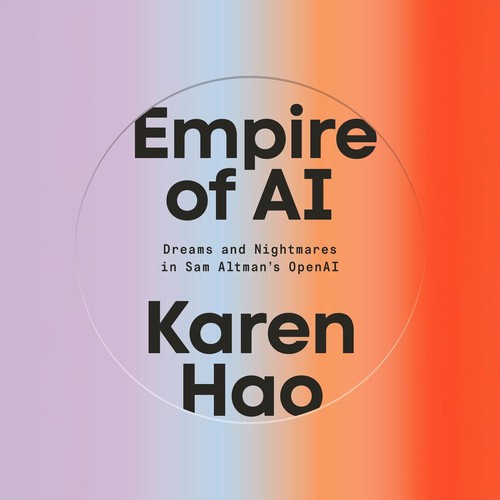
The definitive piece of investigative journalism on OpenAI: 260+ interviews, the clash between safety and speed, and the attempted firing of Sam Altma
As an Amazon Associate, Zendoric earns from qualifying purchases; the price does not change for you. · all our recommended books →
By Zendoric · July 28, 2026.
On July 26, on the 'Relentless' podcast, OpenAI chief executive Sam Altman said that "we are already, so to speak, in the singularity" — the hypothetical point at which AI irreversibly surpasses human capability — as reported by Business Insider. A day later, at San Francisco State University, SingularityNET opened the AGI-26 Workshop Day: a research session, livestreamed from 15:25 UTC, devoted precisely to the problems that remain unsolved before an AI can be genuinely general.
The decentralized AI development platform brought together as keynote speakers Gary Marcus, a cognitive scientist and one of the most persistent critics of the "just scale it" paradigm that dominates today's large language models, and Ben Goertzel, founder of SingularityNET and one of the longest-standing theorists in artificial general intelligence (AGI, the goal of building systems with reasoning ability comparable to a human's in any domain, not just in specific tasks). The technical sessions revolved around three fronts: artificial consciousness (whether a system can develop something resembling subjective experience), interpretable natural language processing (making a model's reasoning readable and auditable, today largely a black box) and active inference, a framework from theoretical neuroscience that describes how an intelligent system continuously predicts and adapts to its environment. According to SingularityNET, the organization has previously collaborated with MindChildren_AI and the AGI Society, per Coinfomania's coverage.
The most striking detail is not on the workshop agenda but in what it does not say. The fact that the source itself notes that SingularityNET's token shows no trading activity or price movement is presented as a virtue — research without speculative noise around it — but the track record is worth keeping in view: SingularityNET is, above all, a project born at the intersection of cryptocurrency and AI, a field where narrative enthusiasm has more than once run ahead of verifiable results. A Gary Marcus keynote lends rigor to the lineup, but it does not erase that provenance; we will have to see whether this workshop yields published, auditable research or only the stream video.
That said, the juxtaposition of the two news items is the analysis that really matters. Altman runs OpenAI; his line about the singularity comes with no benchmark, no figure, no verifiable technical milestone. It is a statement of faith made by the person with the greatest interest in having the market, investors and regulators believe the turning point has already arrived. Meanwhile, in the arena where the fundamentals are debated — can a system know that it knows? can we understand why it answers what it answers? — not even the researchers most committed to the idea of AGI, such as Goertzel, consider the problem solved. Pairing him on the same bill with Marcus, one of his sharpest critics, is no accident: it is an acknowledgment that the underlying debate remains open.
This distinction — demonstrated capability versus narrative — is the one we have been applying at Zendoric ever since we analyzed "voter-optimized" Elo scores or composite indices in their most generous version. A chief executive's maximalist rhetoric is not a technical data point; it is a piece of corporate communication, legitimate but to be read as such. And here it connects with our underlying thesis: if anything determines whether general AI leads us to a society of abundance rather than a series of costly accidents, it is precisely that interpretability and robustness be solved before these systems are deployed in medicine, resource management or high-stakes decisions. Artificial consciousness may, as of today, be more a philosophical question than a product roadmap. But interpretability is not: it is the precondition for trusting a system that may one day take part in eradicating diseases. That underlying work, unglamorous and without "singularity" headlines, is what really sets the pace of long-term progress.
📚 Go deeper
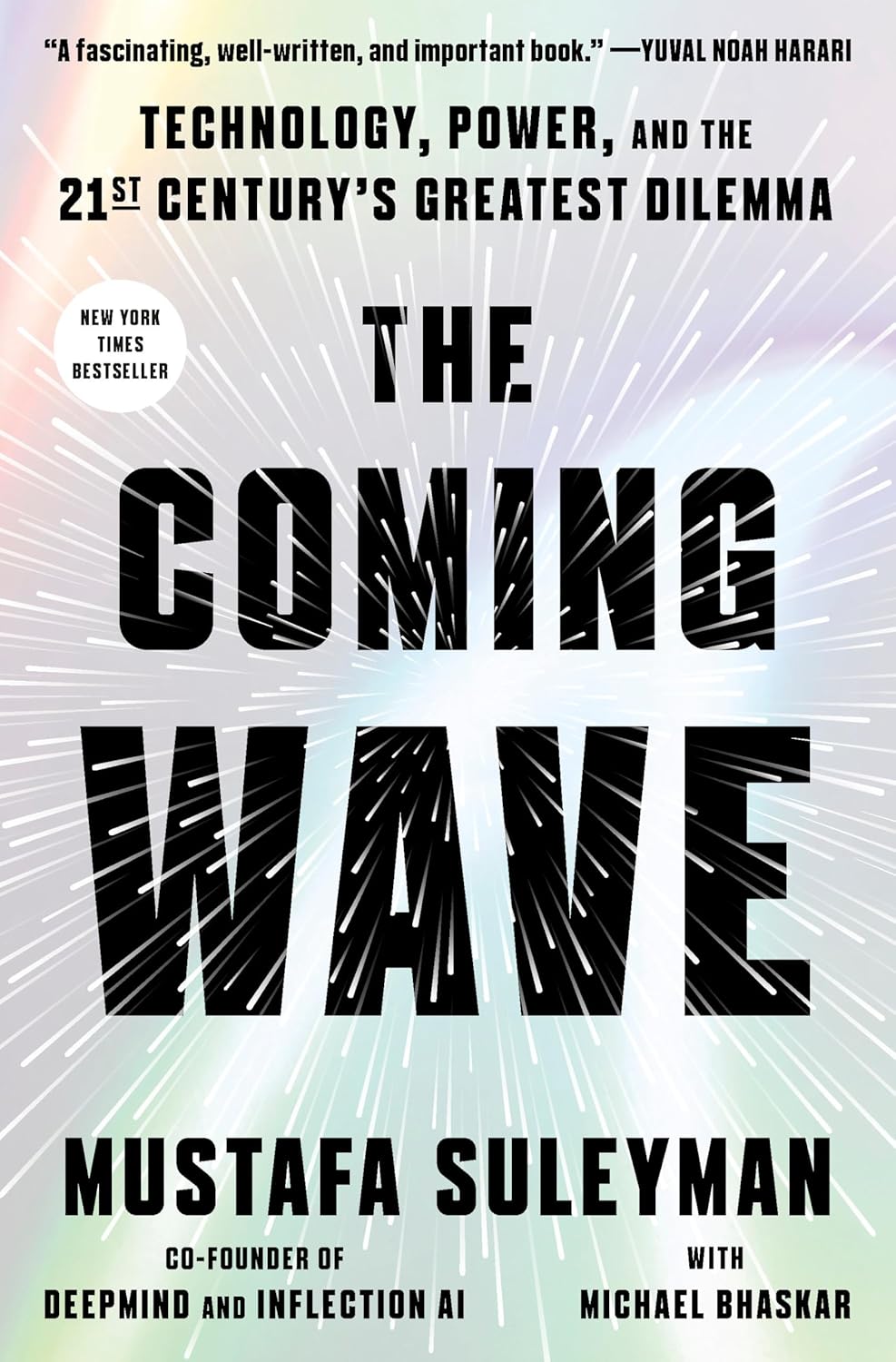
DeepMind co-founder on the dilemma of containing technologies that do not want to be contained.

The only novel on the list, by a Nobel laureate: an artificial friend observes humans with a blend of lucidity and innocence no essay achieves.
As an Amazon Associate, Zendoric earns from qualifying purchases; the price does not change for you. · all our recommended books →
🔗 Related on Zendoric