Stony Brook, caught between fear of being "replaced" and AI as a collaborator: the university reinvents itself without answers

🕒 Published on Zendoric: October 20, 2026 · 00:19
✨ AI-generated · how it's made
A Stony Brook panel brought together medicine and engineering faculty who already use AI daily and admit they don't have all the answers. What's valuable isn't the enthusiasm but what they acknowledge: AI frees up time but threatens relationship-based learning.
📚 Go deeper

The only novel on the list, by a Nobel laureate: an artificial friend observes humans with a blend of lucidity and innocence no essay achieves.
As an Amazon Associate, Zendoric earns from qualifying purchases; the price does not change for you. · all our recommended books →
By SBU News · October 19, 2026.
Stony Brook University (New York) held a presidential panel on October 16 on how it is deploying artificial intelligence in teaching, research and healthcare. It was moderated by university president Andrea Goldsmith, with four experts from education, engineering and medicine. According to the university, the participants were enthusiastic but admitted they don't have all the answers.
The most telling example came from cardiologist On Chen. He spent five years writing an electrocardiogram manual; an undergraduate he had asked about a 3D model of the heart brought him one, created with AI, the very next day. It is interactive: it can simulate a blocked artery or the administration of a drug and show how the patient's electrocardiogram and vital signs change. Chen acknowledged that if the student's method is better, so be it.
In the classroom, Rose Tirotta-Esposito, who leads educational transformation, described two opposite reactions among faculty: those who use chatbots for simulations and role-play, and those who redesign assignments around group work and AI-free discussion. Goldsmith voiced her concern that students, with instant answers, will stop going to office hours or working with classmates. Tirotta-Esposito suggested the opposite: that AI could absorb basic questions and leave the difficult conversations for time with the instructor.
In medicine, Cindy Lee, chief of breast imaging, explained that Stony Brook's program has used AI since 2018 to flag suspicious findings on mammograms as a "second pair of eyes" for the radiologist. The physician still weighs medical history, family history and other risk factors. Her team is also studying whether AI performs equally across racial and ethnic groups, through a mobile screening program in underserved communities. Lee warned, in a line worth remembering, that "the most confident answer is not always the correct one."
Dean of Engineering Andrew Singer argued that teaching students only to use today's tool is "setting them up for failure"; they have to be taught to think. He also pointed to a deeper problem for science: if producing a paper keeps getting easier, universities will have to decide how to assess what counts as original research.
**Our take.** This panel is an institutional press release, not a study: there is no outcome data, only testimony. Even so, it's a good gauge of the mood in academia, and we draw three ideas from it.
First: the fear of being replaced is no longer confined to administrative staff. Lee, recently promoted to full professor after years of papers and grants, confessed to feeling "replaced" when she saw AI do tasks that used to take her months. And at the same time she calls it her "best collaborator." That tension sums up the short term: the value of routine intellectual work is falling fast, and those who don't reposition themselves will feel it. It's an uncomfortable transition, and it should be called that.
Second: the most serious risk is not the one usually cited. More than plagiarism, the concern is the disappearance of the introductory tasks through which a doctoral student learns the craft, just as research funding is under pressure. If AI does the groundwork, how are experts trained? Lee's answer, that graduate students and mentoring will still be needed, is the right one, but it requires deliberately redesigning learning rather than waiting for it to happen on its own.
Third: medicine shows the healthy model. AI that flags, a human who decides, and explicit auditing of bias across populations. That is how trust is earned, and the payoff if it works is enormous: personalized care and more human time with the patient. In general, that combination is the most realistic path toward a medicine that, in the long term, can prevent and cure diseases that are beyond us today.
The thesis is simple: the university that thrives will be neither the one that bans nor the one that adopts uncritically, but the one that protects what is irreplaceable, the relationship with those who teach you and your own judgment, while delegating the mechanical. That the experts themselves say "we have to make mistakes and try new things" is, paradoxically, a sign of maturity.
📚 Go deeper
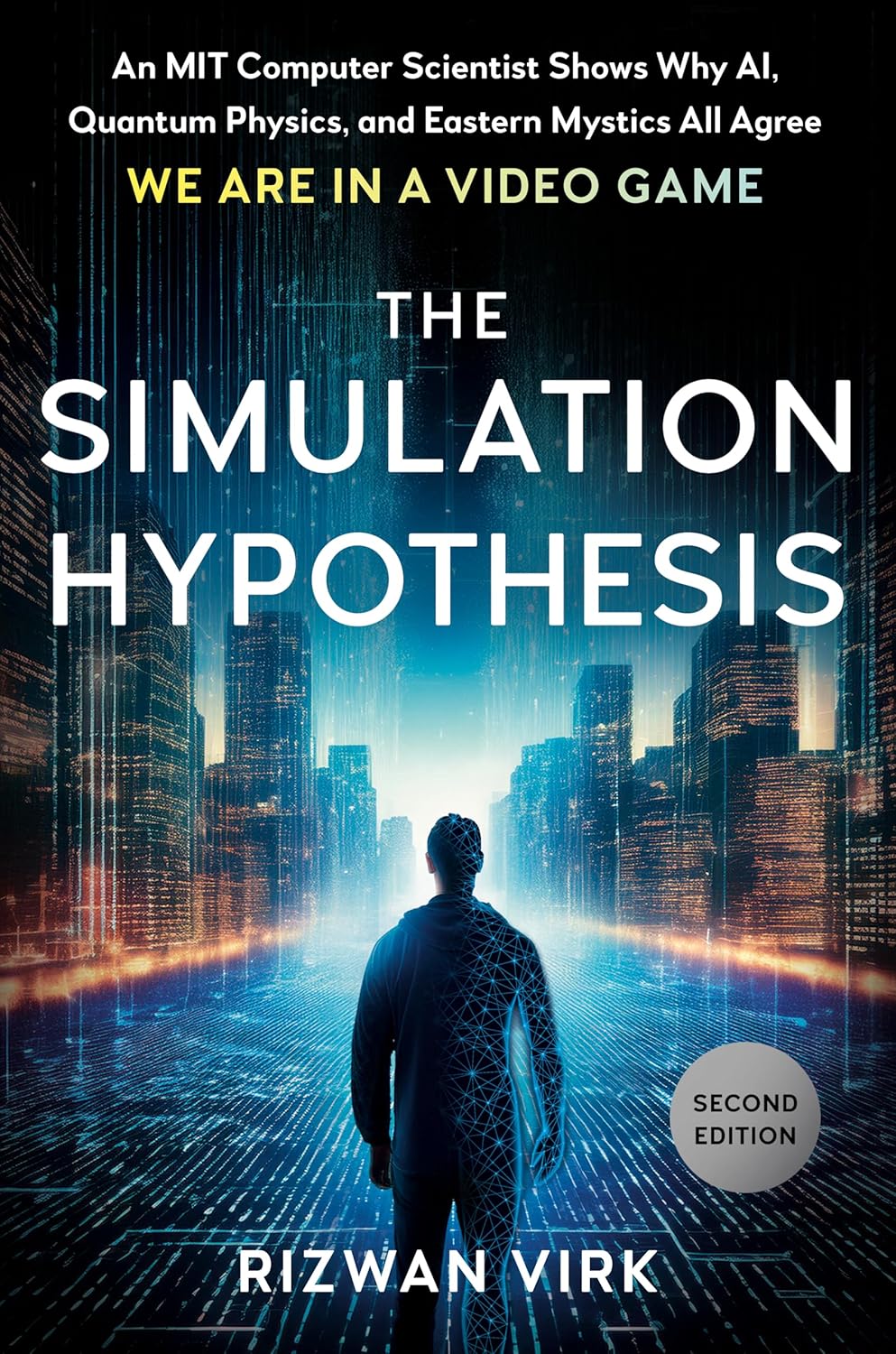
An MIT computer scientist connects AI, quantum physics and video games to take an uncomfortable question seriously: what if we live in a simulation? M

AI as an extractive industry: the lithium, the energy, the underpaid data-labeling work and the bodies behind the cloud.
As an Amazon Associate, Zendoric earns from qualifying purchases; the price does not change for you. · all our recommended books →
🔗 Related on Zendoric
- UT Austin is building its 2030 hospital with AI built in, but today it mostly uses it to lighten the medical paperwork · 2026-10-08
- AI cheating reaches the Ivy League: the problem isn't the chatbot, it's what we measure as learning · 2026-07-10
- Genomics plus AI: why the public health of the future is also being decided in Rancagua, not just San Francisco · 2026-07-16