Anthropic and Blackstone create Ode, a $1.5 billion bet that the model matters less than who deploys it

🕒 Published on Zendoric: July 26, 2026 · 00:23
✨ AI-generated · how it's made
Anthropic and Blackstone unveil Ode, a $1.5 billion joint venture that places elite engineers inside companies to deploy AI. Their bet: the model matters less than knowing how to integrate it, and OpenAI is already playing the same card with its own subsidiary.
📚 Go deeper
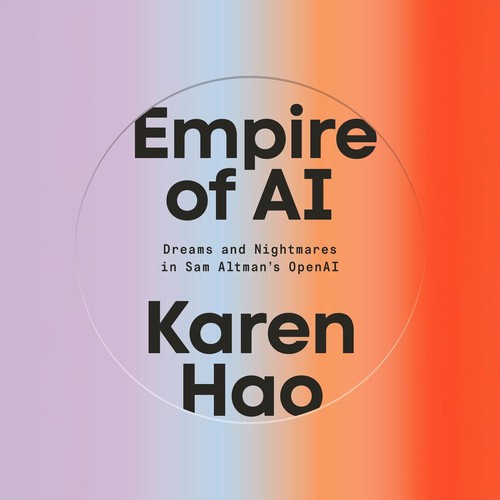
The definitive piece of investigative journalism on OpenAI: 260+ interviews, the clash between safety and speed, and the attempted firing of Sam Altma
As an Amazon Associate, Zendoric earns from qualifying purchases; the price does not change for you. · all our recommended books →
By Zendoric · July 26, 2026.
Ode with Anthropic now has a name, a figure and a headcount. The $1.5 billion joint venture that Anthropic launched in May alongside Blackstone, Hellman & Friedman, Goldman Sachs and other investors unveiled its brand and strategy this week, according to TechCrunch. Its core asset: a team of 100 'deployment engineers' (forward-deployed engineers, or FDEs: professionals who embed inside the client to design and integrate AI systems into its real processes, not just sell it access to a model).
The venture is born of an acquisition, not from scratch. Blackstone had spent some time testing different AI implementation providers across its portfolio companies —from large consultancies to specialized boutiques— and concluded that Fractional AI, a startup that until then had been working in an 11-month partnership with OpenAI, was the best bet. Its co-founders, Chris Taylor and Eddie Siegel, become Ode's CEO and technical lead, respectively.
The thesis they defend is an uncomfortable one for the business of selling models: choosing the AI model matters, but it is secondary. Siegel explained it to TechCrunch by comparing it to choosing a programming language when building software —relevant, but not the variable that decides the outcome. What really determines whether a company captures value from AI is how it designs, evaluates and integrates the complete system into its day-to-day operation. Ode will operate on a 'Claude-first' principle —it will use Anthropic's technology by default, including its Claude Tag integration in Slack— but not exclusively: it will turn to competitors' models when the client requires it. Anthropic's own internal AI applications team will remain separate, focused on strategic, mission-aligned deployments, apart from Ode's commercial work.
As sector context, Ode is not arriving on empty ground. OpenAI launched its own implementation subsidiary, The Deployment Company, at almost the same time. Deloitte announced its own FDE practice and Accenture presented an equivalent offering aligned with Microsoft. In other words: the two frontier labs and the big consultancies have reached the same conclusion almost simultaneously — selling API access is no longer enough to capture AI's enterprise value at scale.
The venture itself acknowledges its own limit: talent. More than half of Ode's team are former startup founders, and demand for these profiles already outstrips supply, according to sources close to the company cited by TechCrunch. A Blackstone executive described them as 'special forces', not a mass implementation army — a deliberate positioning as a boutique, albeit a scaled one, rather than a volume provider. Siegel, however, plays down the risk: he argues that the current AI environment makes it easier than ever to build a startup, which multiplies precisely the engineer-founder profile Ode needs.
Our take. Ode confirms something we have been pointing out for months at this outlet: the enterprise AI war is no longer fought solely in the lab that trains the best model, but over who controls the 'plumbing' — the integration, evaluation and deployment layer that turns an API into a business process that works. That Anthropic and OpenAI, the same labs competing fiercely to lead the performance tables, are setting up a deployment subsidiary at almost the same time is a more eloquent market signal than any benchmark: the model's own creators admit that the model, on its own, does not sell.
There is also a second reading, about who captures the value. Behind Ode there is not only an AI lab: there is Blackstone, Hellman & Friedman and Goldman Sachs, heavyweights of private capital and investment banking that will channel their own portfolio companies as potential clients. It is the same pattern of concentration we already see in other corners of this industry: AI's value tends to accumulate with whoever controls capital and distribution, not only with whoever signs the model. Private equity entering directly into the business of 'making AI work' inside companies is one more step in that concentration, and it is worth watching with the same attention we give the model race.
The talent shortage that Ode acknowledges as its operational ceiling also fits another thread we had been following: the radical cheapening of building a company thanks to AI is generating, almost accidentally, the pool of engineer-founders that this kind of venture needs. It is the flip side of the 'one-person unicorn': the prediction that a single person could found a billion-dollar company with AI has not come true yet, but the cost of starting a business has indeed collapsed, and here we see the side effect — a small, highly qualified group of ex-founders now selling, inside other companies, the same ability to 'own a business problem end to end' that they previously reserved for their own startup.
In the short term, the message for any non-tech company is honest and uncomfortable: buying access to Claude, GPT or whichever model is not enough. If AI is one of your one or two top management priorities —the explicit audience Ode is targeting—, the bottleneck is not the model's capability, it is finding or training the few people capable of redesigning a real process with that technology. It fits what we have been observing sector by sector: in tech, routine profiles lose out, but those who govern AI architecture, security and integration win.
In the long term, if Ode's model scales —its own founder admits that is the pending exam before international expansion—, the outcome fits this outlet's underlying thesis: the more companies that actually manage to deploy AI in their processes, the faster model capability translates into real productivity, and the closer we are to that abundance also reaching sectors outside software —healthcare, energy, logistics— where clumsy implementation, not a lack of powerful models, remains the real brake today.
📚 Go deeper
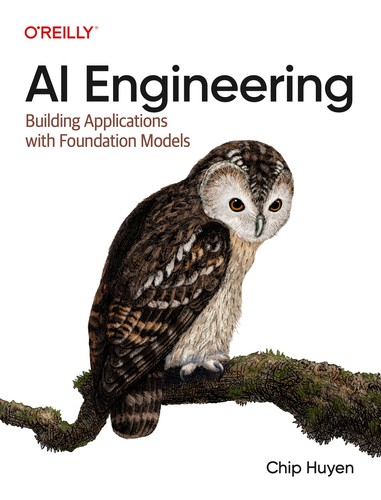
The reference manual for building products on top of AI models: prompts, RAG, fine-tuning, agents, evaluation and deployment.
The best starting book if you're not technical: a Wharton professor explains how to work WITH AI — when to delegate, when to supervise, when to keep i
As an Amazon Associate, Zendoric earns from qualifying purchases; the price does not change for you. · all our recommended books →
🔗 Related on Zendoric
- Anthropic and OpenAI go public: why buying before the IPO may be the worst bet of the AI frenzy · 2026-07-04
- An unverified rumor of a cheaper, smarter Anthropic model reveals how AI races are now priced · 2026-07-12
- Only 12% of companies know how to govern their AI agents: Google turns that gap into its edge over OpenAI and Anthropic · 2026-07-20