The Northern Triangle no longer fights to get online, but to know what's fake in it
🕒 Published on Zendoric: July 22, 2026 · 01:59
✨ AI-generated · how it's made
A study by the Escuela Mónica Herrera, the UCA and DW Akademie in El Salvador, Guatemala and Honduras reveals that connectivity is already nearly universal, but the ability to detect AI-generated disinformation isn't advancing at the same pace. 50.7% of Hondurans surveyed admit they have already seen fake content created with artificial intelligence.
📚 Go deeper

The only novel on the list, by a Nobel laureate: an artificial friend observes humans with a blend of lucidity and innocence no essay achieves.
As an Amazon Associate, Zendoric earns from qualifying purchases; the price does not change for you. · all our recommended books →
By Infobae · July 21, 2026.
A report produced by the Mónica Herrera School and the Central American University José Simeón Cañas (UCA), in collaboration with the German organization DW Akademie, documents how the citizens of El Salvador, Guatemala and Honduras consume information and how exposed they are to disinformation. The figure that sums up the problem is Honduran: 50.7% of the sample acknowledge having been exposed to disinformation generated with artificial intelligence (AI), that is, content fabricated or altered with generative AI tools —from text to manipulated images or videos, so-called deepfakes— and presented as real.
The study breaks the problem down by country and qualifies the usual diagnosis that the digital divide in Central America is, above all, one of access. In El Salvador, where mobile phones and audiovisual consumption over the internet have already displaced traditional media, three out of four people (75.7%) say they consult other outlets to verify a piece of news and 62.1% assess the outlet's reliability before believing something, according to the report's own data. In Guatemala, urban connectivity is practically universal, but that does not translate into skills to verify: WhatsApp and Facebook are flagged as the main channels of disinformation. In Honduras, alongside that half of the population already exposed to AI content, it is youtubers and influencers —not the media— who concentrate the role of main source of information, especially on politics, violence and insecurity.
There is a nuance the report underscores that deserves more attention than it usually receives: older adults turn to trusted people to verify what they see, rather than applying their own checking routines. It is a reasonable strategy against an old-fashioned hoax, but insufficient against a well-made deepfake, where the human eye itself ceases to be a reliable filter. The study says it bluntly: the signals for detecting a fake news item fabricated with AI do not match the verification reflexes people had already internalized. It is a generational mismatch that technology has created faster than media literacy has been able to correct.
Here lies, in our view, the truly important figure in the report: media and information literacy (MIL) —the ability to access, analyze, contrast and produce information critically and responsibly— is emerging as the terrain where much of the battle against AI disinformation will be fought, more than in platform moderation or in the regulation of the models. None of the three countries presents an access problem: the mobile phone has already reached everywhere. The problem is that the critical capacity to process what that phone delivers has not grown at the same pace, and that is exactly what education systems and public policies have still not managed to solve.
This is, in our reading, one of the most predictable and least discussed side effects of the current wave of generative AI: the same technology that in the long term can democratize access to knowledge and to tools once reserved for a few, in the short term also cheapens the fabrication of hyper-realistic hoaxes on a scale that no society —much less one with weaker institutions and fewer resources for verification, as is often the case across much of Central America— yet has the reflexes to digest. It is not a phenomenon exclusive to the Northern Triangle, but it hits harder there because it coincides with more fragile democracies and media ecosystems that rely heavily on social networks and instant messaging as an almost sole source of information.
The good news, if there is any, is that this is a problem of capabilities, not of physics: media literacy can be taught, funded and measured, unlike other AI risks that are far harder to govern. Investing in it —in classrooms, in local media, in training older adults— is one of the few responses to AI disinformation that does not depend on big tech companies changing course. While the automatic detection of synthetic content and the labeling of origin (something the industry is advancing on, though still unevenly) finishes maturing, the most readily available defense remains, paradoxically, the most analog one: teaching people to ask where information comes from before believing it.
📚 Go deeper
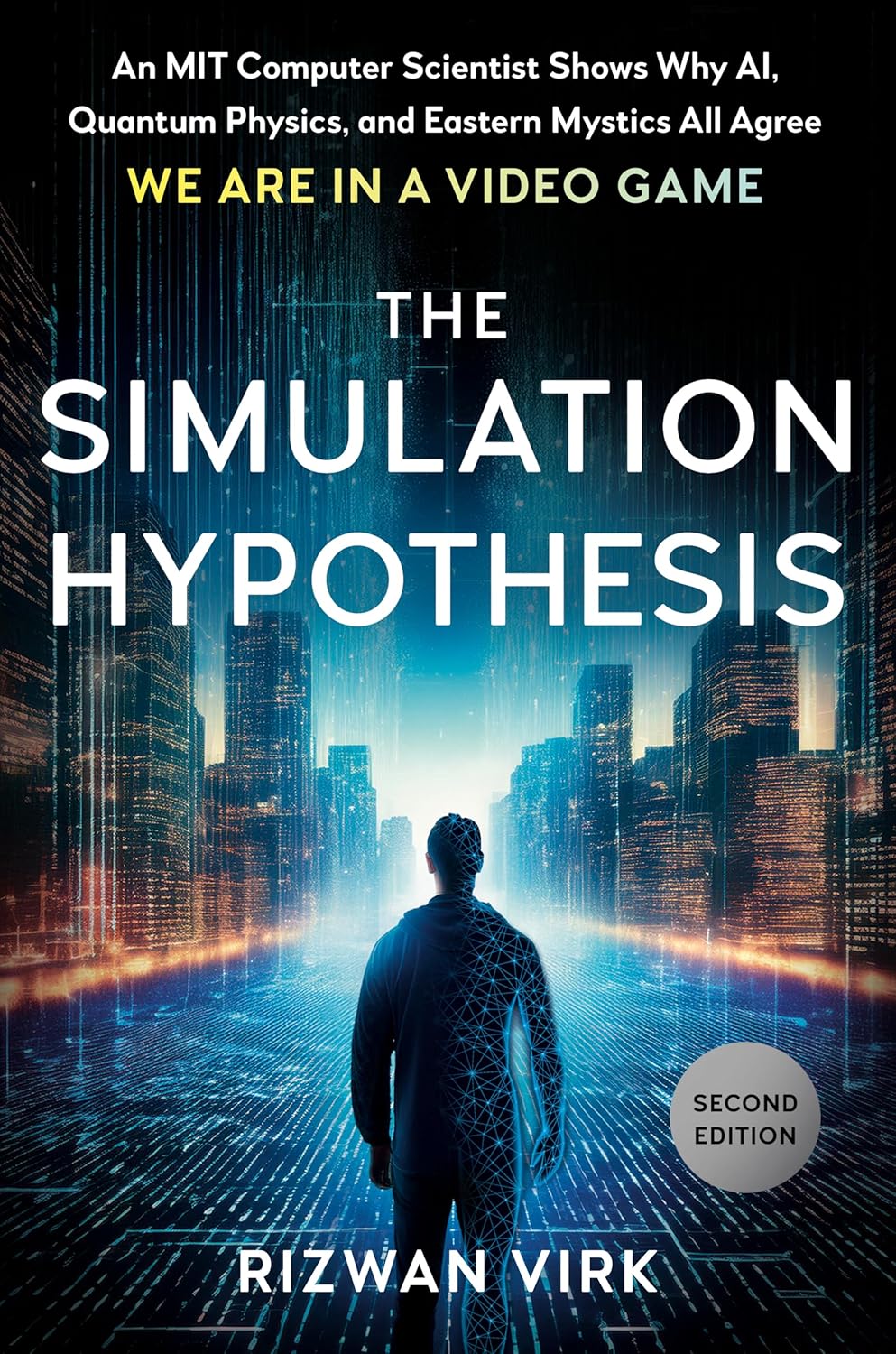
An MIT computer scientist connects AI, quantum physics and video games to take an uncomfortable question seriously: what if we live in a simulation? M
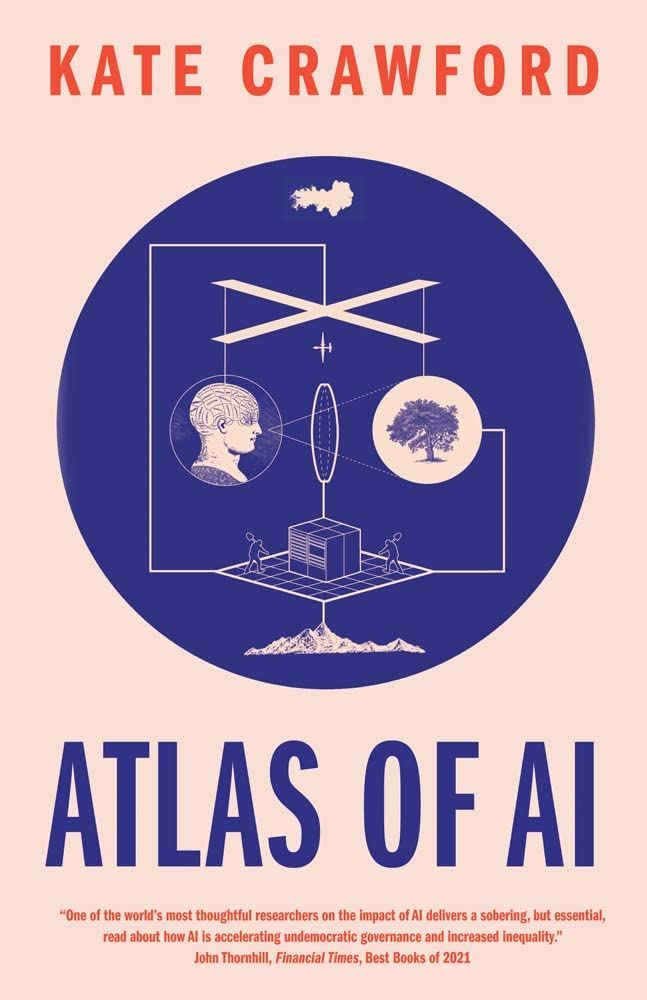
AI as an extractive industry: the lithium, the energy, the underpaid data-labeling work and the bodies behind the cloud.
As an Amazon Associate, Zendoric earns from qualifying purchases; the price does not change for you. · all our recommended books →
🔗 Related on Zendoric
- The China–U.S. gap in AI narrows: why the real contest is no longer technical but about the business model · 2026-06-25
- Breast cancer leaves traces six years earlier: AI can already see them, and that forces a rethink of the entire screening process · 2026-06-28
- Bristol students showcase AI and aerospace projects: the next generation is already touching the future · 2026-06-30