Altman invited his harshest critic: Eggers told OpenAI that ChatGPT is 'silencing a generation'
🕒 Published on Zendoric: July 19, 2026 · 00:04
✨ AI-generated · how it's made
Novelist Dave Eggers, invited by Sam Altman to speak before 200 OpenAI employees, accused ChatGPT of making teachers' lives 'catastrophic' and of stealing the voice of students who delegate their writing to it. The scene, a head-on critic of the industry inside the company itself, says as much about the problem as about who is pointing it out.
📚 Go deeper
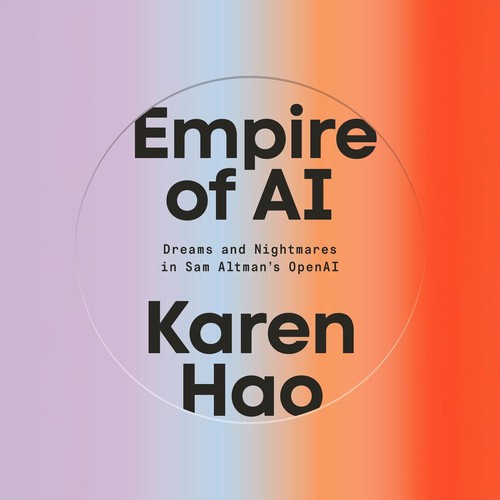
The definitive piece of investigative journalism on OpenAI: 260+ interviews, the clash between safety and speed, and the attempted firing of Sam Altma
As an Amazon Associate, Zendoric earns from qualifying purchases; the price does not change for you. · all our recommended books →
By Zendoric · July 19, 2026.
Last year, Sam Altman invited writer Dave Eggers to give a talk to some 200 OpenAI employees. As reported by the Financial Times, and reproduced by The Verge, Eggers did not come with a motivational speech about creativity: he came with a direct accusation. "The effect of ChatGPT on the lives of educators is catastrophic," he said. "If students use it to compose, which is the greatest tragedy of all, they will never learn to write. And their voice is stolen from them... That is silencing a generation or two."
It is worth placing who is speaking. Eggers is the author of The Circle, a novel that is itself a fierce critique of the tech industry, founder of McSweeney's and of several schools and nonprofits that support writers. He has also previously called AI-generated writing "meaningless pastiche." Altman, according to the account itself, knew perfectly well whom he was inviting into his home. That does not diminish the critique, but it does require reading it for what it is: the firm, well-argued opinion of an author with a very pronounced prior stance, not an empirical study on ChatGPT's impact in the classroom.
That said, the underlying problem Eggers points to is real and fits with something we have been observing in the pedagogical response to generative AI: the friction of writing your own text, with its doubts and its crossings-out, is not a cost to be eliminated but the part of the process where thinking happens. Delegating that friction to a model does not save intellectual work, it replaces it with something else, and that something else teaches neither how to reason nor how to find one's own voice. In general, educational initiatives that deliberately reintroduce practices like pencil and paper to safeguard that process point in the same direction: the answer is not to ban the tool, it is to protect the act of thinking.
Where we would qualify Eggers is in the diagnosis that the solution lies in teachers "winning" simply by resisting AI. In our analysis of AI's impact on the education sector, the pattern that emerges is not the teacher who bans the tool, but the one who learns to orchestrate it: using it to generate disposable drafts, examples or counterarguments, while demanding that the final essay, the student's own argument, come from the student's head. That pedagogical redesign is far more work for the teacher in the short term, exactly the "infinitely harder life" Eggers complains about, but it is also the only path that gives up neither the tool nor the cultivation of judgment.
There is also a piece of context worth not overlooking: that Altman invited Eggers, knowing his track record, to speak unfiltered before 200 employees says something about OpenAI that is rarely told alongside the headlines about funding rounds and benchmarks. It can be read as a genuine exercise in internal self-criticism, or as a symbolic gesture that costs little and provides moral cover; it is probably a bit of both. What does not change is that the company doing the most to transform how writing is done and taught needs, more than any other, internal mechanisms that make it listen to precisely that objection, even when it comes unsoftened.
In the long term we continue to believe that AI can free up teaching time from mechanical grading and repetition to devote it to what a model does not replace: the relationship, the judgment, the accompaniment of each student's own thinking. But that promise does not fulfill itself, nor by product decree. It is fulfilled, if it is fulfilled, through the deliberate redesign of the classroom that Eggers does not mention but that his critique, unwittingly, makes all the more urgent.
📚 Go deeper
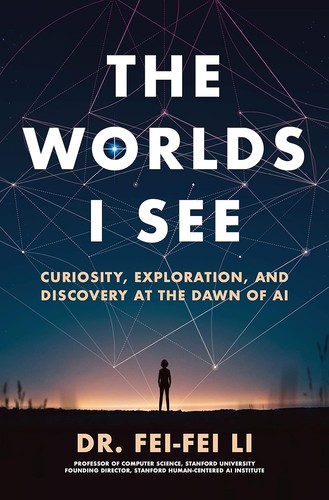
The memoir of the creator of ImageNet, the scientist who made the deep learning revolution in vision possible.
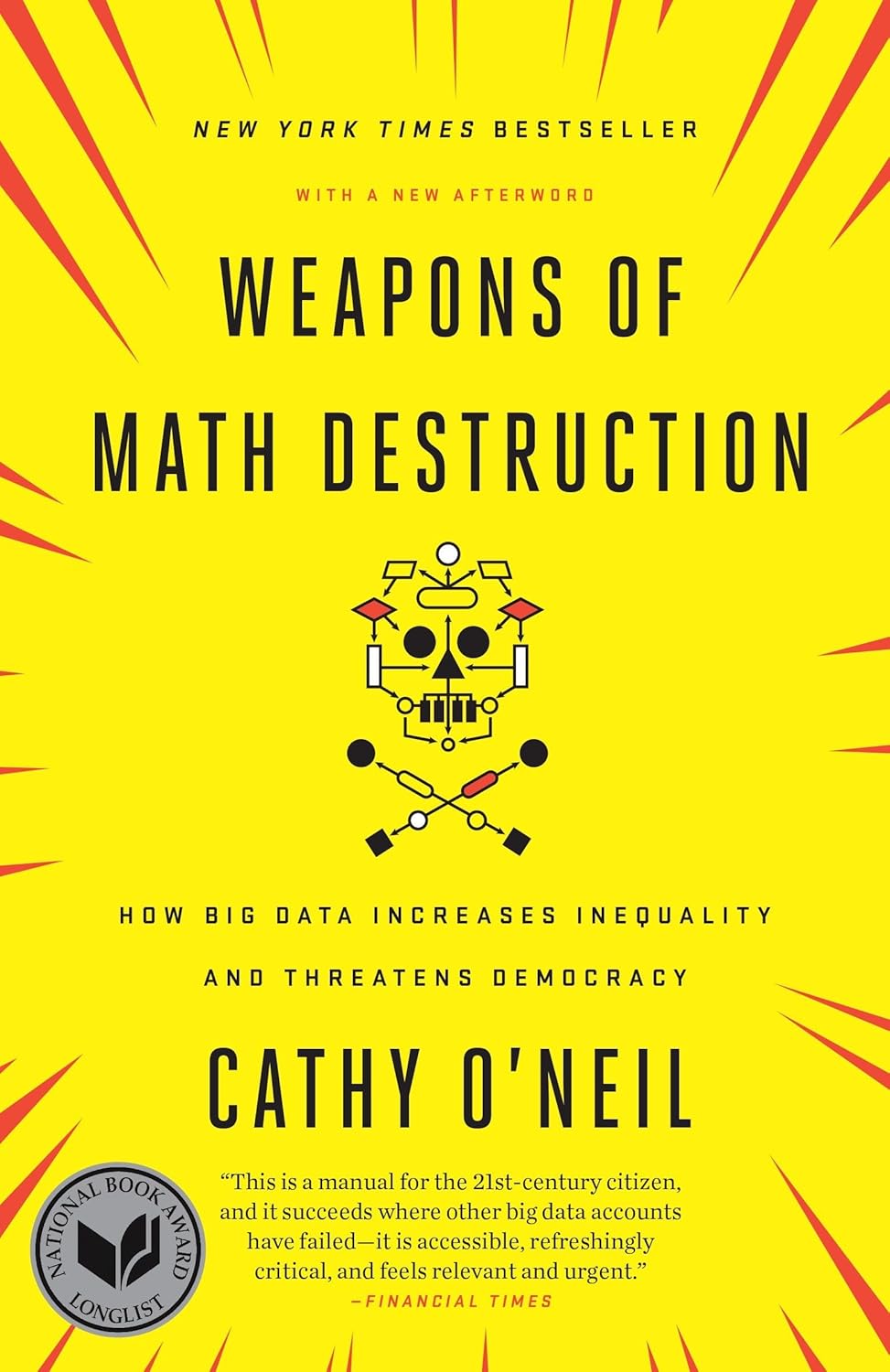
How opaque algorithms decide who gets credit, a job or parole — and why they tend to punish the same people.
As an Amazon Associate, Zendoric earns from qualifying purchases; the price does not change for you. · all our recommended books →
🔗 Related on Zendoric
- Apple presents new "shocking" evidence against a former employee accused of stealing data for OpenAI · 2026-09-03
- The ironic Goose case: an 'anti-algorithm' app accused of fabricating men with AI to sell itself · 2026-07-03
- GPT-5.6: OpenAI bets on 'more intelligence per token' and agents that decide on their own when to delegate · 2026-07-12