Agentic AI: when software stops responding and starts deciding on its own

🕒 Published on Zendoric: July 18, 2026 · 01:58
✨ AI-generated · how it's made
Quartz distills into an explainer the difference that is reshaping enterprise software: a chatbot answers, an agent executes. The question that really matters is no longer what agentic AI can automate, but who audits what it decides when no one is watching.
📚 Go deeper

The best starting book if you're not technical: a Wharton professor explains how to work WITH AI — when to delegate, when to supervise, when to keep i
As an Amazon Associate, Zendoric earns from qualifying purchases; the price does not change for you. · all our recommended books →
By Quartz · July 17, 2026.
The article offers a useful exercise in definition at a time when the term "agentic" is applied to almost everything: it is not AI that answers a question or drafts a document when asked, but AI that receives a high-level objective, breaks it down into subtasks, uses external tools (browsers, databases, APIs, code interpreters) to carry them out, evaluates the result and adjusts course, all without a human directing each step. The basic building block is still the "agent": a language model with the ability to call tools. What's new is chaining several specialized agents together under an orchestrating layer, capable of sustaining complete workflows —drafting and sending communications, reconciling data across platforms, managing logistics, monitoring changing conditions— that previously required sustained human attention.
That is the real leap in scale compared with the previous wave of generative AI: it doesn't automate a single task, it automates the process end to end. And that reshuffles entire categories of corporate software. The article rightly points to identity and access management as one of the fronts under the most pressure: an agent needs credentials and permissions just like a human employee, and each new agent is an additional attack surface to secure. It also points to compute infrastructure: agents sustain iterative, prolonged workloads, not one-off inference calls, which strains data centers and the chip supply chain in a different way. More broadly, this same week brought news that Anthropic is negotiating to lease AI compute capacity from Meta for around $10 billion, a data point that fits that reading: demand for compute to sustain agents is already pushing the labs themselves to seek capacity outside their usual providers.
But the text's most relevant finding, even though it treats it almost in passing, is its diagnosis of the central tradeoff: autonomy versus oversight. The more a system acts on its own, the harder it becomes to audit its decisions, catch errors before they spread, or assign responsibility when something goes wrong. The article places there —action logging, approval gates, access controls— the bulk of the practical engineering and regulatory attention. It's the right way to frame the problem: agentic AI does not fail for lack of capability, but for lack of governance over that capability, the same pattern we have been observing in other sensitive domains where the brake is not technical but institutional.
Our reading is that this explainer, without setting out to, captures well where enterprise AI adoption stands in 2026: the technology to chain agents already exists and works reasonably well in bounded domains, but organizations have not figured out how to govern it at scale. In the short term this has a concrete labor cost: end-to-end administrative processes —data reconciliation, logistics, document management— are precisely the most susceptible to being compressed into an agentic flow, and they are also the most exposed jobs, in line with what we have been observing sector by sector: the winner is the profile that orchestrates and supervises agents, the loser is the one who manually performed the routine task the agent now chains together on its own. This is not a distant promise, it is the hard transition already underway in back-office, banking and business administration.
Over the longer term, however, this same architecture —agents pursuing complex objectives without constant supervision— is the piece that makes it possible to imagine systems capable of sustaining, for example, a scientific research process or a full clinical trial from start to finish, with human oversight concentrated where it truly adds value: judgment, not mechanical execution. That is the terrain where the abundance we champion as a horizon begins to look less like a rhetorical aspiration and more like a consequence of well-governed engineering. The question that will truly separate who wins this decade from who suffers it is not whether they adopt agents, but whether they build —before the agent acts— the traceability and control points that make it possible to trust what it decides without anyone watching it step by step.
📚 Go deeper
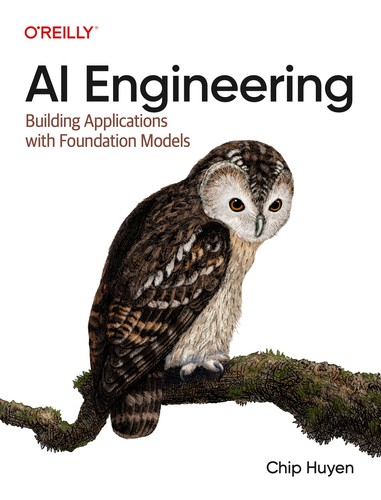
The reference manual for building products on top of AI models: prompts, RAG, fine-tuning, agents, evaluation and deployment.

The story of NVIDIA and Jensen Huang: how a video-game card company ended up making the most coveted resource on the planet.
As an Amazon Associate, Zendoric earns from qualifying purchases; the price does not change for you. · all our recommended books →
🔗 Related on Zendoric
- Self-driving labs: when AI stops running experiments and starts deciding them · 2026-06-27
- The figure that matters from Expo B2B Tech Asia isn't agentic AI: it's that you no longer need to code to deploy it · 2026-07-13
- Claude Code no longer reads the web, it sees it: the built-in browser and the race to control the coding agent · 2026-07-14