200 economists and 16 Nobel laureates sign a warning on jobs: what's unusual is who agrees, not what they propose
🕒 Published on Zendoric: July 16, 2026 · 00:23
More than 200 economists, researchers and executives —among them sixteen Nobel laureates— sign a letter calling for action now in the face of a possible economic transformation 'faster than the Industrial Revolution.' AI optimists and skeptics agree, but the text offers not a single concrete proposal.
📚 Go deeper
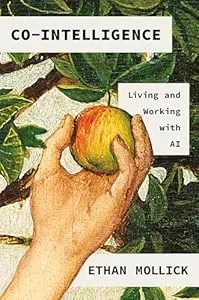
The best starting book if you're not technical: a Wharton professor explains how to work WITH AI — when to delegate, when to supervise, when to keep i
As an Amazon Associate, Zendoric earns from qualifying purchases; the price does not change for you. · all our recommended books →
By Futurism · July 15, 2026.
A letter titled «We Must Act Now» has gathered more than 200 signatures from economists, researchers and tech executives, including those of sixteen Nobel laureates. The text warns that AI «may become radically more powerful in the coming decade» and that such a leap could trigger an economic transformation «greater than the Industrial Revolution, but on a far shorter timeframe». Among the risks it cites is massive job displacement; among the opportunities, «significant improvements in living standards». Its central request is simple: that economists, governments and industry build now the incentives, safeguards and institutions needed before that change arrives.
The roster of signatories is the most striking feature of the document. Alongside MIT economists Daron Acemoglu and Simon Johnson (both Nobel laureates) and NYU Nobel laureate Michael Spence, it features former Google CEO Eric Schmidt, researcher Zoë Hitzig —an outspoken critic since her time at OpenAI—, OpenAI's current chief financial officer Sarah Friar, and Anthropic co-founder Jack Clark. In other words: people with direct commercial interests in AI advancing quickly, signing alongside their harshest critics. The initiative's driving force, Erik Brynjolfsson (Stanford), summed it up to the New York Times: «There is a notable shift in the profession (...) I worry that we won't be prepared for the tsunami that's coming». Acemoglu, historically skeptical about AI's impact on jobs, added that if the technology replicates in a compressed timeframe what robotics did in manufacturing, the cost to workers would be severe.
What the letter does NOT do is as telling as what it does: it does not quantify the number of jobs at risk, it sets no specific timelines and it proposes not a single measure —no basic income, no taxation on AI capital, no retraining programs—. It is, in essence, a collective wake-up call, not a plan. And it arrives at a moment when the empirical signal remains contradictory: there are indications that AI is behind tech-sector cuts and the growing difficulty of finding a first job, and some reports suggest it is pushing older workers out of the market; but other analyses insist that, for now, there is no measurable aggregate impact on employment. That ambiguity is precisely what Zendoric's series of sector analyses has been documenting: the blow is neither uniform nor instantaneous, it concentrates in administrative and routine tasks while expert judgment, the human relationship and in-person work hold up better.
Our reading is that the value of this letter lies not in its technical content —modest— but in its social function: when AI optimists and its harshest critics sign the same paragraph, what is being certified is that uncertainty about the magnitude of the impact is no longer debatable, even if the direction of the change is. It is consistent with the underlying thesis we hold at Zendoric: the short term is going to be hard —real displacement, uneven across sectors, with the back office and routine tasks on the front line— and pretending otherwise would be dishonest. But the letter also makes clear, if only indirectly, that the outcome is not written: the difference between a chaotic transition and one that leads to higher living standards for all depends on building the institutions the text itself demands and that today do not exist. That is where the real risk lies: that 200 weighty signatures remain a symbolic gesture if governments and regulators fail to translate the warning into concrete policy before the impact arrives, not after.
📚 Go deeper
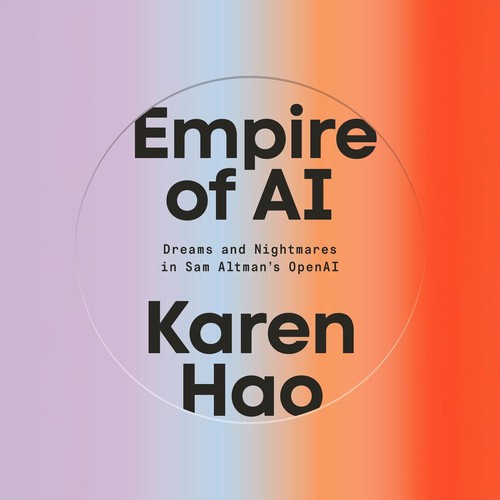
The definitive piece of investigative journalism on OpenAI: 260+ interviews, the clash between safety and speed, and the attempted firing of Sam Altma
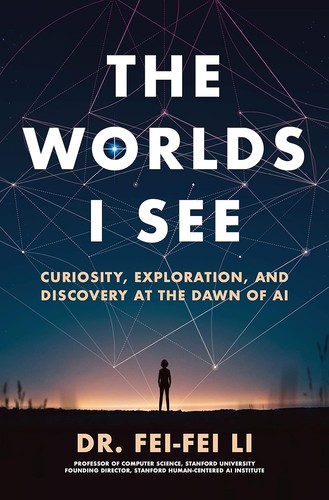
The memoir of the creator of ImageNet, the scientist who made the deep learning revolution in vision possible.
As an Amazon Associate, Zendoric earns from qualifying purchases; the price does not change for you. · all our recommended books →
🔗 Related on Zendoric