FOD#158: If we must act now on AI, what should we really do?

🕒 Published on Zendoric: July 15, 2026 · 08:41
This edition's editorial from Turing Post starts from a recent piece of news: more than 200 economists, AI researchers and tech leaders—among them at least 16 Nobel laureates and figures from OpenAI, Anthropic and Google—have signed a statement titled "We Must Act Now."
📚 Go deeper
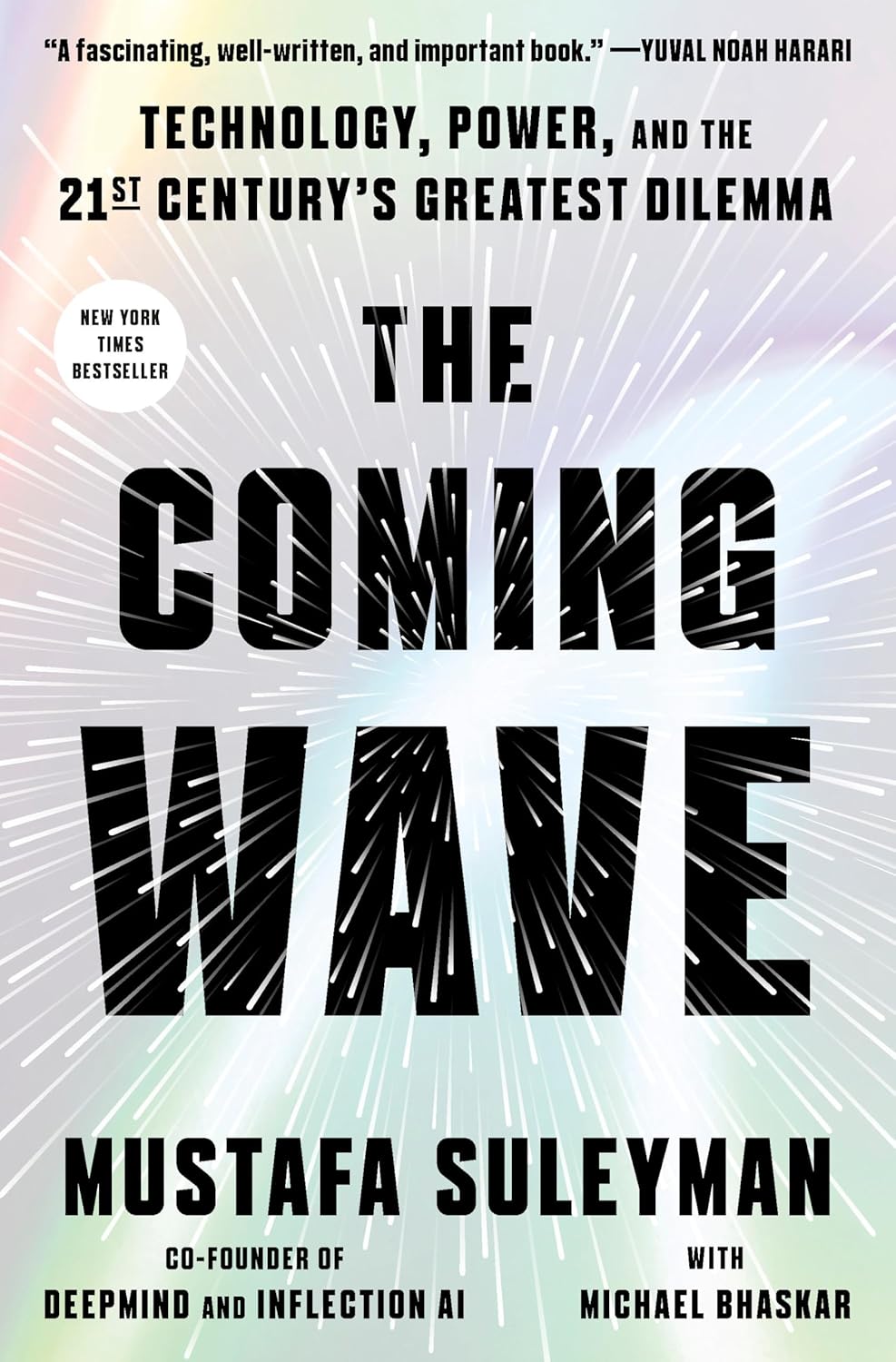
DeepMind co-founder on the dilemma of containing technologies that do not want to be contained.
As an Amazon Associate, Zendoric earns from qualifying purchases; the price does not change for you. · all our recommended books →
By Turing Post · July 13, 2026.
The editorial in this edition of Turing Post starts from a recent piece of news: more than 200 economists, AI researchers and tech leaders—among them at least 16 Nobel laureates and figures from OpenAI, Anthropic and Google—have signed a statement titled "We Must Act Now." Its central warning is that AI could transform the economy on a scale greater than the Industrial Revolution, but giving society far less time to adapt. The text notes that this transformation could bring major improvements in living standards, but also mass job displacement, and it calls for more research, as well as the incentives, safeguards and institutions needed for AI to complement humans and benefit society.
The author of the editorial notes that the "institutions" part is, in his view, one of the hardest challenges of the proposal: what exactly needs to be built? What should those institutions protect? What should they make possible? And what can already be tested, before the economic transformation turns a problem of institutional design into an emergency?
The email includes a quote from economist Anton Korinek to Reuters: "Steam, electricity and computers gave societies decades to adapt. AI may give us only a few years." According to Korinek, waiting for certainty amounts to arriving too late.
From there, the editorial reflects on the meaning of the word "abundance," so often used to describe the future promised by AI. It recalls that its Latin root (abundantia, abundare, linked to unda, "wave") points to the idea of overflowing, not simply of having a lot. A river that overflows can nourish a valley or destroy a town; if intelligence, labor and productive capacity begin to overflow the economic containers built around scarcity, the question is what channels are built to direct them.
According to the editorial, AI abundance could drastically cheapen analysis, software, education, scientific research, coordination and, eventually, some forms of physical labor. But it warns that productive capacity can overflow while access remains dammed up by ownership, subscriptions, infrastructure and political power: an economy can produce more than ever while much of its population experiences less security and bargaining power.
For that reason, the author argues that preparing for abundance requires more than planning for unemployment. Paid work does not only provide income: it organizes time, status, competence, discipline, social belonging and contribution. If paid employment ceases to be the default structure of life, cash transfers alone will not replace everything that employment provided. He calls this transition "post-necessity": a society in which survival depends less on continuous employment, even though people may keep working intensely—starting businesses, doing research, raising children, restoring forests, making films or spending years mastering difficult subjects—without necessity dictating every decision. The editorial stresses that there is very little institutional preparation today for that scenario.
As a deliberately uncomfortable proposal, the author raises the idea of "Aristocracy for All": historical aristocrats were among the few who did not organize their lives around survival labor, thanks to time, tutors, secretaries, land and networks. That aristocracy was deeply unequal and often grotesque, but it constitutes one of the closest historical archives we have for observing what people do when necessity no longer controls their time: some used that freedom to support art, science, politics and education; others turned it into status games, boredom, decadence and domination. The editorial concludes that freedom from necessity does not automatically produce human flourishing, but rather creates space both for flourishing and for passivity or resentment, and that the culture and institutions surrounding that freedom influence which path turns out to be appealing. A democratic version of that aristocracy would distribute the capacity for support (time, education, networks, tools and assistance) without the inherited rank.
From there comes the editorial's concrete proposal: a "Post-Necessity Institute," whose purpose would be to prepare society for AI abundance while that future is still uncertain enough to be shaped. It would combine historical research, speculative design, public infrastructure and long-running regional experiments, organized into four connected programs, of which this summary covers two:
The first program, "Culture and Human Purpose," starts from the fact that Demis Hassabis has described a successful post-AGI future as one of "radical abundance," and has said that philosophers, economists and social scientists are needed thinking about purpose and meaning before reaching that point. The editorial proposes using science fiction as a testing ground, in particular Iain M. Banks's Culture novels, because they do not present abundance as a clean utopia, but keep open the question of whether humans remain meaningful agents or become dependents cared for by superintelligent Minds. This program would combine those imagined futures with historical evidence on aristocracy, retirement, religious orders, welfare states, universal basic income experiments and communities that have been deindustrialized or built around strong public commons, with philosophers, historians, psychologists, artists, mathematicians and educators working alongside those who manage the Institute's practical programs, in order to translate the hidden assumptions in each version of abundance into institutions that can be tested.
The second program, "Public AI Labor," starts from the idea that aristocrats had domestic service, and proposes that a democratic version of abundance give ordinary people access to a basic level of non-human assistance. Libraries, schools, community colleges, legal aid centers, rural hospitals, small businesses and local governments could become access points to advanced AI capabilities; for example, a library card could give access both to AI tools and to trained human guidance to learn a subject, understand government bureaucracy, translate documents, prepare forms or research a medical query. This summary does not cover the detail of the Institute's other two programs.
The email also includes, outside the editorial, Turing Post's weekly agenda: on Friday they will continue the "The Org Age of AI" series and on Sunday they will publish in their Library section a list of "10 Small Language Models to Know in 2026."
📚 Go deeper

The only novel on the list, by a Nobel laureate: an artificial friend observes humans with a blend of lucidity and innocence no essay achieves.
An MIT computer scientist connects AI, quantum physics and video games to take an uncomfortable question seriously: what if we live in a simulation? M
As an Amazon Associate, Zendoric earns from qualifying purchases; the price does not change for you. · all our recommended books →
🔗 Related on Zendoric