Gartner: how CIOs should reinvent IT for the AI era heading into 2030

🕒 Published on Zendoric: July 6, 2026 · 00:04
✨ AI-generated · how it's made
The link leads to the registration page for a Gartner webinar ("Virtual Briefing: IT 2030: How CIOs Should Reinvent IT for the AI Age"), scheduled as a live session on July 28, 2026, lasting one hour.
📚 Go deeper
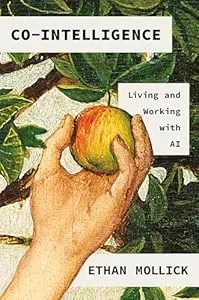
The best starting book if you're not technical: a Wharton professor explains how to work WITH AI — when to delegate, when to supervise, when to keep i
As an Amazon Associate, Zendoric earns from qualifying purchases; the price does not change for you. · all our recommended books →
The link points to the registration page for a Gartner webinar ("Virtual Briefing: IT 2030: How CIOs Should Reinvent IT for the AI Age"), scheduled as a live session on July 28, 2026, running one hour. It is not an article with its own analytical content, but rather a paid/invited-client registration landing page, so the analysis that follows is based solely on the promotional description of the event, not on the actual content of the session, which has not yet taken place nor been published.
According to the description, Gartner's central premise is that AI should not be understood simply as one more technology that delivers business value, but as a force that compels CIOs to comprehensively rethink how IT operates, how it delivers value, and how it prepares for the future. The firm poses open-ended and somewhat dramatic questions: will parts of the IT function as we know it disappear? Will new teams or capabilities emerge? The thesis is that the IT organization could be radically transformed by 2030, for better or worse, and that it falls to CIOs to deliberately lead that reinvention rather than passively endure it.
The briefing—invitation-only and free of charge—promises to address three major decision blocks for CIOs: first, defining a "north star" or long-term destination for the IT organization; second, establishing transition and reskilling plans specific to each function, aligned with that destination and with an appropriate pace of change; and third, going beyond simply having an "AI-ready" technology stack to build a roadmap toward a "democratization-ready" technology stack, that is, one prepared for AI use to spread widely within the organization beyond specialized technical teams.
The speakers include Brook Selassie, Distinguished VP Analyst at Gartner, and Walter Harmon, Senior Executive Partner and former IT leader, who will share his experience helping clients navigate this transition toward AI. The presence of a former CIO turned Gartner advisor suggests the approach will combine a conceptual framework with practical accounts of real-world implementation, although the specific content of those experiences is not detailed on the page.
From this newsletter's editorial perspective, the value of this piece is more indicative of a trend than informative in itself: it confirms that consultancies like Gartner continue to position 2030 as the reference horizon for AI-driven IT transformation, and that the axes of that transformation revolve around three recurring tensions in the current discourse on agentic and enterprise AI: the redefinition of which human and technical functions will remain necessary, the urgency of reskilling plans differentiated by area (not generic), and the conceptual leap from infrastructure that is simply AI-compatible toward infrastructure that enables its effective democratization within the enterprise.
Readers should be warned that, as this is a registration webinar with registration walls (a form for contact details, company, data-processing consent, etc.), no transcript, downloadable report, or concrete Gartner figures, studies, or data are available at this link: all the substantive content (the decision frameworks, examples of IT reinvention, or the well-known "Top CIO Challenges 2026" and other reports linked in the navigation) lies beyond the scope of this page and would only be accessible by registering or being a Gartner client. Therefore, any conclusion beyond what is summarized here would be speculation, and this summary deliberately confines itself to what the page itself announces about the content of the future webinar.
📚 Go deeper
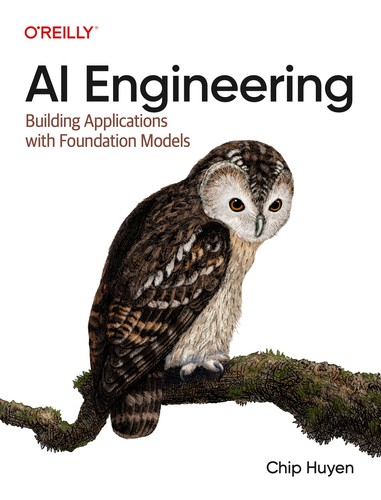
The reference manual for building products on top of AI models: prompts, RAG, fine-tuning, agents, evaluation and deployment.
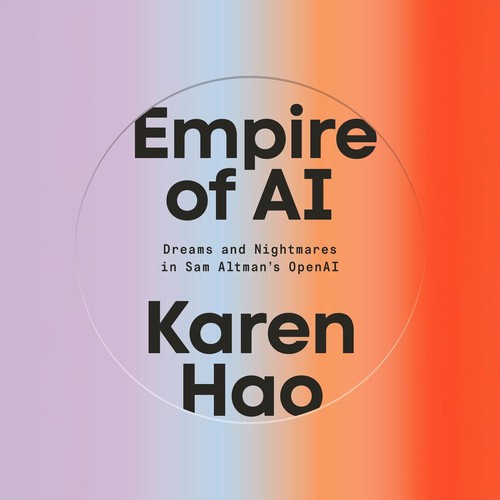
The definitive piece of investigative journalism on OpenAI: 260+ interviews, the clash between safety and speed, and the attempted firing of Sam Altma
As an Amazon Associate, Zendoric earns from qualifying purchases; the price does not change for you. · all our recommended books →
🔗 Related on Zendoric