An AI financial assistant born in Tandil exposes the real path of adoption: local niches, not global giants

🕒 Published on Zendoric: July 5, 2026 · 04:36
✨ AI-generated · how it's made
Three Unicen students created 'Manny,' an assistant that uses AI to classify expenses from simple messages, with no spreadsheets or manual categories. In four months it has amassed 26,000 users and 270 paying subscribers, a small but revealing case of how AI enters everyday life.
📚 Go deeper
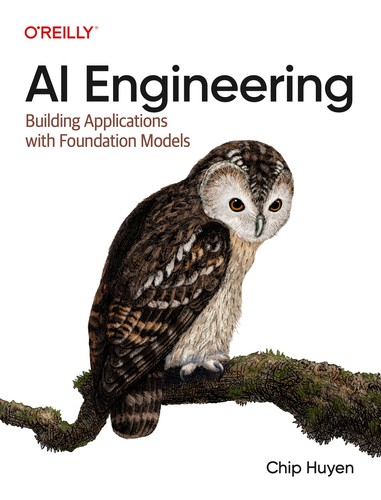
The reference manual for building products on top of AI models: prompts, RAG, fine-tuning, agents, evaluation and deployment.
As an Amazon Associate, Zendoric earns from qualifying purchases; the price does not change for you. · all our recommended books →
By El Eco (Tandil) · July 4, 2026.
Three students from the Faculty of Economic Sciences at Unicen —Lucienne Roca, Joaquín Mariano and Bianca Nasello— developed 'Manny', a financial assistant that interprets simple text messages and automatically classifies them, generates reports and organizes income and expenses, without the user having to open a traditional app and enter each transaction by hand. The project launched to market in March of this year and already has more than 26,000 users and around 270 paying subscribers, as Mariano told El Eco de Tandil.
The proposal does not reinvent personal finance: it replaces the friction of traditional spending apps (categories, fields, reminders) with natural language interpreted by an AI model. It is an application modest in ambition but effective at solving a very concrete problem: most people abandon expense-tracking apps because entering data manually is tiring. If AI does that invisible work, the barrier to adoption drops dramatically.
What makes this case interesting is not the technical sophistication —classifying text into categories is a task that today's language models handle with ease— but the speed and the origin: a public university in the Argentine interior, three undergraduate students, a product with thousands of real users and a conversion to paying customers (270 out of 26,000, just over 1%) that is already starting to validate a business model. It is proof that generative AI has lowered the cost of building useful software so much that you no longer need a team of engineers or venture capital to launch a viable product: it is enough to identify an everyday friction and a language-model API.
In general, this type of story —small, local, unspectacular— is the real thermometer of AI adoption, more so than the announcements from frontier labs. While public discussion focuses on who leads the benchmark of the moment among OpenAI, Anthropic or the Chinese models, the real transformation is happening in thousands of projects like 'Manny': tools that do not compete to be the smartest model in the world, but to solve a specific task with the intelligence already available. That democratization —anyone with programming knowledge and access to a model can build a functional financial product in months— is, in itself, an early manifestation of the abundance we champion as a long-term horizon: more people, with fewer resources, solving real problems for more people.
That said, it is worth keeping the scale in perspective: 26,000 users and 270 paying customers is an early-stage university startup, not a consolidated success story, and the AI-powered personal financial management sector is already competitive globally (from Mint to dozens of apps with integrated AI). Manny's merit lies in fast execution and fit to the problem, not in a sustainable technological advantage. Its future will depend on whether it manages to differentiate itself in a market where the barrier to entry, precisely thanks to AI, is increasingly low for everyone.
📚 Go deeper
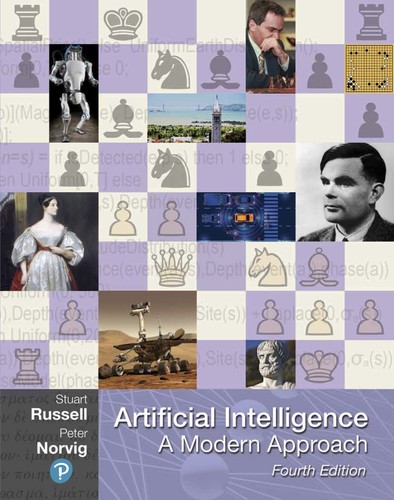
THE AI textbook: used by 1,500+ universities.

The academic "bible" of deep learning, with a Turing Award winner among its authors, and legally free on the web.
As an Amazon Associate, Zendoric earns from qualifying purchases; the price does not change for you. · all our recommended books →
🔗 Related on Zendoric
- When a decree shuts off an API: the Legion case exposes the fragility of building on a single AI provider · 2026-06-24
- Wall Street tests the AI promise: when two out of every three stocks rise and the index falls anyway · 2026-06-27
- Saudi Arabia reaps six medals at the first Asia-Pacific AI Olympiad: a sign that a young-talent strategy is paying off · 2026-06-29