Microsoft's Layoffs Amid AI Spending: The Capital-for-Labor Swap Made Visible

🕒 Published on Zendoric: July 2, 2026 · 08:26
✨ AI-generated · how it's made
Microsoft is reportedly weighing layoffs that could reach thousands even as its AI investment climbs. It's the clearest snapshot yet of capital being poured into machines while headcount is trimmed.
📚 Go deeper

The best starting book if you're not technical: a Wharton professor explains how to work WITH AI — when to delegate, when to supervise, when to keep i
As an Amazon Associate, Zendoric earns from qualifying purchases; the price does not change for you. · all our recommended books →
The reports are blunt: Microsoft could cut thousands of jobs at the same time it pours ever more money into AI infrastructure and models. Two lines on the same balance sheet are moving in opposite directions — spending up, headcount down — and that juxtaposition is exactly why this story resonates beyond one company.
The context matters. This is not a struggling firm slashing to survive; it's one of the best-capitalized companies on earth reallocating resources. When a market leader spends aggressively on AI while trimming staff, it signals a strategic bet that future output will lean more on compute and automation than on incremental hiring. That's the capital-for-labor substitution economists have long theorized, now showing up in a press release.
The short-term impact is real and should not be sugarcoated. Thousands of livelihoods, disproportionately in the roles most exposed to automation — administrative, routine, back-office — are the human cost of this transition. It's worth attributing carefully: these are reported plans, and 'AI spending is up' does not by itself prove 'AI caused the cuts.' Reorganizations have many drivers. But the pairing of the two narratives is what shapes perception across the industry, and perception drives more layoffs elsewhere.
Our reading: this is what the transition actually looks like — not a clean handoff but a messy, uneven reshuffling of where value is created. The uncomfortable truth is that the same investment displacing today's routine roles is also building the tools that could, over the long run, collapse the cost of software, discovery and healthcare toward abundance. The task for this decade is to make the bridge survivable: retraining, redeployment and honesty about who bears the cost now versus who benefits later. Companies that treat the human side of this swap as an afterthought aren't being efficient — they're externalizing the hardest part of the transition onto the very workers who built them.
📚 Go deeper
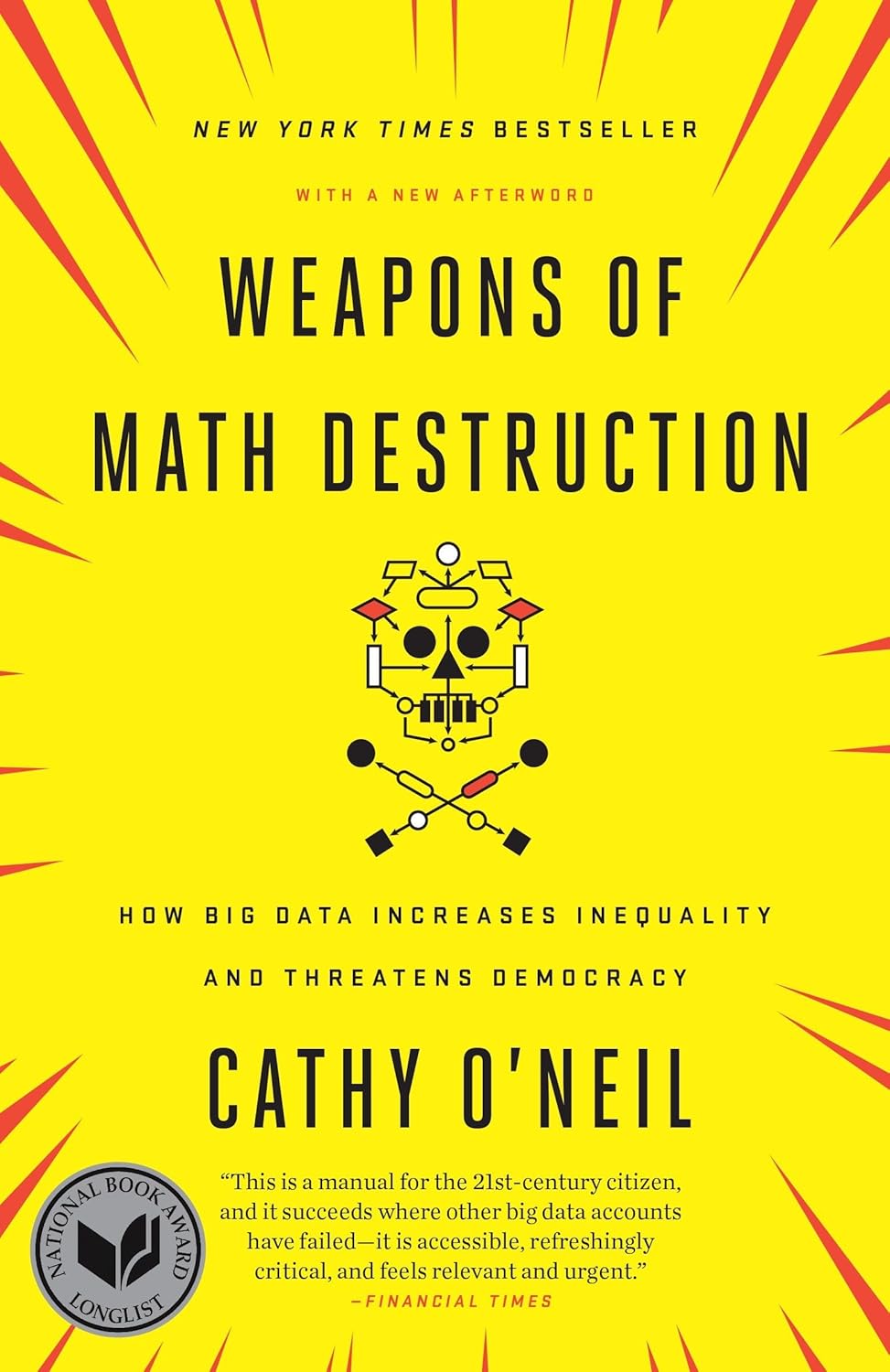
How opaque algorithms decide who gets credit, a job or parole — and why they tend to punish the same people.

The reference manual for building products on top of AI models: prompts, RAG, fine-tuning, agents, evaluation and deployment.
As an Amazon Associate, Zendoric earns from qualifying purchases; the price does not change for you. · all our recommended books →
🔗 Related on Zendoric