Microsoft's 4,800 Cuts Confirm the Pattern: AI Capex Is Rewriting Corporate Headcount

🕒 Published on Zendoric: July 7, 2026 · 03:25
✨ AI-generated · how it's made
Microsoft is cutting about 4,800 jobs — 2.1% of its workforce — restructuring its commercial and Xbox businesses as capital keeps shifting toward AI infrastructure. It's the latest entry in a documented wave of AI-linked layoffs that Reuters has been tracking since October 2025, and it puts hard numbers behind a trend economists have been warning about for months.
📚 Go deeper

The best starting book if you're not technical: a Wharton professor explains how to work WITH AI — when to delegate, when to supervise, when to keep i
As an Amazon Associate, Zendoric earns from qualifying purchases; the price does not change for you. · all our recommended books →
Microsoft announced it is cutting roughly 4,800 jobs, about 2.1% of its workforce, as part of a restructuring of its commercial and Xbox divisions. In a memo to staff, Chief People Officer Amy Coleman said AI is changing how work gets done by automating routine tasks, while framing the cuts as part of a broader realignment of resources with the company's priorities. Reuters places this within a running tally of AI-linked layoffs across the global economy dating back to October 2025 — Microsoft joins a list of major companies making similar moves as capital increasingly flows toward AI infrastructure rather than headcount.
What makes this notable isn't the size of the cut — 4,800 jobs is modest relative to Microsoft's scale — but the explicit causal link the company draws between AI adoption and workforce restructuring. That's no longer speculative commentary from analysts; it's now standard language in corporate memos, a sign that 'we're reallocating toward AI' has become an accepted, almost routine justification for layoffs, the way 'cost synergies' functioned in past merger waves.
The broader pattern Reuters is tracking matters more than any single company's numbers. When job cuts get formally cataloged as 'AI-linked layoffs' by a wire service, it signals that this is now a recognized economic category, not an isolated anecdote. It also lines up with warnings from investors and economists that automation exposure is concentrated in specific functions — administrative, back-office, and routine commercial roles — rather than spread evenly across the economy, which is consistent with what we've been documenting sector by sector: the roles most at risk are the ones built on repeatable process, not judgment or relationship.
Our reading: this is exactly the kind of short-term cost we don't sugarcoat. Real people are losing real jobs, and companies are using AI-driven efficiency as a genuine budget lever, not just a talking point for investors. But it's worth keeping the two time horizons separate. In the near term, this is a redistribution of capital away from labor and toward infrastructure — GPUs, data centers, model training — that will keep squeezing administrative and routine-commercial roles for the next several years. In the long run, the same infrastructure buildout is the foundation for the abundance case: cheaper compute and more capable AI systems eventually make possible the medical, scientific, and productivity gains that justify all this spending in the first place. The uncomfortable truth is that we're living through the expensive, disruptive middle of that transition — and pretending otherwise would be exactly the kind of naive optimism we try to avoid.
📚 Go deeper

The story of NVIDIA and Jensen Huang: how a video-game card company ended up making the most coveted resource on the planet.
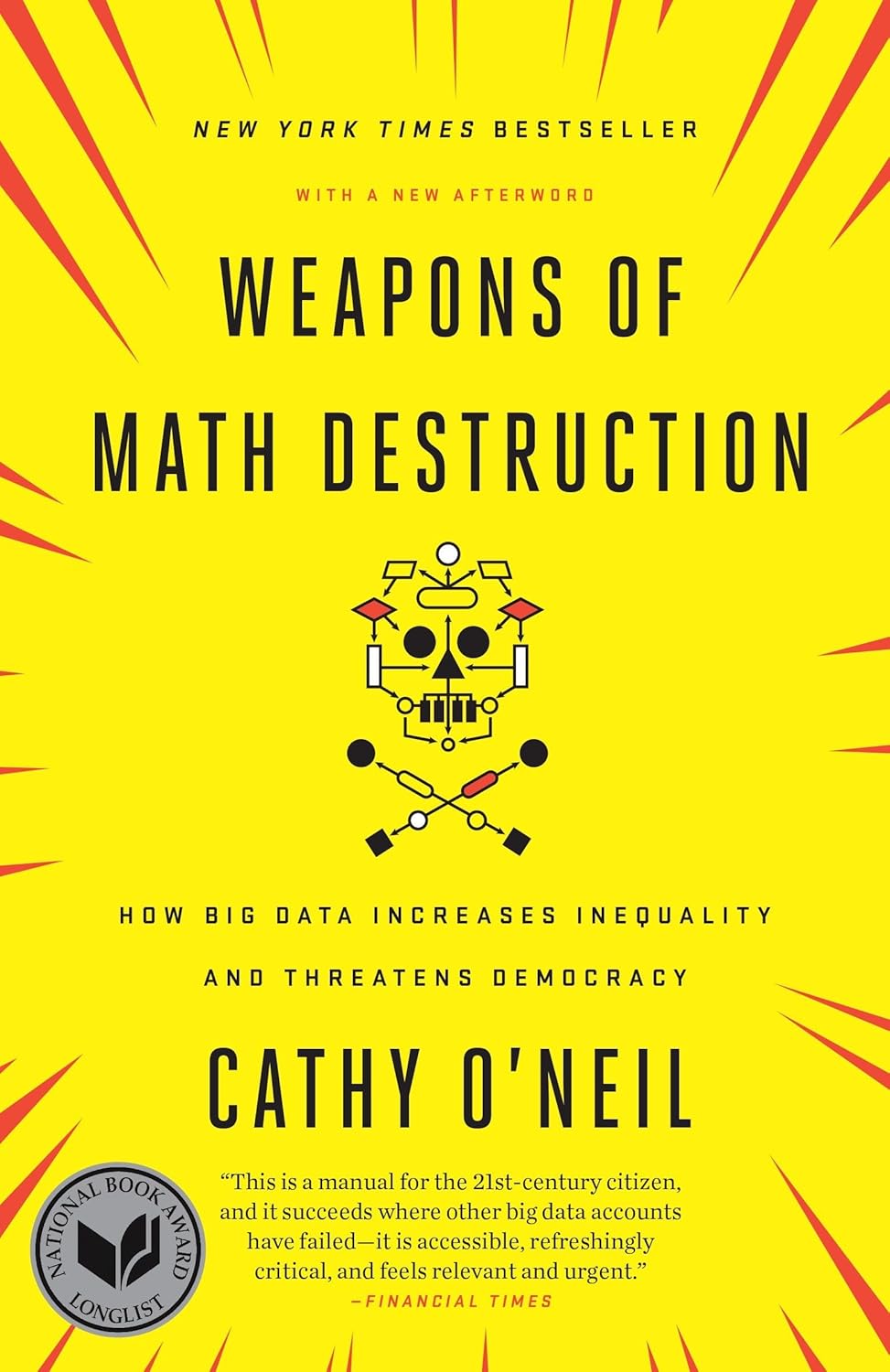
How opaque algorithms decide who gets credit, a job or parole — and why they tend to punish the same people.
As an Amazon Associate, Zendoric earns from qualifying purchases; the price does not change for you. · all our recommended books →
🔗 Related on Zendoric