Meta's Autodata: when models learn to create their own lessons

🕒 Published on Zendoric: July 2, 2026 · 08:26
✨ AI-generated · how it's made
The TheSequence newsletter devotes its "AI of the Week #887" edition to discussing a paper published by Meta the previous week, titled Autodata, available on arXiv (arxiv.org/abs/2606.25996).
📚 Go deeper
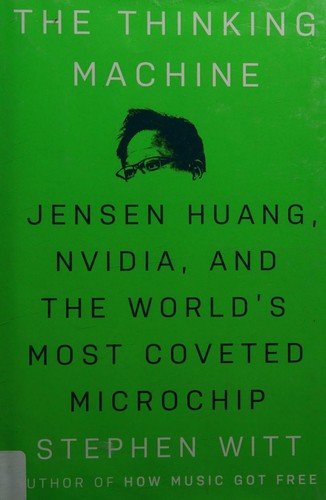
The story of NVIDIA and Jensen Huang: how a video-game card company ended up making the most coveted resource on the planet.
As an Amazon Associate, Zendoric earns from qualifying purchases; the price does not change for you. · all our recommended books →
Via TheSequence · July 1, 2026.
TheSequence newsletter devotes its "AI of the Week #887" edition to discussing a paper published by Meta the previous week, titled Autodata, available on arXiv (arxiv.org/abs/2606.25996).
According to the email, a quiet shift is underway in the training of AI systems. For years, the center of gravity of progress in AI has been the model: more parameters, more GPUs, better architectures, longer context windows, better optimizers. Data mattered, of course, but it was usually treated as something that came before the real work: it was scraped, filtered, labeled, perhaps carefully blended, and then the actual training began.
Meta's new work, Autodata, turns that perspective around. The core idea, as the email describes it, is simple but powerful: what if the creation of data itself became an agentic process? It would not be a one-shot prompt, nor a static synthetic-data recipe, nor "asking a powerful model to generate a million examples and hoping the resulting distribution is useful." Instead, Autodata treats data generation as a small research loop in miniature.
Under this scheme, an AI agent creates examples, tests them, studies the failures, updates its generation recipe, and tries again. In other words, the very process of producing training data becomes an iterative, autonomous cycle of testing, evaluation, and improvement, rather than a fixed step disconnected from the rest of training.
The available excerpt of the email stops at this introductory point, presenting the general concept of Autodata as a conceptual shift: moving from seeing data as a static input to seeing it as the product of a continuous agentic process, in which an AI agent takes on the role of a researcher who designs, tests, and refines its own training materials.
📚 Go deeper
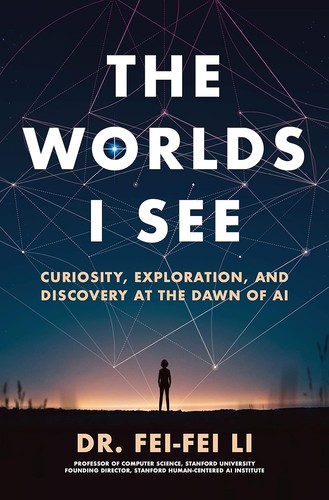
The memoir of the creator of ImageNet, the scientist who made the deep learning revolution in vision possible.
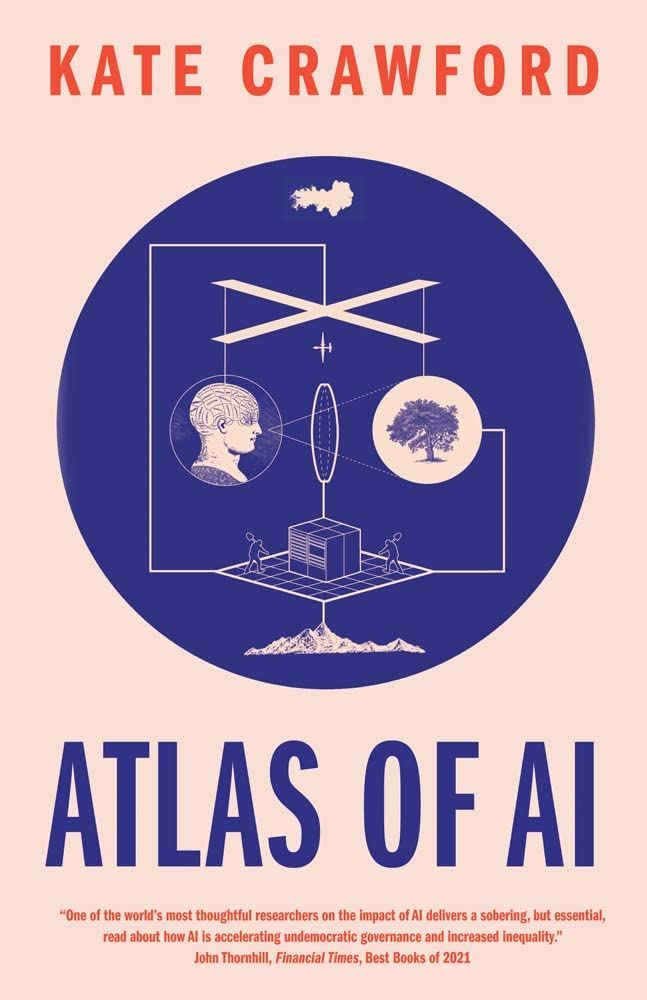
AI as an extractive industry: the lithium, the energy, the underpaid data-labeling work and the bodies behind the cloud.
As an Amazon Associate, Zendoric earns from qualifying purchases; the price does not change for you. · all our recommended books →
🔗 Related on Zendoric