OpenAI goes down to the silicon: 'Jalapeño' and the bet on controlling the entire intelligence chain
🕒 Published on Zendoric: June 26, 2026 · 09:00
✨ AI-generated · how it's made
OpenAI and Broadcom unveil Jalapeño, the first inference chip designed by OpenAI itself. Nine months from design to fabrication, and models used to design the hardware: AI's vertical integration is accelerating, though the final figures are yet to be published.
📚 Go deeper
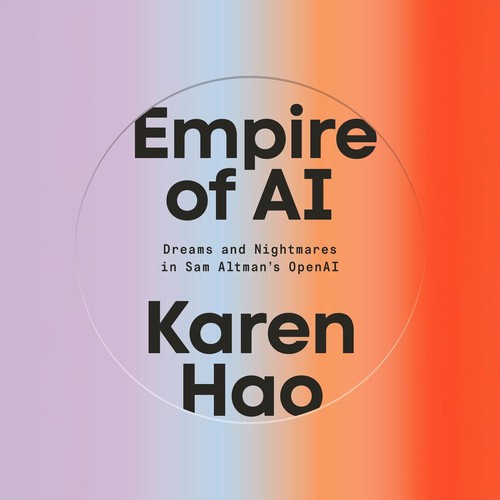
The definitive piece of investigative journalism on OpenAI: 260+ interviews, the clash between safety and speed, and the attempted firing of Sam Altma
As an Amazon Associate, Zendoric earns from qualifying purchases; the price does not change for you. · all our recommended books →
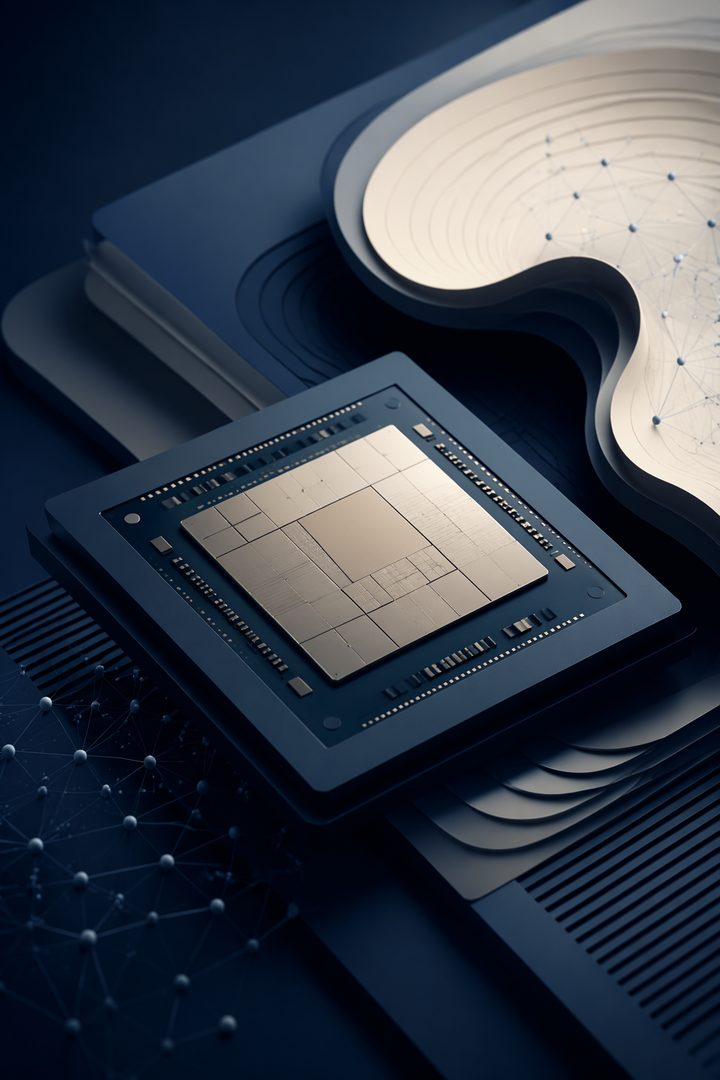
The news that OpenAI has its own chip is best understood by reading the gesture that accompanies it. On June 24, Broadcom's Hock Tan and Charlie Kawwas physically handed the first Jalapeño to Sam Altman and Greg Brockman. Beyond the corporate stagecraft, the act seals a deeper strategic move: OpenAI wants to stop being merely a customer for other companies' accelerators—NVIDIA, unnamed, hovers over the entire announcement—and to have its own say in the silicon layer that runs its models. It is the logic of vertical integration applied to AI: whoever controls the model, the product and now the chip controls their own destiny and their own margins.
The technical argument that runs through the statement is that Jalapeño is a 'blank-sheet design' conceived from scratch for language-model inference, and not a generic accelerator repurposed. Richard Ho, OpenAI's head of hardware, explains that the chip was optimized around the kernels, memory movement, interconnects and serving patterns that really matter in production. The goal is to close the so-called 'utilization gap,' that chronic distance between an accelerator's theoretical performance and what it actually exploits under real load. It makes sense: no one knows the workloads of ChatGPT, Codex or the API better than whoever runs them daily at massive scale.
The most striking figure is the speed: nine months from design to tape-out, compared with the usual two to four years for complex chips. OpenAI presents it as, in its view, the fastest ASIC cycle ever achieved in high-performance semiconductors; it is worth taking as a company claim, still without independent verification. What is truly significant is how they did it: they used their own AI models to accelerate parts of the design. There is a recursiveness here that captures the moment the sector is living through: AI is beginning to design the infrastructure that will run the next AI. If that spiral holds, the cost of advanced computing could fall for the whole industry, not just for OpenAI.
On performance, it is worth being scrupulous about what has been said and what has not. The engineering samples already run real workloads in the lab—including GPT-5.3-Codex-Spark—at the target frequency and power, and OpenAI claims performance per watt 'substantially better' than the current state of the art. But the company itself acknowledges that it is still measuring the final figures and that it will publish a technical report in the coming months. Put another way: the promise is concrete, the numbers not yet. The prudent reader will wait for that report before accepting any comparison.
Energy efficiency, once again, is the real battleground. With data centers consuming gigawatts to serve intelligence, performance per watt has ceased to be a marketing argument and become an operational and environmental constraint. If Jalapeño delivers, it not only makes OpenAI's service cheaper: it pushes down the energy cost of all interactive inference at scale, which is precisely the kind of load generated by conversational and agentic products.
The division of roles completes the picture and makes it credible. OpenAI keeps the architecture for itself; Broadcom provides the silicon implementation and its Tomahawk networking technology; Celestica integrates boards, racks and systems. It is the division of labor of a company that wants to design without becoming a foundry. The big unknown left hanging is what this move means for the balance of the accelerator market, today dominated by a single player. This is not an immediate frontal challenge, but it is an unmistakable signal: the major labs are no longer content to buy the engine of their intelligence; they want to build it.
📚 Go deeper
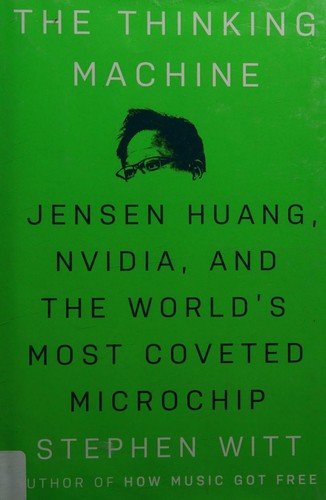
The story of NVIDIA and Jensen Huang: how a video-game card company ended up making the most coveted resource on the planet.
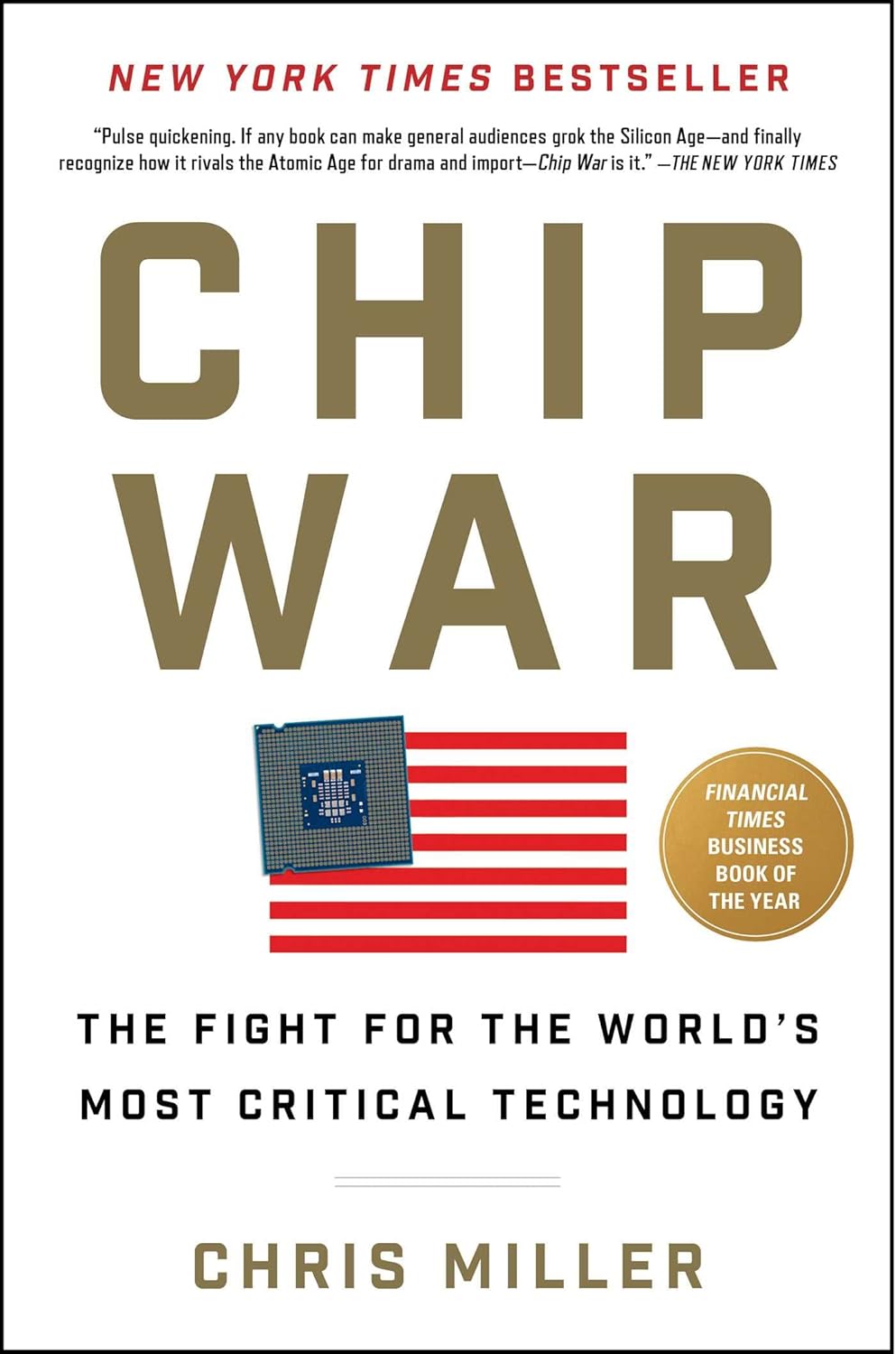
Semiconductors as the oil of the 21st century: history, espionage, and why an island of 23 million people underpins the entire AI economy.
As an Amazon Associate, Zendoric earns from qualifying purchases; the price does not change for you. · all our recommended books →
🔗 Related on Zendoric
- With 'Jalapeño,' OpenAI stops being just a silicon customer and becomes the architect of its own infrastructure · 2026-06-26
- IBM and the sub-1 nanometer frontier: the silicon race reorders itself around AI · 2026-06-27
- Edge inference matures: how choosing power mode and backend makes up to a 74% difference in tiny models · 2026-06-28