Hotmart tests the abundance thesis: AI agents that sell and collect payments for the creator

🕒 Published on Zendoric: July 2, 2026 · 08:26
✨ AI-generated · how it's made
In Medellín, Hotmart unveiled five agentic AI products that already sell, collect payments and tutor for thousands of content creators in Latin America. The case illustrates, in miniature, how automation can scale individual businesses without expanding staff —and which support jobs fall by the wayside.
📚 Go deeper
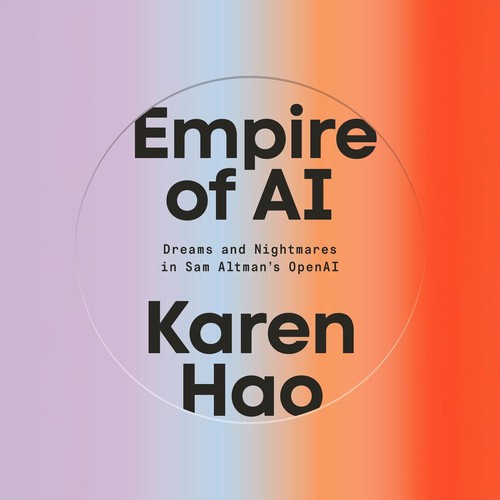
The definitive piece of investigative journalism on OpenAI: 260+ interviews, the clash between safety and speed, and the attempted firing of Sam Altma
As an Amazon Associate, Zendoric earns from qualifying purchases; the price does not change for you. · all our recommended books →
By DPL News · July 1, 2026.
At Hotmart FIRE Sessions Colombia 2026, held in Medellín before 2,500 attendees, the Brazilian creator-economy platform unveiled five artificial intelligence products already running in production: a Sales Agent (5,000 producers, more than 7,000 interactions), a Collections Agent operating via WhatsApp and email (2,000 creators, 86,000 sales impacted), a Tutor launched in 2024 (20,000 creators, one million students, 7 million interactions) and HotLeads, the event's novelty: an agent that trains on the creator's own content to distinguish buyers from mere visitors and create new products —training plans, materials, templates— in minutes. According to Hotmart, some 6,000 creators are already selling with this latest agent.
These figures come from the company itself, without external audit, and it is worth taking them for what they are: marketing material from a firm that has grown from two founders to more than 1,600 employees and from $70,000 processed in a year to $200 million in a single month, as recounted by its Product director, Leandro Salgado. That growth is no accident: Hotmart was born in 2011, when the creator economy barely existed, and over fifteen years it has built the payment, courses and community infrastructure that today sustains millions of people selling knowledge on the internet. That is the real context behind the announcement: it is not an isolated AI launch, it is the automation layer that a consolidated platform is adding to a mature business.
The most telling data point of the event came not from Hotmart but from Neil Patel, co-founder of NP Digital, who spoke of a transition already completed: from 'let's google it' to 'I've got it,' with 94.4% of users searching across multiple channels and —a figure to read cautiously but that points in a clear direction— eight out of ten people in Latin America already using AI assistants. His advice to creators was blunt: if your brand does not appear in ChatGPT, you lose customers, and the discipline required to achieve it (GEO, Generative Engine Optimization) demands being findable, trustworthy and relevant to a generative engine, not just to a traditional search engine.
Our read is that this case, modest in appearance, neatly captures the transition we have been describing in the sector-by-sector employment series: Hotmart's explicit promise —that creators 'will be able to scale without growing their teams'— is the abundance of our long-term thesis applied on a small scale. A trainer, a coach or an individual creator can today manage sales, collections and student support with an infrastructure that previously required a full administrative team. That democratizes access to doing business with one's own knowledge, without depending on intermediaries or costly staff, and fits the logic that AI frees up capacity to devote to what one knows how to do —teach, create, sell one's own expertise— rather than to operational management.
But the short term has its uncomfortable side: every agent that sells or collects on behalf of a creator is, on the other side of the equation, a virtual assistant, a collections clerk or a human community manager who is no longer needed. In an ecosystem with more than 1,600 employees of its own and millions of end users in Latin America, automating the back office of the creator economy is not neutral: it reduces the need to hire administrative support precisely in the employment segment most exposed to AI, the one we already flagged in banking, insurance and business administration. The productivity gain for the creator-entrepreneur coexists with the contraction of a type of auxiliary employment that until now accompanied the growth of these businesses.
The other thread the event leaves is the consolidation of GEO as a new layer of digital distribution: if conversational assistants replace the search engine as the entry point, the battle for visibility is now fought over how a generative engine understands and recommends a product, not over classic Google rankings. It is the same 'plumbing' dynamic we already identified in the dispute among major platforms: whoever controls how AI assistants recommend products and creators will have a structural advantage, and that makes RAG and AI optimization competencies as strategic as SEO was for two decades.
📚 Go deeper
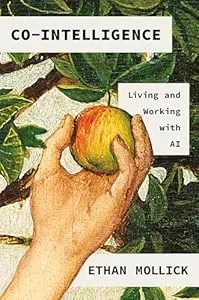
The best starting book if you're not technical: a Wharton professor explains how to work WITH AI — when to delegate, when to supervise, when to keep i
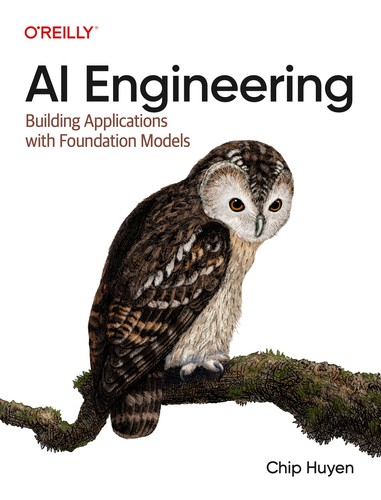
The reference manual for building products on top of AI models: prompts, RAG, fine-tuning, agents, evaluation and deployment.
As an Amazon Associate, Zendoric earns from qualifying purchases; the price does not change for you. · all our recommended books →
🔗 Related on Zendoric
- Agentic AI reaches Latin America's family-run small businesses: the challenge isn't the technology, it's governance · 2026-07-28
- Nutanix bets on governing AI agents before token spending spirals out of control · 2026-07-04
- The stall of AI agents at Meta dismantles the myth of immediate employee replacement · 2026-07-04