Google rations Meta's access to Gemini: AI demand overwhelms even the giant's infrastructure

🕒 Published on Zendoric: June 28, 2026 · 09:00
✨ AI-generated · how it's made
Google has imposed limits on Meta's use of its Gemini models, according to the Financial Times, due to the pressure AI demand places on its capacity. The episode shows that not even the world's largest data center operator escapes infrastructure bottlenecks.
📚 Go deeper
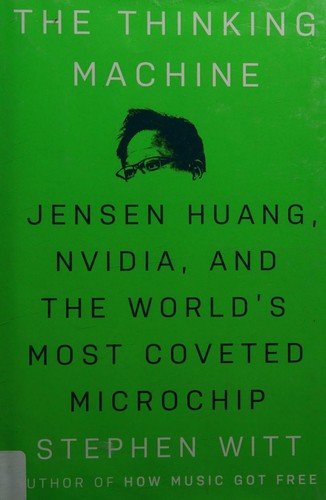
The story of NVIDIA and Jensen Huang: how a video-game card company ended up making the most coveted resource on the planet.
As an Amazon Associate, Zendoric earns from qualifying purchases; the price does not change for you. · all our recommended books →
By Zendoric · June 28, 2026.
According to the Financial Times, Google has capped the volume of usage that Meta can make of Gemini, its family of artificial intelligence models, arguing that global demand is stretching its computing capacity to the limit. The fact itself is brief, but the reading it allows is striking: Meta—one of Google's biggest competitors in the generative AI space—appears as a customer or technology partner of Gemini, and Google has had to impose rationing even on a player of that caliber.
The fact that Meta turns to Google's models while developing its own Llama line of open models is not as contradictory as it seems. Big tech companies routinely cross their ecosystems when there is tactical convenience or a capacity gap to fill quickly. But for Google, which operates one of the largest AI infrastructure fleets in the world, to be forced to set caps on a top-tier customer is an unmistakable sign that the race for inference capacity has become the sector's real bottleneck.
As sector context, scarcity is nothing new: since 2023 the debate over chips, data centers and energy has dominated much of the strategic conversation around AI. What this news adds is a different dimension: it is not only that startups can't get GPUs, but that even deals between giants have physical and operational limits. AI infrastructure does not scale instantly, no matter how much big tech's capex spending has reached historic figures in recent years.
For the industry, the episode has several implications. First, it reinforces the thesis that competitive advantage in AI lies not only in algorithms but in guaranteed, at-scale access to inference infrastructure. Companies that do not control their own computing capacity are vulnerable to others' restrictions at moments of peak demand. Second, it shows that even Google—which sells access to Gemini through its cloud platform—has to manage demand that exceeds its forecasts or its current installed capacity.
Third, and perhaps most relevant in the long term: if Google rations Meta's access, a strategic partner of enormous weight, one has to wonder what happens to the thousands of mid-sized companies and startups that also depend on Gemini's APIs for their products. The reliability of AI infrastructure providers becomes an operational risk factor that any company built on these platforms should take into account in its planning.
The episode also sheds light on the competitive dynamics among the hyperscalers themselves: Google, Microsoft, Amazon and Meta compete fiercely for the same enterprise AI market, but at the same time interconnect as mutual customers and suppliers when resources are scarce. This tension between competition and mutual dependence is not going to be resolved soon; it will probably intensify as next-generation models demand even greater volumes of computing.
Given the limited information available—the original article is behind a paywall and the specific details of the deal or the usage volume are not public—it is wise not to extrapolate too much. But the direction of the headline is clear enough: AI demand is growing faster than the infrastructure capable of sustaining it, and that has real consequences, even for the biggest players on the board.
📚 Go deeper

Semiconductors as the oil of the 21st century: history, espionage, and why an island of 23 million people underpins the entire AI economy.

The best starting book if you're not technical: a Wharton professor explains how to work WITH AI — when to delegate, when to supervise, when to keep i
As an Amazon Associate, Zendoric earns from qualifying purchases; the price does not change for you. · all our recommended books →
🔗 Related on Zendoric
- Google rations Meta's access to Gemini: compute capacity, not talent, is the new bottleneck · 2026-07-03
- Anthropic points the finger at Alibaba: the AI frontier is starting to defend itself with lawyers, not just code · 2026-06-25
- Nokia brings Gemini agents to the network: automating without taking the engineer out of the loop · 2026-06-24