Aetrex and 50 million feet: how a cheaper scanner turns a biomechanical data point into a competitive edge
🕒 Published on Zendoric: June 27, 2026 · 09:00
✨ AI-generated · how it's made
With the Zoe Pro, a thousand dollars more affordable than its bigger sibling, Aetrex is not just selling a scanner: it is extending a foot-data capture network that already totals 12,000 devices and half a hundred million scans. The real story is not the hardware, but what AI does with it.
📚 Go deeper

The reference manual for building products on top of AI models: prompts, RAG, fine-tuning, agents, evaluation and deployment.
As an Amazon Associate, Zendoric earns from qualifying purchases; the price does not change for you. · all our recommended books →
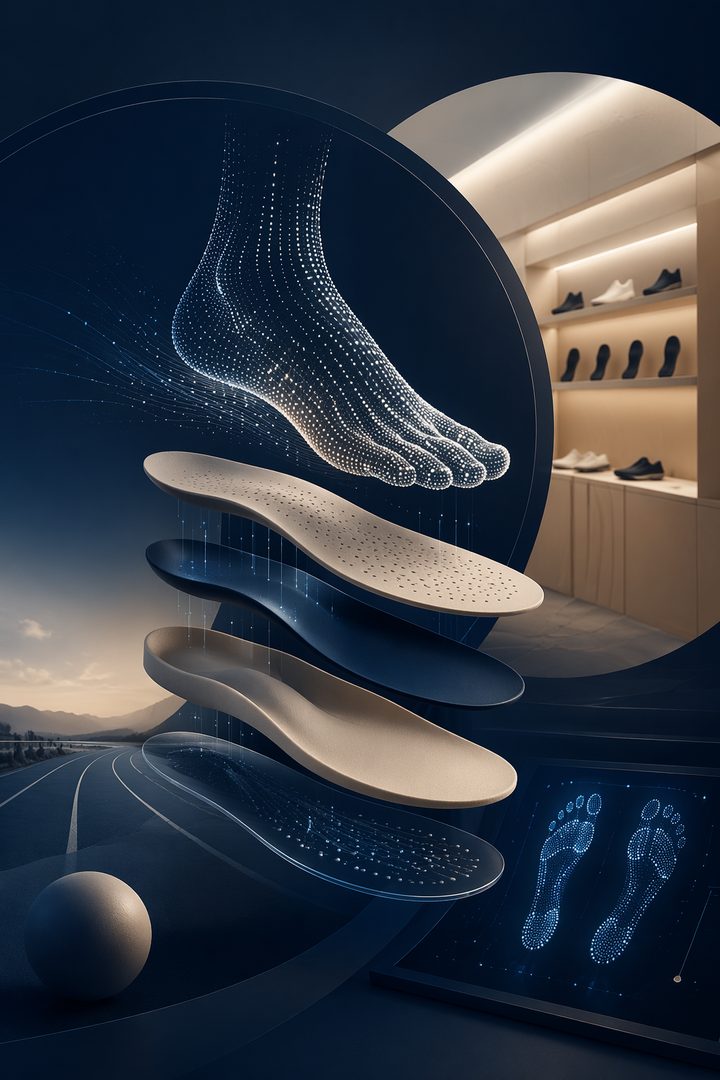
Some innovations are announced with a fanfare and others are better understood by looking at the infrastructure they leave behind. Aetrex's new Zoe Pro 3D scanner belongs to the second category. At $1,995—a thousand below the Albert Pro, its flagship model—it keeps the 16 key foot measurements and plantar-pressure analysis, but lowers the barrier to entry so that more retailers can install it. The price is not a detail: it is the strategy. Each additional scanner is a new data-capture point.
The functional novelty is the preinstalled Fit AI software, which cross-references the customer's anatomy with the footwear actually available in the store, paired with a conversational assistant—by voice or text—that acts as a virtual sales clerk. Integration with the Heeluxe system incorporates the biomechanical data of each shoe model, and when these are missing, the manufacturer itself can supply them. It is a circle that closes on its own: the more players take part, the more useful the system becomes for everyone.
But the decisive asset is not visible in the store. Aetrex has accumulated more than 50 million unique scans since 2002 across a network of more than 12,000 devices, with retailers such as DSW, Puma, Foot Locker, Nordstrom and Schuler Shoes among those that have already activated Fit AI, according to its CEO, Larry Schwartz. That corpus is the fuel for the models: the larger the base, the more refined the recommendation, and the harder it is for any latecomer competitor to replicate. It is the classic network effect applied, literally, to the footprint.
The human dimension of the rollout adds texture to the story. In June 2026, Aetrex brought foot screenings to the U.S. Special Olympics with twelve Albert Pro scanners in the Athletes' Village and free orthotics for every athlete; that same month it sealed an agreement with IMG Academy to scan its 1,800 student athletes a year. The same technology that serves elite performance attends to communities with special needs: when a tool is good, its value knows no categories.
The most sophisticated part, however, is what the company does with the aggregated data. Through its Foot.com portal, brands can consult the real morphology of the population—what, for example, the most common women's size 7 looks like—and design optimized lasts from the outset. There AI takes a qualitative leap: it no longer merely recommends the footwear that exists, but informs what footwear should exist. Fewer failed prototypes, less waste, more market success.
Schwartz has been transparent about the roadmap: there will be no new hardware until sometime in 2027, so the focus is on software, the AI assistant and a mobile app with an imminent launch. If part of the analysis were to be done from the phone's camera—a trend already present in the sector—the scale would multiply far beyond the store's walls. The Aetrex case neatly sums up where applied AI is heading: hardware that captures, models trained on proprietary data, and assistants that translate all of it into a concrete decision. The question is no longer whether AI personalizes, but who owns the data that makes it useful.
📚 Go deeper
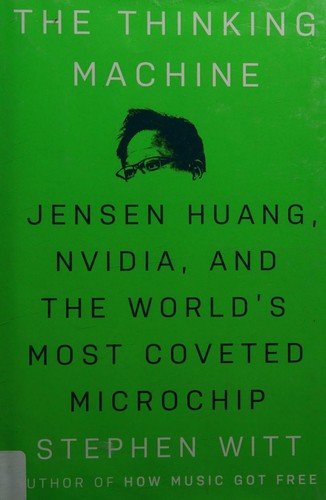
The story of NVIDIA and Jensen Huang: how a video-game card company ended up making the most coveted resource on the planet.

Semiconductors as the oil of the 21st century: history, espionage, and why an island of 23 million people underpins the entire AI economy.
As an Amazon Associate, Zendoric earns from qualifying purchases; the price does not change for you. · all our recommended books →
🔗 Related on Zendoric
- Anthropic bets on trust as a brand: the ad campaign that turns fear of AI into a selling point · 2026-07-11
- When Grief Meets Generative AI: Spain's Missing-Pet Scam Shows Fraud's New Playbook · 2026-07-03
- An Unverified Tweet Is Moving AI Market Odds—Treat Anthropic's 'Next Week' Model as Rumour · 2026-07-13