When an AI model becomes an export good, the border is no longer physical

🕒 Published on Zendoric: June 24, 2026 · 09:00
✨ AI-generated · how it's made
Legion, a U.S. LegalTech company, has sued the U.S. government for cutting off its Canadian developers' access to Fable 5 and Mythos 5. The lawsuit tests something new: applying export controls to intangible models served via API.
📚 Go deeper

The story of NVIDIA and Jensen Huang: how a video-game card company ended up making the most coveted resource on the planet.
As an Amazon Associate, Zendoric earns from qualifying purchases; the price does not change for you. · all our recommended books →
There are moments when a court case stops being a dispute between parties and becomes a map of where an industry is headed. The lawsuit that Legion, a US-based legal technology company, filed on June 23, 2026 in a federal court in Washington has that quality. The target of the litigation is not Anthropic, but the US Government, over the order that forced the company to shut off worldwide access to its most advanced models —Fable 5 and Mythos 5, of the Claude family— for foreign citizens, leaving out Legion's Canadian developers.
The choice of defendant is telling. By taking action against the Administration and not against the provider, Legion implicitly acknowledges that Anthropic acted in compliance with a legal obligation, not out of commercial will. The underlying conflict is more interesting than the allocation of blame: it pits the logic of export controls, designed to prevent adversarial powers from accessing sensitive technology, against the reality of American companies that operate with teams distributed across allied countries. According to Legion's argument, its Canadian engineers work for a US company and for the benefit of US clients, so the restriction penalizes them without a clear national security risk.
The qualitatively new nuance lies in the restricted item. Previous control measures —such as those affecting NVIDIA's AI chips bound for certain destinations— fell on tangible hardware, goods that cross customs. Applying that same doctrine to a software model changes the rules: the 'export' can be completed with a simple access to an API from abroad. Drawing that border around an intangible good is a delicate legal exercise, and that is precisely where this case could gain value as a reference point.
What is at stake goes beyond Legion. These models have become critical infrastructure for entire sectors, and in LegalTech they power agentic workflows —document analysis, automated research, litigation assistance— that depend on advanced capabilities. When that access is suddenly cut off, it is not a single function that falls but entire automation systems. The distinction the court will have to weigh, between 'foreign professional working for an American company' and 'adversarial foreign entity', is not rhetorical: it defines the degree of friction the entire industry will face in managing international access.
Looked at positively, this type of litigation serves a healthy calibration function. A general-purpose technology needs rules to discipline its circulation, but it also needs those rules to be subjected to court scrutiny to avoid disproportionate collateral damage. Whatever the outcome —limiting the scope of restrictions on APIs or validating the Executive's approach—, the case law that emerges will give companies like OpenAI, Google DeepMind or xAI a more predictable framework for how to serve their models to the world. And predictability, in such new terrain, is already a form of progress.
📚 Go deeper

The reference manual for building products on top of AI models: prompts, RAG, fine-tuning, agents, evaluation and deployment.
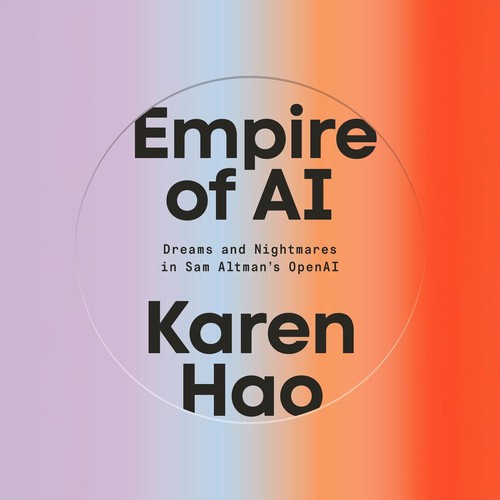
The definitive piece of investigative journalism on OpenAI: 260+ interviews, the clash between safety and speed, and the attempted firing of Sam Altma
As an Amazon Associate, Zendoric earns from qualifying purchases; the price does not change for you. · all our recommended books →
🔗 Related on Zendoric
- Mythos and Fable: when the U.S. applies 20th-century export controls to 21st-century AI models · 2026-06-28
- The deal Anthropic is negotiating with Washington reopens an uncomfortable question: how do you control the export of something that travels in a file · 2026-06-27
- When the state shuts down a model: the Fable 5 case redefines who's in charge of frontier AI · 2026-06-25