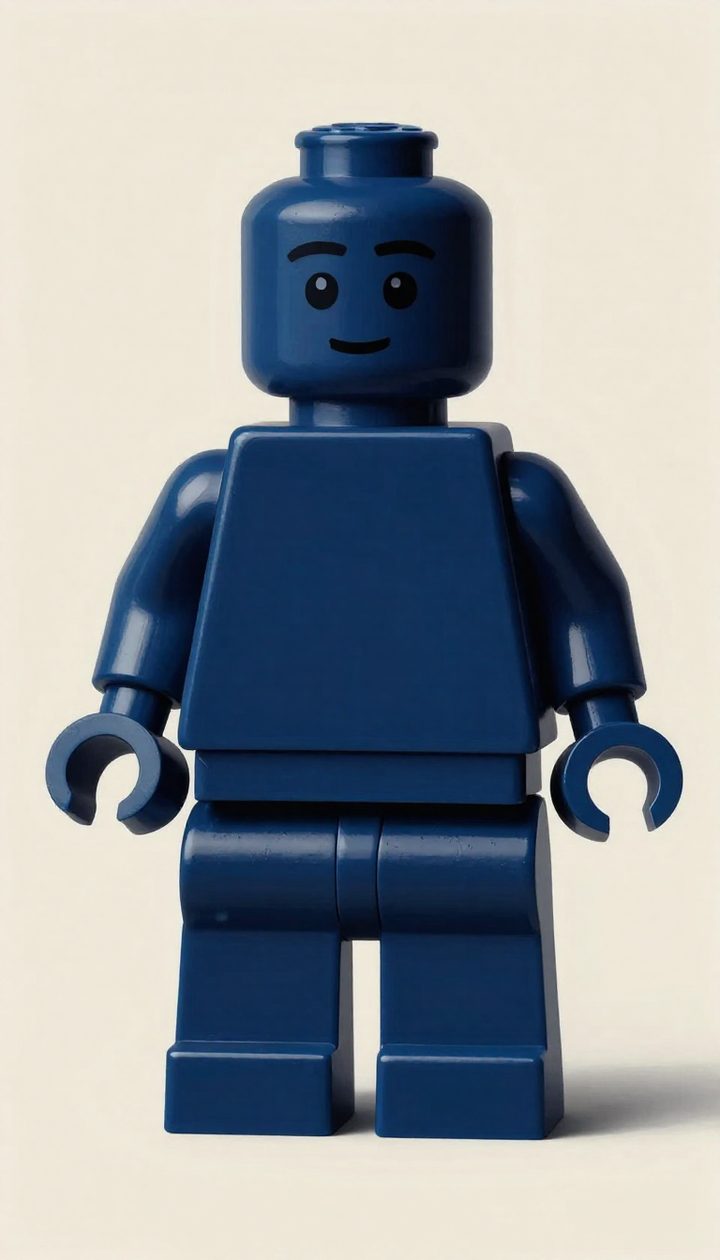
Karri Saarinen (Linear): freedom within structure, not LEGOs, for work products
🕒 Published on Zendoric: November 11, 2026 · 00:19
✨ AI-generated · how it's made
The material received is a single-tweet thread by Karri Saarinen, founder of Linear, compiled on Thread Reader App. It is a short text, so this summary is short too.
📚 Go deeper
Twenty years after "The Singularity Is Near", Kurzweil revisits his predictions and keeps the date: human-AI merger around 2045.
As an Amazon Associate, Zendoric earns from qualifying purchases; the price does not change for you. · all our recommended books →
The material received is a single-tweet thread by Karri Saarinen, founder of Linear, compiled on Thread Reader App. It is a short text, so this summary is short as well. The page also includes fragments of other threads by the same author, but the core piece is the tweet that gives the digest its title: “Freedom within structure.”
The thesis is that, in products designed for getting work done rather than for entertainment, freedom should be granted within a structure rather than consist of being able to strip that structure of meaning. Saarinen rejects the LEGO metaphor, meaning generic pieces that each user assembles their own way, and prefers the house analogy because it makes clear that there is a pre-existing structure and what kind of customization is truly meaningful or realistic.
His argument runs as follows. A house has structure and layout, and in good houses that layout fits everyday life well: someone thought through the experience from the front door to the kitchen and dining areas. Each room has a specific purpose (the kitchen for cooking, the bathroom for bathing, the bedroom for sleeping) and built-in features that make it useful for that. This lets people live without having to think of each room as a custom arrangement of blocks. Within that structure there is freedom: choosing furniture, decorating, rearranging and deciding how to use the space.
He then asks the reader to imagine a house shared by 1,000 people. If each of them decided what every room was for, some would cook in the bathrooms and others would sleep in the kitchens, each customizing to their own needs, and everyone would have to work out what each room meant to everyone else. He thus distinguishes between building a unique, eccentric house for yourself and a house that is, in essence, a place where an organization operates.
At Linear, he explains, they have deliberately designed shared concepts such as issues, projects and teams. Each has a purpose and a consistent meaning across the whole organization. People are free to configure their workspace or personal settings, to decide what they put into those structures and how they work, but they don't need to invent their own definition of a project or translate between hundreds of different definitions.
Another key value of structure, according to the author, is that it gives work a canonical place. It is rare to see someone casually duplicate an entire project in Linear, whereas with documents and spreadsheets it happens constantly, because copying is easy when the artifact isn't really connected to anything real. Over time, different versions appear and someone has to figure out which one reflects what is actually happening.
The conclusion is that the goal is not to eliminate flexibility, but to make the important decisions about shared structure so that people can focus on their work rather than on the system around it.
Note: the downloaded content consists only of this thread and fragments of other posts by the author; it does not include the context of the debate it responds to, so no further detail can be given.
📚 Go deeper

AI as the latest chapter in the history of information networks, from gossip to the printing press to the algorithm.

DeepMind co-founder on the dilemma of containing technologies that do not want to be contained.
As an Amazon Associate, Zendoric earns from qualifying purchases; the price does not change for you. · all our recommended books →
🔗 Related on Zendoric
- Altman outlines three possible outcomes for advanced AI, one with a single company that 'melts everyone else's GPUs' · 2026-10-22
- Chinese hackers spied on thousands of companies after breaching IT giant ConnectWise · 2026-10-24
- Musk cuts Grok Bot usage limits over "unsustainably high" costs · 2026-11-04