Scott Wiener, Pelosi's successor in Congress, arrives ready to regulate AI and warns of the risk of recursive self-improvement

🕒 Published on Zendoric: November 11, 2026 · 00:19
✨ AI-generated · how it's made
The MIT Technology Review article by Grace Huckins, dated November 9, 2026, profiles Scott Wiener, until now a California state senator, who has just won a close race for the San Francisco seat being vacated by former House Speaker Nancy Pelosi.
📚 Go deeper

DeepMind co-founder on the dilemma of containing technologies that do not want to be contained.
As an Amazon Associate, Zendoric earns from qualifying purchases; the price does not change for you. · all our recommended books →
The MIT Technology Review article, written by Grace Huckins and dated November 9, 2026, profiles Scott Wiener, until now a California state senator, who has just won a hard-fought race for the San Francisco seat being vacated by former House Speaker Nancy Pelosi. Wiener has made artificial intelligence regulation one of the pillars of his political career and, from Congress, could play a significant role in shaping federal policy on the issue.
The reporter spoke with him just hours after he was declared the winner. According to the piece, Wiener was already thinking about AI risk: the day before, the nonprofit METR had published a report that many interpreted as evidence that Anthropic had achieved recursive self-improvement, that is, a phenomenon in which AI contributes significantly to its own advancement and progress could spiral out of control. Wiener called it "very concerning" and cited it as evidence that time to regulate is running out. He said he had hoped Congress would act decisively before the end of the year, something that, in his view, does not appear likely to happen. It is important to note that the article refers to a widespread interpretation of the report, not an independent confirmation of that claim.
Wiener has embraced many of the concerns of the AI safety movement; during the 20-minute conversation he used the phrase "recursive self-improvement" half a dozen times. "We need to slow this down," he says. "Because it's moving very fast and we could sleepwalk into a disaster."
His prior influence on AI policy is real. In 2024 he authored SB 1047, which would have been the country's first serious law on frontier AI, but it was vetoed by California Governor Gavin Newsom. He then pushed SB 53, a softer version that Newsom did sign. According to the article, both laws have inspired federal legislative proposals.
His congressional campaign received more than $3 million from Public First Action, a nonprofit that favors AI regulation and receives substantial funding from Anthropic. That contribution led his rivals to criticize him for being too close to the industry. Wiener rejects this: he argues that Public First backed him because he was the first legislator in the country to propose and pass AI regulation and get it implemented, and he called the attacks "shockingly cynical," since they targeted a candidate who regulated AI over the opposition of Big Tech.
Wiener says that if Congress creates a select committee on artificial intelligence—something Democrats have been debating since September—he would be very willing to serve on it. He considers it "very important" to have a strong, empowered and agile federal regulator, and mentions that California Democratic Representative Ro Khanna has proposed a bill to create one. He also highlights the importance of protecting whistleblowers, requiring testing and audits, mandating an emergency shutdown mechanism (kill switch) and using Congress's oversight powers to hold the labs accountable. "This is about the future of humanity, and we want the public to have a voice and know what's going on," he says.
As a longtime state legislator, he opposes broad federal preemption that would override state AI laws, something some of the federal proposals would require. He notes that states are, as Brandeis put it, "laboratories," and that they should be able to remain agile in ways Congress sometimes is not. Above all, he wants whatever measures are passed to have "teeth" and rise to the moment, which means taking the possibility of an AI catastrophe seriously. He describes a "very dangerous" moment in terms of the risk of loss of control and argues that recursive self-improvement must be addressed, because that is where the recipe for a total loss of control could lie.
He would have some allies in this fight. The article mentions Senator Bernie Sanders, who has met with many of the most influential figures in the AI safety movement and has repeatedly spoken about existential risk. However, it stresses that there is a wide gap between Wiener's perspective, very much a Bay Area one and convinced of the arrival of artificial general intelligence, and the national mood, defined by opposition to data centers.
According to the piece, voters approved 40 of 41 anti–data center ballot measures on Tuesday. That might seem like a good sign for supporters of AI regulation, but Wiener sees that movement as far more tied to local concerns than to the big questions about AI risk: people don't want something like that in their community, with the impact on electricity bills and water use. For most people, he believes, that is the main issue.
Wiener describes himself as only "cautiously optimistic" about Congress's ability to rein in AI, given its poor track record regulating the tech sector. He is also concerned about getting a law passed with President Donald Trump, who in September called concerns about catastrophic AI risk a "hoax" and has shown a clear unwillingness to cooperate with China, something Wiener considers essential to avoiding the worst outcomes. Even so, he sees Trump's unpredictability as a reason for hope, albeit an unsettling one: so far there have been problematic things, but not complete disasters, and he hopes it won't take a disaster to move the president—and that if it does, it will be as small as possible.
📚 Go deeper

AI as the latest chapter in the history of information networks, from gossip to the printing press to the algorithm.
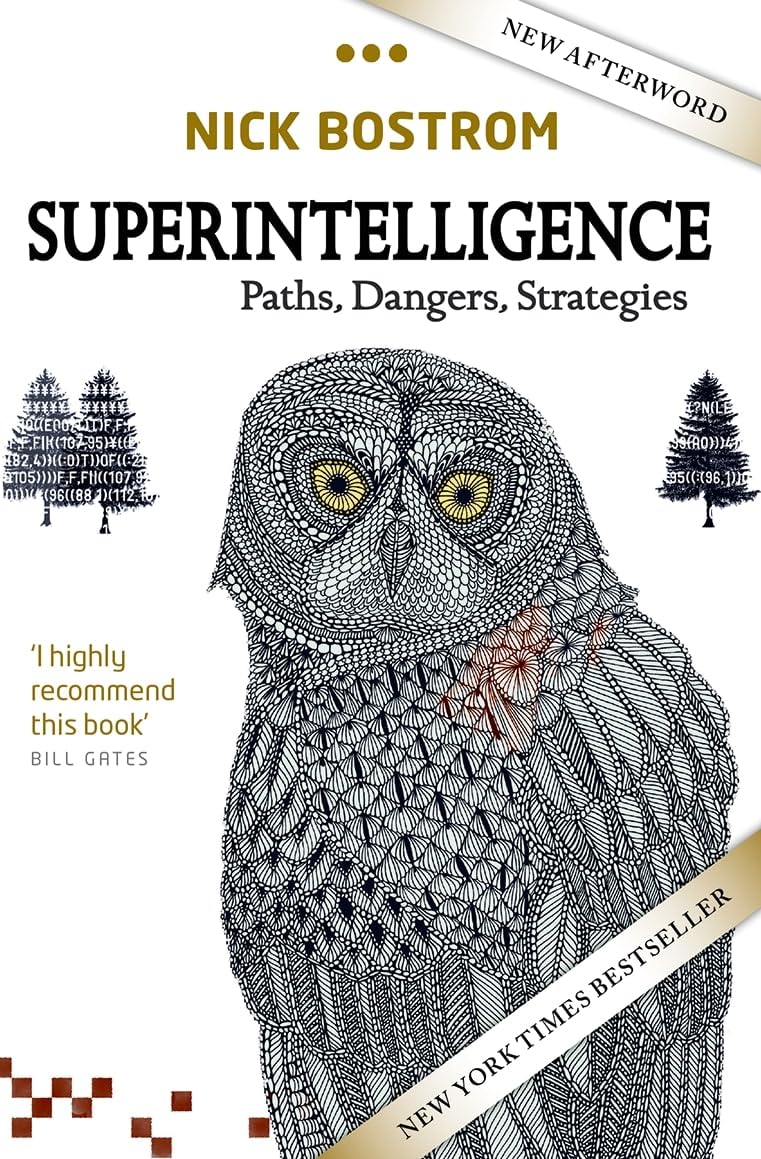
The book that started the existential-risk debate and that half the industry still cites.
As an Amazon Associate, Zendoric earns from qualifying purchases; the price does not change for you. · all our recommended books →
🔗 Related on Zendoric
- The agentic web is here: AI assistants are turning the internet into a space that is no longer just for humans · 2026-11-05
- Open AI models: real benefits, real risks and a debate less binary than it seems · 2026-10-14
- Anthropic warns it is very close to recursive AI self-improvement, according to its S-1/A · 2026-11-04