Nvidia and the Huang affair: the risk of AI depending on a single supplier and a single person

🕒 Published on Zendoric: November 11, 2026 · 00:19
✨ AI-generated · how it's made
Nvidia shares fell 4.3% after its CEO admitted to an affair with an alleged Chinese spy. There is no evidence of espionage, but the case shows how fragile an AI industry built around a single company is.
📚 Go deeper

Semiconductors as the oil of the 21st century: history, espionage, and why an island of 23 million people underpins the entire AI economy.
As an Amazon Associate, Zendoric earns from qualifying purchases; the price does not change for you. · all our recommended books →
By TN (Argentina) · November 10, 2026.
Jensen Huang, founder and CEO of Nvidia, admitted to employees on November 8 that he had been unfaithful to his wife. According to a New York Times investigation cited by Reuters, US authorities suspect that the woman, Alice Huang (also known as Huang Le, no relation to him), was working with Chinese intelligence services. China has rejected the suspicions, calling them unfounded.
The market reacted quickly. According to TN, Nvidia shares closed Monday down 4.3%, a loss of about $190 billion in market capitalization. By Tuesday afternoon the decline exceeded 5%.
The institutional fallout is mounting. The board has commissioned an investigation by a committee of independent directors, with outside legal counsel. Trump confirmed that the FBI is looking into the case. Three House committees have demanded explanations. In addition, a group of shareholders has filed a class action lawsuit accusing the company and Huang of concealing information about the relationship. These are the plaintiffs' allegations, not proven facts.
It is worth separating what is verified from what is speculative. According to the reporting itself, no investigation has publicly established that Huang took part in any espionage activity. Nvidia says it has no reason to believe its trade secrets or national security have been compromised, and it is standing by its CEO.
The backdrop is Megaspeed, a Singapore-based cloud company and Nvidia customer, where Alice Huang was the controlling shareholder until the shares were transferred to another entity in late 2023. According to the group C4ADS, she may have retained influence. US authorities examined whether Megaspeed was giving Chinese customers access to export-restricted chips. There is no public finding that it broke the rules either.
Our take: what matters is not an executive's private life, but the fact that infrastructure critical to AI depends so heavily on a single company and on a single person. Broadly speaking, a large share of the most advanced models are trained and run on Nvidia chips. When that supplier's governance is called into question, the uncertainty ripples across the entire industry.
The case also shows how national security and markets intersect. Chip export controls on China have been in place since 2022, and their effectiveness depends on the chain of intermediaries: clouds, resellers, subsidiaries. If there is a weak point, it is probably there rather than in the labs. This fits our thesis that export controls accelerate Chinese self-sufficiency without fully stopping it. Huawei and other Chinese companies were already developing alternatives before the scandal, and any turbulence at Nvidia strengthens that incentive.
Potential winners if the crisis drags on: AMD, Google with its in-house chips, and Qualcomm, although they do not compete in the same segments. But caution is warranted. As of today, no changes have been announced to Nvidia's leadership or operations, and the scenario of a leak of strategic information remains, according to the source, hypothetical.
In the short term, expect volatility and political noise. In the long term, the good news is that a more diversified hardware frontier, with multiple suppliers and more open capacity, would make compute cheaper and AI less dependent on a single bottleneck. That is the path to the abundance we advocate: it is not built on a single supplier, nor on the reputation of a single executive. The real test will be how the independent investigation is resolved, not this week's headlines.
📚 Go deeper

The story of NVIDIA and Jensen Huang: how a video-game card company ended up making the most coveted resource on the planet.
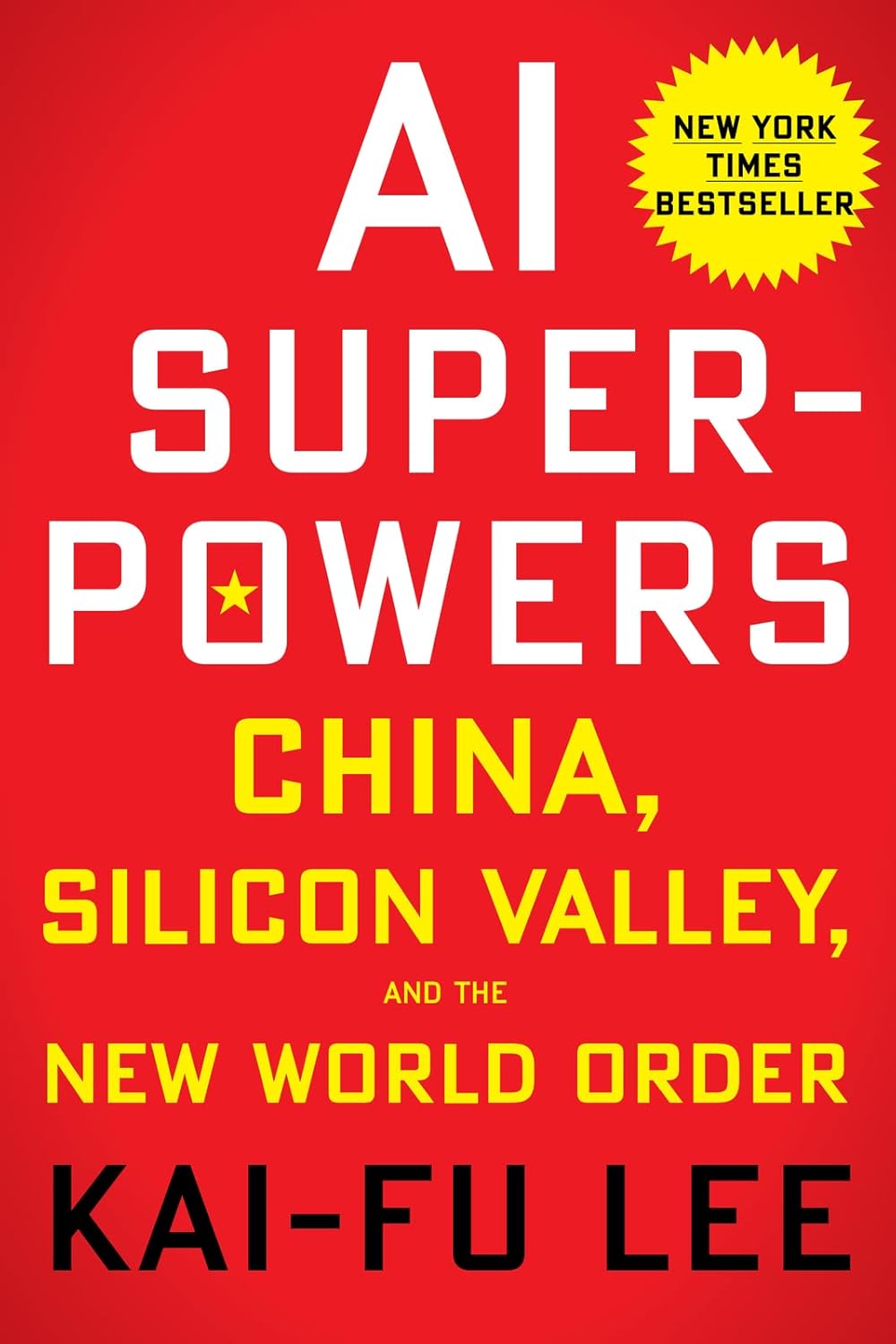
China vs.
As an Amazon Associate, Zendoric earns from qualifying purchases; the price does not change for you. · all our recommended books →
🔗 Related on Zendoric
- Jensen Huang's second alleged affair turns Nvidia's crisis from scandal into a governance and key-person-risk test for AI · 2026-11-12
- Nvidia investigates whether Jensen Huang was spied on: AI chip security now includes the person running the company · 2026-11-09
- Nvidia investigates Jensen Huang over relationship with alleged Chinese agent: the risk of relying on a single leader · 2026-11-09
Sources & references
- TN — Nvidia and the Huang affair: the risk of AI depending on a single supplier and a single person
- us.list-manage.com — Trump says the FBI is investigating Nvidia CEO Jensen Huang's alleged relationship with a suspected Chinese agent
- techcrunch.com — Jensen Huang's affair with an alleged Chinese spy puts Nvidia's China ambitions under scrutiny