Cornell launches a live AI certificate for finance: the bottleneck is understanding, not coding

🕒 Published on Zendoric: November 10, 2026 · 02:47
✨ AI-generated · how it's made
Cornell debuts a live online AI certificate for seasoned finance professionals: 37 students in the first cohort and zero code. Its bet is that the gap lies in the judgment to decide where AI adds value and where it doesn't.
📚 Go deeper

How opaque algorithms decide who gets credit, a job or parole — and why they tend to punish the same people.
As an Amazon Associate, Zendoric earns from qualifying purchases; the price does not change for you. · all our recommended books →
By Cornell Chronicle · November 9, 2026.
Cornell has opened enrollment for the spring 2027 edition of "AI in Finance," an online certificate taught live through eCornell. The program is run by the Cornell Duffield College of Engineering and the Cornell SC Johnson College of Business. It launched in spring 2026 with 37 participants, according to the university.
The 2027 classes will run on Tuesdays and Thursdays from 19:00 to 21:00 (the university's local time), from May 18 to June 24. Unlike many online programs built on recorded videos, students here interact with faculty and industry professionals.
According to Victoria Averbukh, director of the Cornell Financial Engineering Manhattan program, the course is not about coding. It aims to help experienced professionals master the terminology and understand what the models do and why they were not designed for finance. The syllabus moves from fundamentals and tools to use cases (investment research, credit risk, fraud detection, compliance), responsible AI and leadership. It also covers hallucinations, data security and regulation. At the end, each participant designs a use case and defends it as if before an investment committee.
The faculty combines Cornell professors with executives from AllianceBernstein, BlackRock, J.P. Morgan Global Private Bank, OKX and EY. Most students in the first cohort were experienced professionals, and many had more than a decade in capital markets, investment management, compliance or fraud.
A technical point from Professor Jamol Pender deserves attention: correct data is not enough; when it was generated matters. In finance, data that is accurate but delayed or not available in time leads to bad decisions.
**Our take.** This is a small story, but it points to something important: in financial services, the bottleneck for AI adoption is no longer model capability but the human judgment needed to deploy it. Averbukh puts it well: you cannot decide where to use AI without knowing what it is.
It fits with what we see on other fronts. In general, companies are scaling agents more slowly than they announce, and errors and governance hold things back more than the technology does. Training decision-makers is probably a better investment than another software license.
There are caveats. This is the university's own initiative and there is no outcome data: 37 students do not measure impact, and the release does not say how much it costs or what participants gain after completing it. It is worth distinguishing between well-designed training and a fashionable badge.
There is also an employment angle. In general, administrative and back-office roles in the financial sector are considered among the most exposed to automation, and this offering targets people who already have experience. In the short term, the transition favors those who know how to orchestrate AI and may fall short for those without access to this kind of training; that is real inequality and it should be said.
In the long term, however, the direction is hopeful: if the financial sector learns to use these tools well, with timely data, clear limits and accountability, it will be able to offer cheaper and more accessible services to more people. That is a modest but real piece of the path toward an economy of abundance in which technology frees up human time for what matters.
📚 Go deeper

THE AI textbook: used by 1,500+ universities.
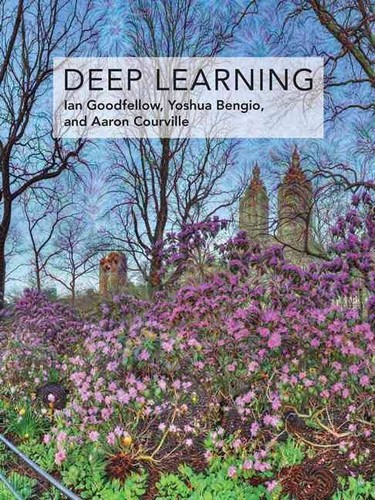
The academic "bible" of deep learning, with a Turing Award winner among its authors, and legally free on the web.
As an Amazon Associate, Zendoric earns from qualifying purchases; the price does not change for you. · all our recommended books →
🔗 Related on Zendoric
- Chicago bans laptops for first-year law students: betting that human judgment, not AI, still earns the degree · 2026-07-16
- Anthropic launches a $100 million academy to train 10,000 engineers: AI's bottleneck isn't the model · 2026-10-06
- Anthropic’s own workforce shows AI’s first casualty is the junior hire, and human attention is the new bottleneck · 2026-10-19