Building a growth engine with AI agents: experiments, wins and mistakes at Vellum

🕒 Published on Zendoric: November 4, 2026 · 00:20
✨ AI-generated · how it's made
Anita Kirkovska, who leads growth at Vellum, explains in this case study how a three-person marketing team tried to match the reach of a much larger one using AI agents.
📚 Go deeper
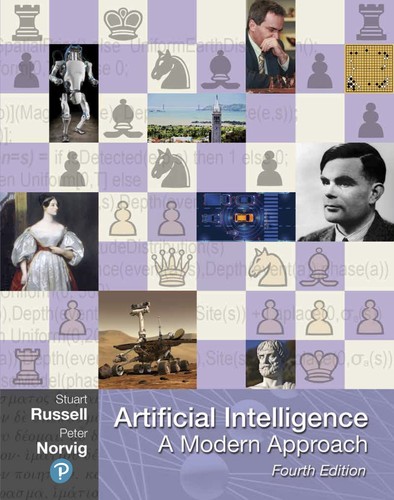
THE AI textbook: used by 1,500+ universities.
As an Amazon Associate, Zendoric earns from qualifying purchases; the price does not change for you. · all our recommended books →
Anita Kirkovska, who leads growth at Vellum, describes in this case study how a three-person marketing team tried to match the reach of a much larger one using AI agents. She says the turning point came around February 2026, when more powerful models and better agent harnesses arrived. She calls them “GTM engineers in a data center”. The thesis is that growth is becoming an engineering problem, though not everything needs to scale and not every problem needs AI. The piece reviews the experiments, what worked and where they went wrong.
Agent-powered website. For the author, the first step is for the website, the front door to the internet, to run on agents. At Vellum, creating a product page could take days or weeks, and the separation between the site and the product limited experimentation. Around March, she and her CTO migrated from Webflow to a code-based site in just one month, using coding agents. The site now lives in a GitHub repository, with Sanity as a headless CMS, and the team works on pages and content with their assistants. It is integrated with the rest of their tools, so feedback on the site is captured in Slack and the assistant can turn it into a pull request.
The transition had costs. The models were not good at frontend design, something the author says has since changed as of November 2. Her advice is to always bet that the model will get better. The second problem is that everyone can now touch the website, which is both a blessing and a curse. Shared rules were needed on where data lives, what agents can change and how work is reviewed. Handing out the tools was the easy part. Teaching people to use them well required a lot of training.
“Viral” articles. The team used a reusable SKILL.md file to produce comparison and benchmark explainer articles around new model launches. Some reached tens of thousands of views in a single day. The GEO-oriented writing skill defined the process: gather live sources, save research notes, back comparisons with citations and pass a quality check before review. It was applied to head-to-head comparisons, listicles and other formats. They also expanded topics into adjacent categories, such as voice agents, search tools and web scrapers. Those articles opened up another opportunity: companies that wanted links from them and offered backlinks in return.
Organic (and AI) UGC. Here she acknowledges the biggest mistake. They chased scale with human creators and AI influencers before knowing what worked. In the rush, creators were not properly onboarded and did not fall in love with the product, which she describes as a recipe for disaster. If she were starting a UGC program from scratch, she would hand-pick a few creators, invest in their product knowledge, voice and relationship with the brand, and keep everything in-house. For her, the key is obsession. She cites Hector Serrano’s Wispr Flow playbook as one to study: start with a small group, invest in coaching and relationships, and then scale what works. For a technical product, she recommends real creators, with scripts and post-production automated with agents. She also mentions that they can be cloned with tools like VEED, and that Higgsfield can be used to create variations with AI influencers on videos you record yourself. She tested a video of her own about AI glasses, reworked with a different AI persona.
Content at scale. According to the author, Claude already makes very good explainer videos if you have a good skill for the format. On ElevenLabs, you can clone your voice with a video of about 10 minutes. Creating will be easy; distribution will be the hard part. She suggests starting with short videos on TikTok and YouTube, because the algorithms are generous with new accounts. Her workflow starts from a written idea and ends in a video and an article: she clones her voice with ElevenLabs, generates the video with Claude, publishes automatically to AIExplained and YouTube, and generates a repurposed article. She shows three examples: a post turned into a two-minute explainer, a video based on a filing that Claude read, and a 40-second product video for Ambient generated from a single prompt.
Performance marketing that adapts to the user. She describes a personalized loop that turns a cold lead into a user while the agent learns what they need, so that the ad’s intent carries over to the landing page and onboarding. The idea is that the user does not adapt to the product; the agent adapts to each user. They tested many AI-generated creatives on Meta and used Codex to build custom landing pages for each main theme. They made sure to capture that data during onboarding so the agent would know how to activate each user. They also used what she calls “ugly ads”, unbranded-looking, platform-native ads, such as those on Instagram Stories.
Agent-led activation. The author had already written a full case study on the redesign of Vellum’s onboarding, where the agent now onboards to the user rather than the other way around. According to the piece, the experiment improved onboarding completion by 10.7 percentage points, and day-one activation rose from 27.5% to 37.4%. The flow, built largely with Claude Code, combines four pieces. First, the user chooses their assistant’s face, name and personality, while a deep research agent fills in information about them in the background. Second, the user confirms what was found and the assistant proposes tailored tasks. Third, there is a check-in the next day: after connecting Google Calendar, the user can confirm a meeting with their assistant. Fourth, a personalized email sequence, built with her assistant, Resend and Claude Code. Almost 6% of users who connected Google Calendar came back through the invite, because the assistant scheduled a 1:1 meeting with them.
Resources agents can cite. The Vellum LLM Leaderboard let users compare models by public benchmarks, speed, latency and price. It was an interactive, continuously maintained resource. It mattered for two reasons: it built topical authority in evaluations, a field in which the company was actively selling, and it generated relevance for agentic browser searches, with many recommendations. The author states that benchmarks and other evidence data are what agents now look for. The resource was fully automated: background processes detected new models and benchmarks and updated the page and its “last updated” date almost as soon as they launched. According to her, that page alone brought in half of the year’s traffic.
Editor’s note: the text received appears to end abruptly after the leaderboard section, so this summary covers only what was in the downloaded content. Figures and results are those stated by the author herself, without independent verification.
📚 Go deeper

The academic "bible" of deep learning, with a Turing Award winner among its authors, and legally free on the web.
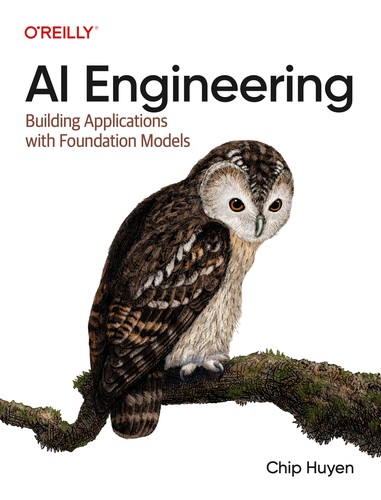
The reference manual for building products on top of AI models: prompts, RAG, fine-tuning, agents, evaluation and deployment.
As an Amazon Associate, Zendoric earns from qualifying purchases; the price does not change for you. · all our recommended books →
🔗 Related on Zendoric
- Zscaler pitches AI agents and an 'agentic SOC' as the next growth engine for its Zero Trust business · 2026-09-13
- Stanford puts 70 million U.S. workers within reach of AI agents: they want shared control, not surrender · 2026-09-15
- Anthropic puts numbers on itself: Claude now "leads" 26% of the R&D that creates the next Claude · 2026-09-23