FlashProve: Anthropic proposes cryptographically verifying which AI model produced a response, though it won't adopt it yet

🕒 Published on Zendoric: November 4, 2026 · 00:20
✨ AI-generated · how it's made
Anthropic is developing FlashProve, an open "proven inference" system to show which model generated a response. It is still research, with no deployment plans, but it targets a real problem: today no one can verify what sits behind an API.
📚 Go deeper
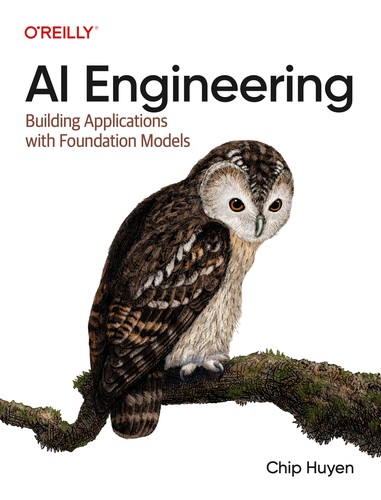
The reference manual for building products on top of AI models: prompts, RAG, fine-tuning, agents, evaluation and deployment.
As an Amazon Associate, Zendoric earns from qualifying purchases; the price does not change for you. · all our recommended books →
By UA.NEWS (based on TechCrunch) · November 3, 2026.
Anthropic is working on FlashProve, an open system for cryptographically verifying which AI model produced a given response. The company calls this approach "proven inference." According to TechCrunch, it would work like a cryptographic signature on an email: it would let users confirm that a response comes from the advertised model and not from another one posing as it.
For it to work, labs would have to publish a digital fingerprint of every model they release. That fingerprint would be checked against specific responses and verified cryptographically, without revealing the model's weights (the internal numerical parameters that define its behavior, which are usually kept closed in commercial models).
As the researchers describe it, the system would also prevent the lab itself from secretly swapping a model, whether by using a cheaper one to cut costs or a more expensive one to inflate test results. It would also extend to third-party claims. A developer could prove that their library was reviewed for vulnerabilities by an advanced cybersecurity model, or a company could prove that its business plan was approved by a specific model.
The researchers have published a technical specification and working code for several components on GitHub under an open license. The work is ongoing and, according to available information, there are no plans to deploy it at Anthropic or at other labs.
**Our take.** The most interesting part is not the cryptography but the problem it exposes: today, anyone paying for a "frontier" model is taking the provider at its word. There is no way to verify that the model responding is the one advertised, or that benchmark results were obtained with the model that is later sold. In a market where the cost gap between large and small models is huge, the temptation of silent substitution is a legitimate question, although there is no accusation here against any lab: the source only describes the risk as a possibility.
The proposal fits a trend we have been pointing out: value is shifting from raw capability toward verification and traceability. If agents make decisions, sign off on security reviews or approve plans, "who said it" matters as much as "what was said." A code audit "done by an advanced model" without proof is marketing; with proof, it is an auditable asset. Broadly, verifiable trust is what makes it possible to delegate more responsibility to AI systems without flying blind.
There are limits worth keeping in mind. Proving which model responded does not prove that the response is correct or safe, or that the model is any good: it certifies provenance, not quality. It also only works if labs publish fingerprints and customers demand them, and today, according to the source, there are no plans to deploy it at Anthropic or other labs. Its openness is a good sign, because a standard that depends on a single provider does not solve the trust problem, but a standard without adoption is just a good idea.
In the short term, this changes nothing for users. In the medium term, it is plausible that regulators, large customers and agent marketplaces will end up demanding something similar, especially in sectors where auditing matters. In the long term, this trust layer is part of the infrastructure needed for AI to handle critical tasks, such as medical research, with guarantees. It is unglamorous, but it is what turns a promise of abundance into something that can be trusted.
📚 Go deeper
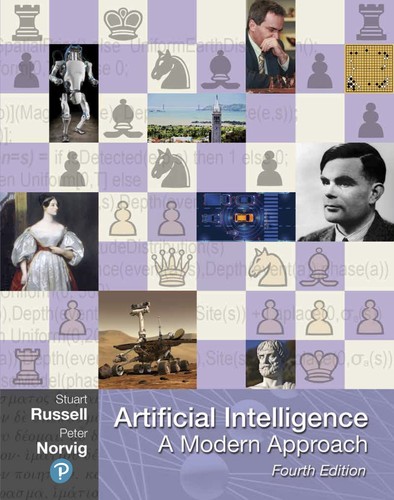
THE AI textbook: used by 1,500+ universities.

The academic "bible" of deep learning, with a Turing Award winner among its authors, and legally free on the web.
As an Amazon Associate, Zendoric earns from qualifying purchases; the price does not change for you. · all our recommended books →
🔗 Related on Zendoric
- Open Engine and the handoff thesis: AI's bottleneck is no longer the model, it is what happens between models · 2026-06-27
- Sonnet 5: Anthropic targets the invisible bill of AI agents with an Opus-grade model at a Sonnet price · 2026-07-01
- Anthropic's AI flagged a new enzyme system in 21 hours. The Crispr comparison is the weakest part · 2026-09-25