Claude Code refuses to clone specific video games: a useful patch, but the line between inspiration and imitation remains undrawn

🕒 Published on Zendoric: November 1, 2026 · 00:10
✨ AI-generated · how it's made
Anthropic has added a rule to Claude Code, which users cannot disable, against recreating a specific existing video game. It stops the quickest clones, but its effectiveness will depend on how it tells inspiration from copying.
📚 Go deeper

The reference manual for building products on top of AI models: prompts, RAG, fine-tuning, agents, evaluation and deployment.
As an Amazon Associate, Zendoric earns from qualifying purchases; the price does not change for you. · all our recommended books →
By BigGo Finance · October 31, 2026.
Anthropic has added an instruction to Claude Code, its programming tool, that prevents the model from recreating a specific commercial video game. According to Game Developer's account, as reported by BigGo Finance, the rule has been distributed server-side under the internal identifier “tengu_heron_brook” since around October 27. Users cannot disable it.
The rule, according to the outlet, applies even if the project is renamed or presented as an original work. Original games, genre games and those built with the user's own designs and assets remain allowed.
Addy Osmani, a member of Anthropic's technical staff, explained in a post that two sentences were added to the Claude Code prompt in Opus 5.5. The reason he gave is that using Claude to infringe intellectual property violates the company's usage policy. Osmani added that they will keep iterating to strike the right balance and asked anyone whose own work is mistakenly rejected to send him their cases. Anthropic has not said whether a specific incident prompted the change.
The backdrop is the glut of clones in game stores. According to the article, after Valve opened the latest Steam Next Fest, players complained of feeds full of low-effort knockoffs, some of titles whose demos had just been released. Some studios pulled their demos from Steam and opted for private playtests. Valve said it was looking into how to respond. Other coverage of the same story, such as Wccftech's, notes that some developers claim legitimate projects are being blocked. That is a claim from that coverage which we have not been able to verify.
One detail from the source should be kept separate from this story: on October 28, Anthropic also enabled smart reports, internal surveys and shared group budgets for Claude Enterprise. It has no causal link to the games rule.
**Our take.** The thesis is simple: this is useful friction, not a solution. A model that refuses to clone a title by name makes the fastest route to a clone more costly, and that mainly helps small studios, which lose the most when a rival rides their marketing momentum with a thinly disguised copy. But a two-sentence rule in a prompt does not close every shortcut. Simply describing the mechanics and aesthetics without naming the game, or splitting the task into pieces, is enough to turn the control into a mere hurdle.
The underlying difficulty is legal and conceptual. Game mechanics tend to be weakly protected, and genres belong to everyone. What is protected is expression: art, code, names and characters. Asking a model to decide where inspiration ends and imitation begins is asking it to make a judgment that courts struggle with. Expect false positives, like the complaints Wccftech mentions, as well as false negatives. Osmani's promise to review mistaken rejections is sensible, but it doesn't scale if volume grows.
There is also a governance lesson. Anthropic enforces the restriction server-side, with no way to disable it, and announces it after the fact. It is effective, but those who depend on a work tool see its rules change overnight. In general, these kinds of silent adjustments will remain the norm as long as providers take responsibility for what their models produce, and transparency about them should be demanded.
In the long run, the outlook remains constructive. If programming a game comes within anyone's reach, an abundance of creation is good news: more people will be able to bring their own ideas to life. But that abundance is only valuable if originality is rewarded. In the short term, the challenge is to keep discoverability from sinking under cheap copies, and there the stores, not the models, have the final say. The most likely effective response will combine limits in the models with platform filters like the one Valve says it is considering.
📚 Go deeper

How opaque algorithms decide who gets credit, a job or parole — and why they tend to punish the same people.
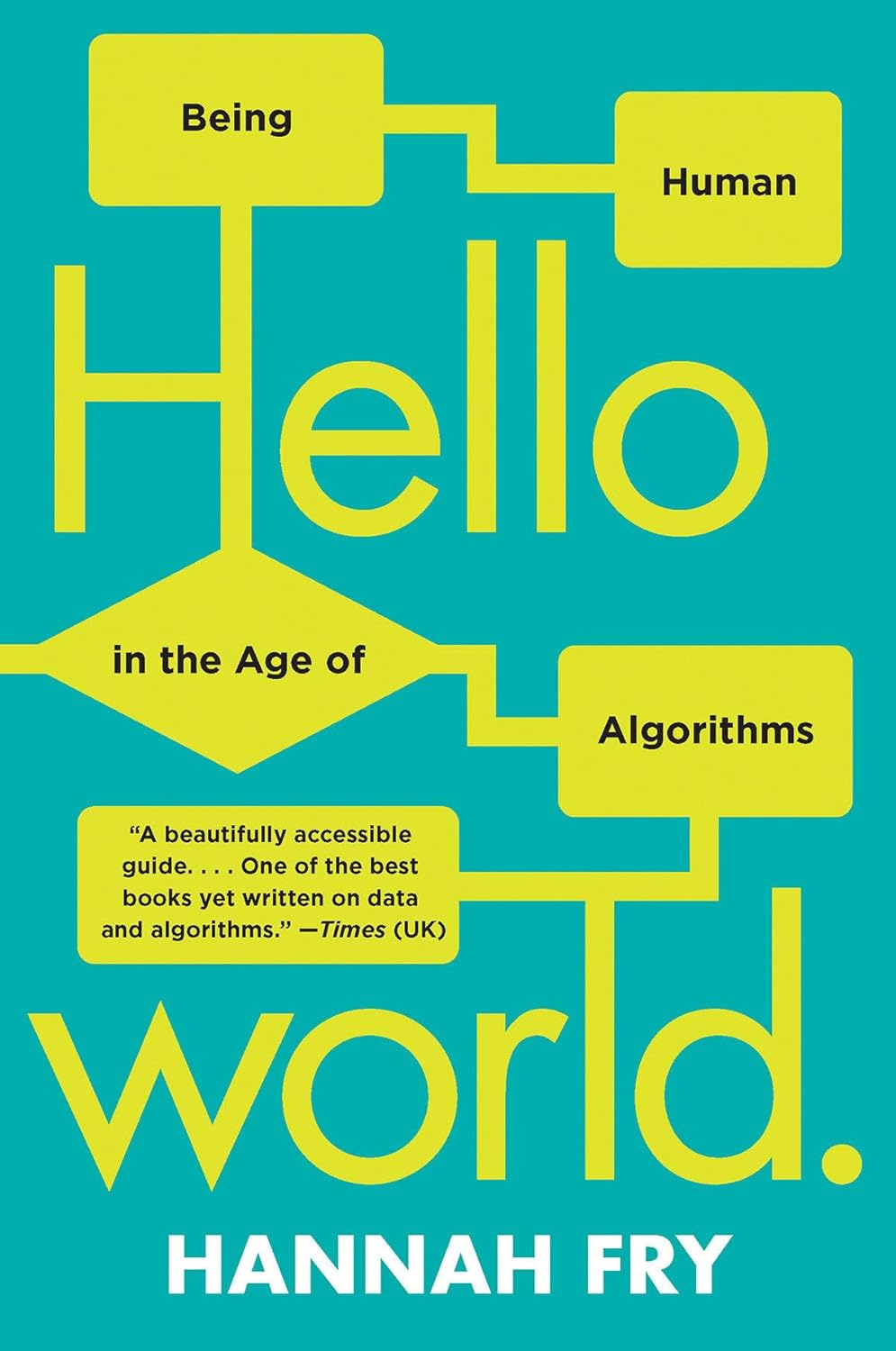
Algorithms in justice, medicine, cars and art, explained with British humor and mathematical honesty.
As an Amazon Associate, Zendoric earns from qualifying purchases; the price does not change for you. · all our recommended books →
🔗 Related on Zendoric
- Anthropic curbs video game clones in Claude Code: a useful rule, but easy to get around · 2026-10-31
- Claude for Chrome remains exposed to fake clicks two months after the warning, despite a one-line patch · 2026-07-20
- ChatGPT, Claude and Grok went down at once: companies need a contingency plan for AI outages · 2026-09-05