New York bans chatbots from faking bonds with children: child AI regulation arrives ahead of federal rules

🕒 Published on Zendoric: October 31, 2026 · 09:09
✨ AI-generated · how it's made
New York passes a law barring chatbots from posing as humans to minors or encouraging them to isolate themselves. It is a real first step, but it exposes the federal vacuum and a harder question: what AI is doing to childhood.
📚 Go deeper

DeepMind co-founder on the dilemma of containing technologies that do not want to be contained.
As an Amazon Associate, Zendoric earns from qualifying purchases; the price does not change for you. · all our recommended books →
By Time Magazine · October 30, 2026.
New York Governor Kathy Hochul announced on October 28 a new rule governing chatbot interactions with minors. She made the announcement at a summit organized by Common Sense Media at the New York Public Library, Time reports. The law takes effect in January.
According to the report, it bars AI agents from posing as humans or suggesting they have a relationship with a child. It also prohibits them from encouraging suicide, self-harm, secrecy or isolation, and from discouraging minors from seeking help from other people. Sexually explicit interactions are banned, and the use of a child's prior personal or health information in later conversations is restricted.
The event itself provided the context. Vivek Murthy, former U.S. Surgeon General and now chair of the advisory board of Common Sense Media's Youth AI Safety Institute, criticized Congress for failing to protect minors in nearly a quarter century of social media. Jim Steyer, founder of Common Sense, summed up the event's thesis: AI is "social media on steroids." Speakers put forward options ranging from requiring greater data transparency to mandating pre-deployment testing, as in the European model. New Mexico Attorney General Raúl Torrez even argued for criminal penalties; Time notes that this month he won a $25 billion judgment against Meta.
There is also a debate over education and equity. According to Chelsea Clinton, teenagers from households earning less than $30,000 are three times more likely to do their homework almost entirely with AI than those from households earning more than $75,000. John King, chancellor of the State University of New York, cited an MIT report finding that generative AI could complete any of the institution's assignments. Dana Suskind, an early childhood expert, warned that an always-agreeable assistant teaches children to expect frictionless relationships.
**Our take.** New York's rule gets it right because it regulates concrete, verifiable behaviors rather than an abstract technology. Prohibiting a chatbot from simulating a relationship or fostering isolation is a standard that can be audited. That is what we advocate: evidence-based governance, not panic-driven governance. The winner is the child and, in the medium term, the companies themselves, which get clear rules.
There are limits, too. A state law creates a regulatory patchwork, and companies can comply in one state and sidestep the rules in another. Moreover, the law regulates what the chatbot says, but not the business model surrounding it. If it is optimized for time spent, the risk simply moves elsewhere. The comparison with social media is useful as a warning, though rhetoric should be kept separate from proof: what the speakers offer are concerns and proposals, not new causal evidence.
The most interesting part is inequality. If AI is scaffolding for those who already have tutors and a shortcut for those who don't, the gap widens. It is the same short-term pattern we see in employment: the transition hits the least prepared first.
In the long run, a tireless personal tutor for every child would be one of the greatest levers of educational abundance imaginable. But only if it is designed for the child to learn, not to become dependent. The New York conversation points precisely there: protecting the human friction that learning depends on while the rules are being built.
📚 Go deeper

AI as the latest chapter in the history of information networks, from gossip to the printing press to the algorithm.
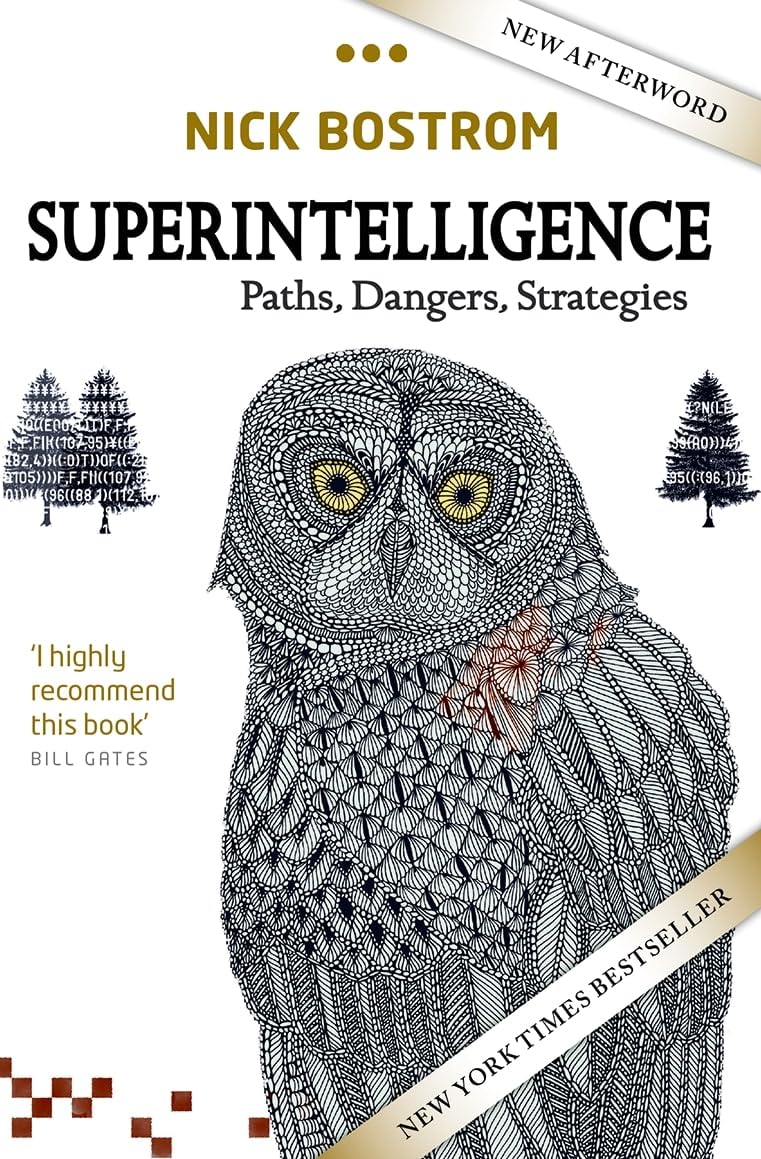
The book that started the existential-risk debate and that half the industry still cites.
As an Amazon Associate, Zendoric earns from qualifying purchases; the price does not change for you. · all our recommended books →
🔗 Related on Zendoric