Cowboy Space unveils Big Iron, a rocket whose second stage becomes a megawatt-class orbital data center
🕒 Published on Zendoric: October 29, 2026 · 00:15
✨ AI-generated · how it's made
Cowboy Space has unveiled Big Iron, a launch vehicle whose second stage is designed to remain in orbit and operate as a megawatt-class data center. According to Payload, the announcement was made on a Monday afternoon.
📚 Go deeper

The story of NVIDIA and Jensen Huang: how a video-game card company ended up making the most coveted resource on the planet.
As an Amazon Associate, Zendoric earns from qualifying purchases; the price does not change for you. · all our recommended books →
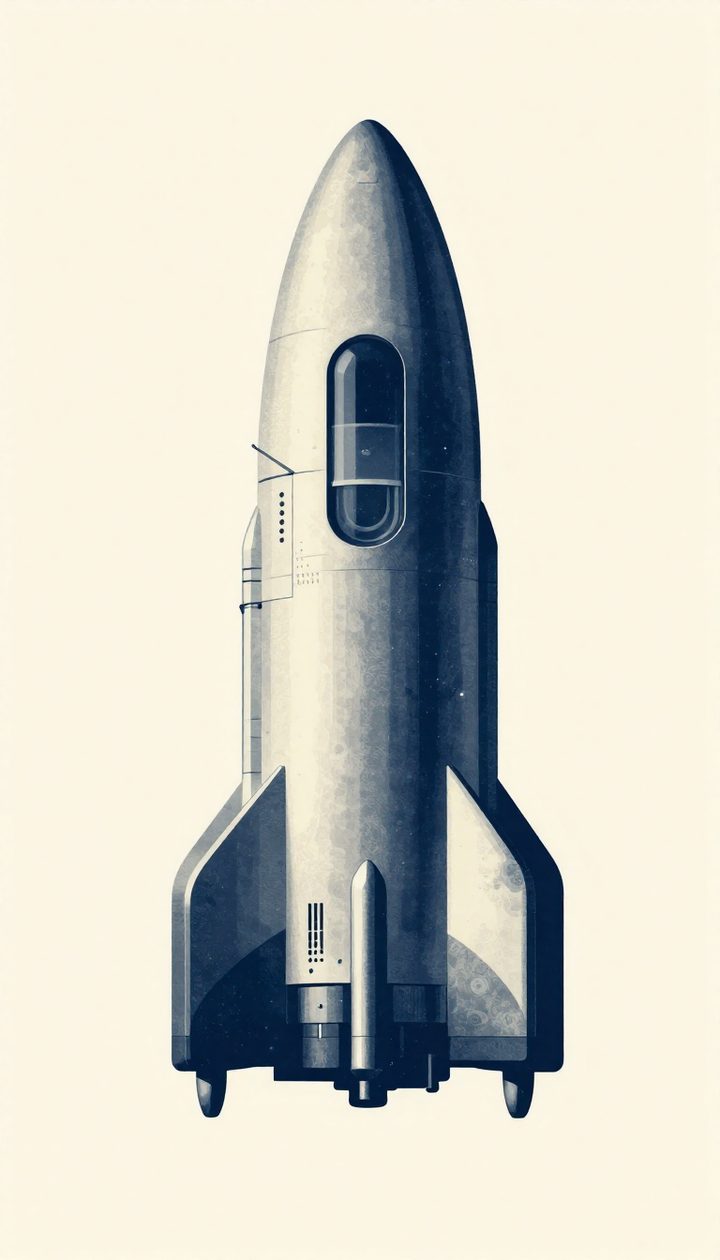
Cowboy Space has unveiled Big Iron, a launch vehicle whose second stage is designed to stay in orbit and operate as a megawatt-class data center. The announcement was made on a Monday afternoon, according to Payload. The company's goal is to put large amounts of electrical power into orbit to run chips and AI data centers.
Joseph Yaffe, Cowboy Space's chief operating officer and chief legal officer, said the most efficient and effective way to do that is to build its own vehicle to reach space. Cowboy will also open Big Iron to outside customers through a program called Big Iron Express. Those customers will be able to fly payloads that need up to one megawatt of power.
Yaffe said launch capacity is scarce right now, if it is available at all. He added that many alternatives, Big Iron included, have yet to fly. In his view, government customers want to see a finished rocket.
Vehicle specs: Big Iron is an 86 m stainless-steel rocket, sized so it can be transported by road. Each vehicle is designed to carry more than 15,000 kg to sun-synchronous orbit. To move fast and keep costs down, the team relied on proven architectures and designed the rocket around existing infrastructure.
The first stage will use nine liquid-oxygen and methane "Clydesdale" engines, each producing 300,000 pounds of thrust. Cowboy tested part of the Clydesdale last week at NASA's Stennis Space Center. A team of about 30 people built and tested its combustion chamber in 90 days. According to Yaffe, the company is "almost a year ahead of schedule."
Rather than being discarded, the second stage joins Cowboy's constellation. Once deployed in dawn-dusk orbit, each satellite will measure 132 m by 73 m and carry five racks of NVIDIA Vera Rubin GPUs.
Double duty: To make the most of every kilogram sent to orbit, many of Big Iron's parts take on a second role once in space. The rocket's skin becomes the data center's radiator. The ammonia propellant also serves as coolant. The nitrogen that pressurizes the second stage is also used to deploy the solar wings.
Yaffe explained the reasoning this way: if you build a small satellite with GPUs, you have to add radiators to it, and then you end up paying twice to lift the same metal into space.
Timeline: Cowboy has already reached orbit with Reason-1, a laser power-beaming demonstration satellite. It launched on October 1 aboard SpaceX's Transporter-18. Yaffe said the first beaming attempt will likely take place in the coming weeks and that testing so far has shown "no red flags."
Reason-2, slated for 2027, will run GPUs in orbit for commercial and government customers, including a NOAA project to process weather data in space. Big Iron's first flight is expected in 2028. After that, the company plans to scale up Stampede, its planned constellation of up to 20,000 satellites, pending FCC approval.
Yaffe acknowledged that a great deal of execution still lies ahead. It is worth noting that Big Iron has not flown and that all figures and timelines are targets stated by the company, not verified results.
📚 Go deeper

Semiconductors as the oil of the 21st century: history, espionage, and why an island of 23 million people underpins the entire AI economy.

DeepMind co-founder on the dilemma of containing technologies that do not want to be contained.
As an Amazon Associate, Zendoric earns from qualifying purchases; the price does not change for you. · all our recommended books →
🔗 Related on Zendoric
- SpaceX launches Google's first AI chips into space in the initial orbital test of Alphabet's Suncatcher project · 2026-10-03
- Meta launches Muse Spark Open, an 816-billion-parameter open-weight model that can run on Macs · 2026-10-17
- World Labs unveils Atlas, a multimodal world model that generates, reconstructs and simulates 3D spaces · 2026-09-02