Marissa Mayer and the "three words" for her daughter: the backlash shows where we draw the line on delegating to AI

🕒 Published on Zendoric: October 28, 2026 · 08:22
✨ AI-generated · how it's made
The former Yahoo CEO used the Dazzle AI assistant to describe her 9-year-old daughter for a school assignment, and social media turned on her. The bigger issue is the question it raises: what do we hand off to AI, and what do we keep?
📚 Go deeper

The best starting book if you're not technical: a Wharton professor explains how to work WITH AI — when to delegate, when to supervise, when to keep i
As an Amazon Associate, Zendoric earns from qualifying purchases; the price does not change for you. · all our recommended books →
By The Cool Down · October 26, 2026.
Marissa Mayer, CEO of Yahoo from 2012 to 2017, has drawn criticism on X after telling a New York Times reporter that she used the Dazzle AI assistant for her daughter's school assignment. According to The Cool Down, citing TMZ, the teacher asked for three words describing what made the 9-year-old special. Mayer couldn't come up with an answer on the spot, and the app returned "empathetic," "creative" and "animal lover."
The backlash was swift. A post by Keith Edwards on X sparked harsh comments such as "this woman has spent very little time with her daughter." Other users questioned whether the story was meant literally. It's worth noting that this episode reaches us secondhand: the source relays the anecdote via TMZ, and we have not seen the original interview. We therefore don't know what nuances Mayer gave it.
There is also an obvious commercial context. Mayer was talking about Dazzle AI, a personal assistant for mobile phones that, according to the article, she pitches as useful for filling out school forms or making everyday family decisions. In other words, the anecdote served as a product demo. That partly explains why she chose such a personal example, and why it backfired.
**Our take.** The outrage is focused on the person, but what's interesting is the boundary it exposes. Handing off office tasks, calculations or routine writing to AI doesn't provoke rejection; doing so with something perceived as an act of parental attention does. The three words mattered less than the gesture of thinking about one's daughter. That's the line most people sense intuitively: AI can save us work, but we don't want it to replace our personal judgment about the people we love.
We also think the verdict on Mayer is probably unfair at heart. Drawing a blank when asked an open-ended question on the spot is very human, and the three resulting words are plausible. A more sensible use would be AI as a prompt for ideas that the parent reviews and makes their own. The real problem isn't consulting it, but ceasing to look.
For those building personal assistants, the lesson is practical. The more intimate the territory, the higher the reputational cost of selling substitution instead of support. Marketing that says "AI does it for you" clashes with a social intuition that won't disappear as models improve.
More broadly, in the short term we'll see many scenes like this as society negotiates norms about what is acceptable to automate. In the long term, AI's promise is to free up time from mechanical tasks so we can devote it to what really matters to us, including people. If the result were the opposite — using it to sidestep precisely those moments — we would have misunderstood what it's for.
📚 Go deeper

How opaque algorithms decide who gets credit, a job or parole — and why they tend to punish the same people.
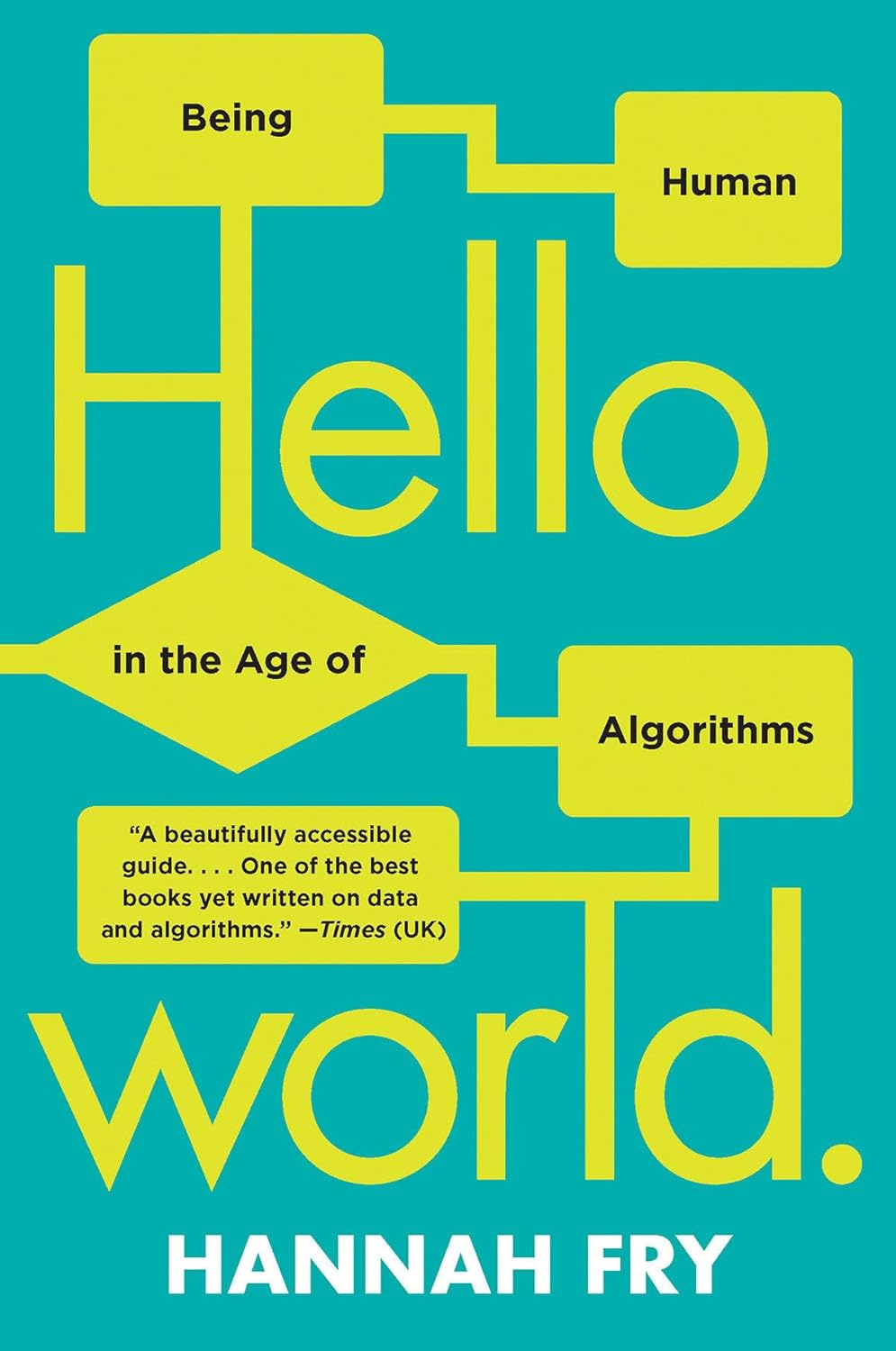
Algorithms in justice, medicine, cars and art, explained with British humor and mathematical honesty.
As an Amazon Associate, Zendoric earns from qualifying purchases; the price does not change for you. · all our recommended books →
🔗 Related on Zendoric
- Marissa Mayer and the "three words" for her daughter: the controversy highlights where we draw the line on delegating to AI · 2026-10-27
- The OECD finds the first indication that using AI at school lowers science scores · 2026-09-28
- Rock Hill takes on AI, social media and enrollment in one package: school governance gets professional · 2026-06-24