OpenAI says its AI cracked three decades-old problems in maths, computing and physics. The proof matters more than the claim

🕒 Published on Zendoric: October 27, 2026 · 00:16
✨ AI-generated · how it's made
OpenAI says its models solved three hard problems in mathematics, computer science and physics that have resisted humans for decades. If independent experts confirm it, this is the kind of progress that counts. Until then, it is an announcement, not a proven result.
📚 Go deeper

The definitive piece of investigative journalism on OpenAI: 260+ interviews, the clash between safety and speed, and the attempted firing of Sam Altma
As an Amazon Associate, Zendoric earns from qualifying purchases; the price does not change for you. · all our recommended books →
OpenAI has announced that its AI models solved three complex problems that have challenged researchers for decades. One is in mathematics, one in computer science and one in physics. That is the whole claim as reported in the short video we are working from. The note does not name the problems, the models used, or any independent checks.
Those missing details are the story. In science, something counts as a discovery after outside experts check it, not when a company issues a press release. A maths proof can be verified line by line. A result in computer science or physics has to be reproduced and reviewed by specialists in that field. Until that happens, the safest wording is that OpenAI claims three discoveries. We cannot yet say it made them.
The announcement still fits a clear trend. The AI race is moving away from chatbots and coding benchmarks. The new goal is original contributions to knowledge, and labs increasingly measure their models on whether they can produce results no one had before. That is a much tougher and more meaningful test than leaderboard scores. It is also harder to fake, because the work can eventually be checked.
Our reading: we are cautiously optimistic, but we want proof. If the results survive peer review, this would be strong evidence that today's models are becoming real research partners rather than search assistants. Over the long term, that matters more than any product launch. The same ability that cracks an old physics or maths problem is what could speed up drug discovery, materials science and our understanding of disease. That is how AI moves toward its most valuable promise: curing illnesses and creating abundance. But our standing rule is to measure, not trust the marketing. Labs have strong commercial reasons to describe their models as scientists, and "solved" can turn out to mean partially solved, solved with heavy human guidance, or solved a narrower version of the problem.
What to watch: whether the problems and methods are published in full, whether outside experts confirm the results, and how much human input was involved. If they hold up, this is a milestone. If they don't, it is one more example of a capability being promised before it was shown.
📚 Go deeper

THE AI textbook: used by 1,500+ universities.
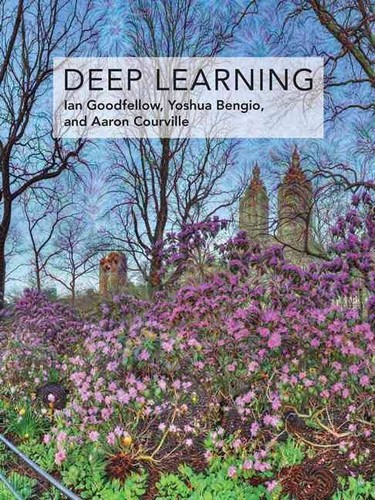
The academic "bible" of deep learning, with a Turing Award winner among its authors, and legally free on the web.
As an Amazon Associate, Zendoric earns from qualifying purchases; the price does not change for you. · all our recommended books →
🔗 Related on Zendoric
- OpenAI says its agents solved Navier-Stokes. Until the proof survives review, it's an announcement · 2026-09-09
- OpenAI says it has solved Navier-Stokes with a swarm of 10,000 agents, but sidesteps the million dollars that would confirm it · 2026-09-09
- OpenAI says it has solved Navier-Stokes with AI, but the row over credit overshadows the achievement · 2026-09-10