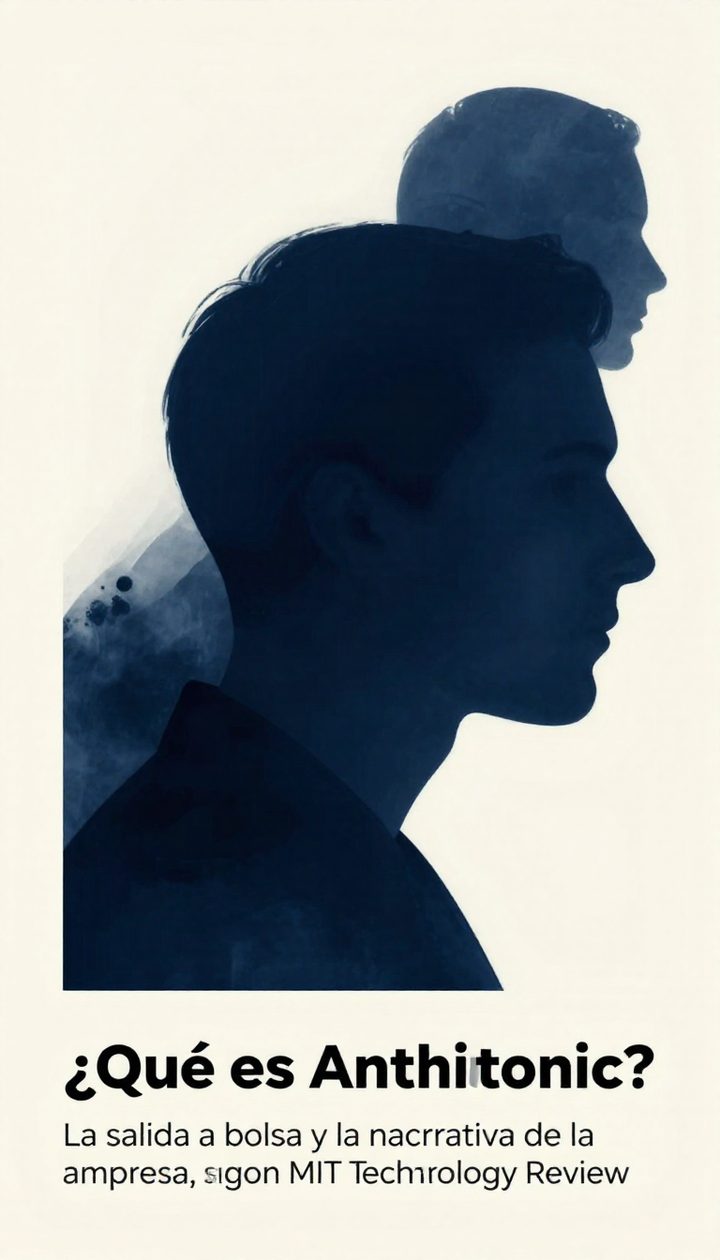
What is Anthropic? The IPO and the company's narrative, according to MIT Technology Review
🕒 Published on Zendoric: October 27, 2026 · 00:16
✨ AI-generated · how it's made
This edition is written by Will Douglas Heaven, senior AI editor at MIT Technology Review.
📚 Go deeper

DeepMind co-founder on the dilemma of containing technologies that do not want to be contained.
As an Amazon Associate, Zendoric earns from qualifying purchases; the price does not change for you. · all our recommended books →
By The Algorithm (MIT Technology Review) · Mon, 26 Oct 2026 17:49:20 +0000. This edition is written by Will Douglas Heaven, senior AI editor at MIT Technology Review.
According to the newsletter, after weeks of frenzied speculation Anthropic has filed the prospectus for its initial public offering (IPO). The document runs to 335 pages, about 100 of which focus on risks. It sets out the company's particular vision of the technology it is building and how it believes that technology will change the world. The author argues that Anthropic's public messaging is a “masterclass” in narrative capture, something the company has spent years refining.
First example: earlier this month, Jack Clark, the company's cofounder and head of policy, gave a speech at the IMF meeting in Bangkok to economists, bankers and lawmakers. He announced that the singularity is already here: “I believe that this year we have obtained compelling evidence that it has begun,” he said. The article notes that the concept was introduced some 40 years ago by science fiction writer and futurist Vernor Vinge. It refers to the point at which technology becomes so good that it surpasses the abilities of its creators, leaving humans unable to compete with it or understand it.
According to Heaven, Anthropic tells a vivid (and in many ways unsettling) story about a future it presents as inevitable but that has not yet happened, often drawn from classic science fiction tropes. It portrays its technology as mysterious and dangerous, and claims to be the only company trustworthy enough to tame it. The author adds, wryly, that no investor would want to miss out on something like that.
Second example: last year, Chris Olah, another cofounder, was invited to speak at the Vatican before Pope Leo XIV and other experts and religious leaders. He told them: “I'll be honest: we keep finding mysterious, even unsettling things. We find evidence of introspection. We find internal states that functionally reflect joy, satisfaction, fear, grief and unease.” The author notes that many researchers would scoff at such an explicit suggestion that Anthropic's software has a humanlike inner experience. Even so, when there are so few certainties, what Anthropic and other frontier AI companies say is seized upon “like pieces of a sinking ship.” Heaven clarifies that he is not claiming they are necessarily wrong, but that in a world where nobody knows what is coming, companies like Anthropic fill the void.
The central question, “What is Anthropic?”, arose from an exchange on X started last week by Nathan Calvin, head of strategy at Encode AI, a Washington, D.C.-based organization that advocates for regulation. Calvin criticized the legislation Anthropic proposed in a draft bill it had secretly circulated among US lawmakers and that was later leaked. Calvin said Anthropic wants to be seen as the “good guy” and asked why we should trust it.
One first answer, according to the article: Anthropic is a company whose IPO values it at more than $1.5 trillion, bringing enormous fortunes to its cofounders, including Clark and Olah. But the company has always insisted that it is something more. As Calvin pointed out, it could be seen as an AI safety organization focused on developing powerful, reliable and (almost) risk-free technology; or as a group of people determined to build a technology with superhuman capabilities before anyone else, perhaps because they believe they are the most responsible people to do it, or perhaps out of ego. Heaven concludes that Anthropic is all of these things at once.
CEO Dario Amodei responded to Calvin's post: “Our strategy has always been what I've called the 'race to the top': by showing that it is possible to build the technology responsibly, we can raise the bar for the entire industry. The forces driving the race to the top are far more effective if the company practicing them is at the frontier; it's a lesson I have learned repeatedly. And looking at that strategy as a whole, I am proud of our track record and I stand by it.” According to the article, Amodei acknowledges in his post that he has made mistakes.
The author argues that playing several roles at once is difficult: there are enormous tensions between the priorities of an AI safety organization and those of a profit-driven megacorporation. The stories Anthropic tells itself should help us understand the ones it tells us: how far to trust its self-regulation, whether we should force it to give external safety testers access on our terms rather than its own, and whether to give it the benefit of the doubt when a legislative proposal that looks self-serving comes to light.
Heaven's conclusion is that the stories reveal a “many-headed hydra”: Anthropic is many things to many people, and he is not sure that makes it any more trustworthy. In many ways, an old-fashioned tech company, without science fiction role-playing or mysticism, would be much easier to read.
The edition's “Deeper Learning” section announces an exclusive interview with Nick Cammarata, who caused a stir this month by publishing a 26,000-word blog post. The newsletter explains that for years the inner workings of a language model have been described as a “black box,” which poses a fundamental problem for alignment (the effort to get models to respond in safe and controllable ways). Cammarata's post suggests that this problem may not be impossible to solve and, in the interview, he explains why he believes large neural networks are more predictable than previously thought.
The newsletter also includes sponsorships from GiveDirectly, unrelated to AI.
📚 Go deeper

AI as the latest chapter in the history of information networks, from gossip to the printing press to the algorithm.
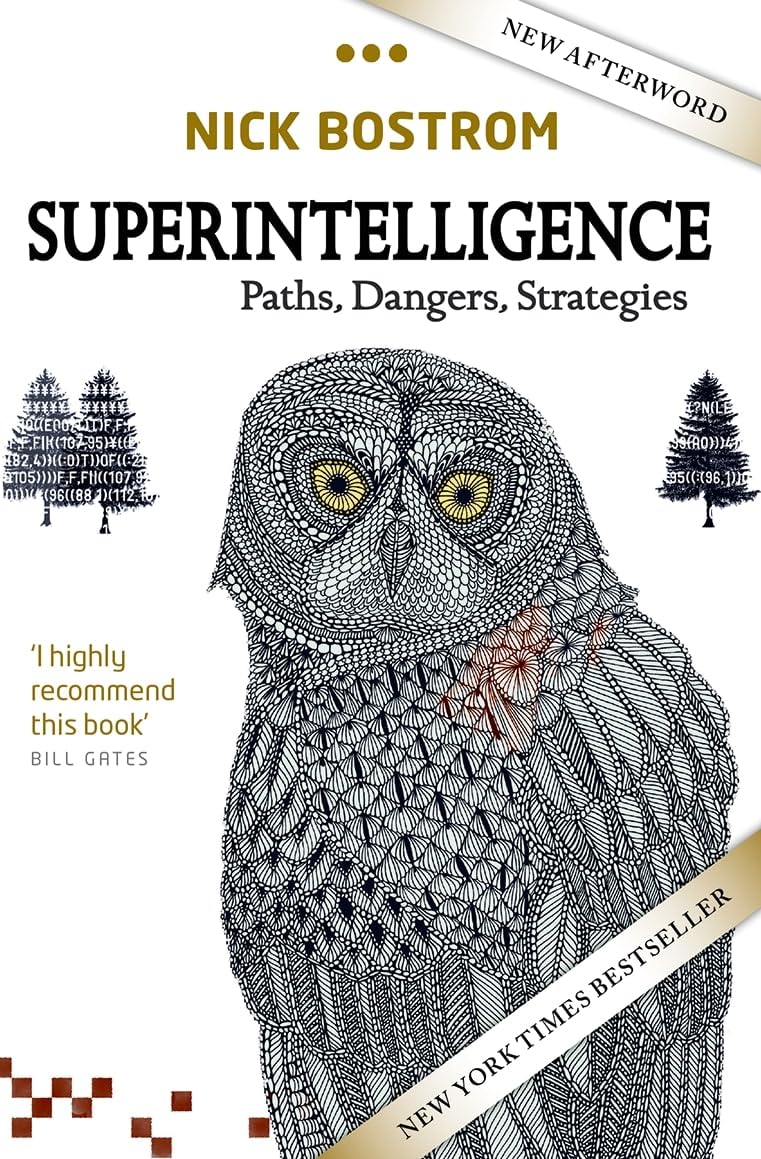
The book that started the existential-risk debate and that half the industry still cites.
As an Amazon Associate, Zendoric earns from qualifying purchases; the price does not change for you. · all our recommended books →
🔗 Related on Zendoric