Executive briefing: AI as a new economic input and how to allocate the capacity it frees up

🕒 Published on Zendoric: October 26, 2026 · 08:28
✨ AI-generated · how it's made
The email introduces a Sunday briefing for paid subscribers (Executive Circle) of Nate's Substack. The available body contains only the introduction and table of contents; the detailed analysis does not appear in the email.
📚 Go deeper

How opaque algorithms decide who gets credit, a job or parole — and why they tend to punish the same people.
As an Amazon Associate, Zendoric earns from qualifying purchases; the price does not change for you. · all our recommended books →
By Nate (Nate's Substack) · 25 Oct 2026.
The email introduces a Sunday briefing for paid subscribers (Executive Circle) of Nate's Substack. The available body contains only the introduction and the table of contents; the detailed analysis does not appear in the email.
The central thesis is that procurement teams are trying to fit AI into traditional product and service contracts, while finance has to justify a return on something whose useful applications are still being discovered. Individuals, meanwhile, see what the tools can do and wonder where they fit in a company that hasn't figured it out either. The author argues that these problems are connected: intelligence can now be bought and put to work wherever one decides, meaning an economic input has been acquired that we do not yet know how to allocate well.
The author illustrates the idea with the approval of a company-wide AI subscription: what is bought is access to intelligence, but that access does not include knowing which customer problem to solve, how to connect the relevant systems or how to make the resulting service useful enough for customers to use it. Someone has to supply all of that.
According to the text, this deserves the CFO's attention, as it may justify buying more than access to a model, including a deeper partnership with whoever knows how to make that intelligence productive. It also matters to the individual, because whoever supplies that judgment may end up responsible for far more work than they could carry out personally. The author sums it up this way: we are becoming managers of intelligence before anyone gives us a management title.
The briefing covers five sections: (1) separating what is actually being bought, distinguishing what is billed, who does the work and who keeps the profit, and when outcome-based pricing or forward-deployed engineers make sense; (2) reading the return before the invoice confuses things, that is, why the price shows up before the value and how to tell the value the company creates from the value it retains; (3) making a partner earn its share, with the questions to settle before giving a vendor equity or a percentage of revenue and how to value what the company itself brings; (4) becoming the person who allocates intelligence, directing AI toward problems the company has kept postponing and making that judgment visible; and (5) funding something that was not possible before, with a concrete path for a CEO or CFO to commit people and money to a new revenue opportunity, with clear signals for when to scale up or stop.
The email closes with a promotion: Executive Circle members receive these Sunday briefings, access to Nate's Library MCP and a private Slack for executives. No figures, cases or specific data are provided beyond this outline.
📚 Go deeper
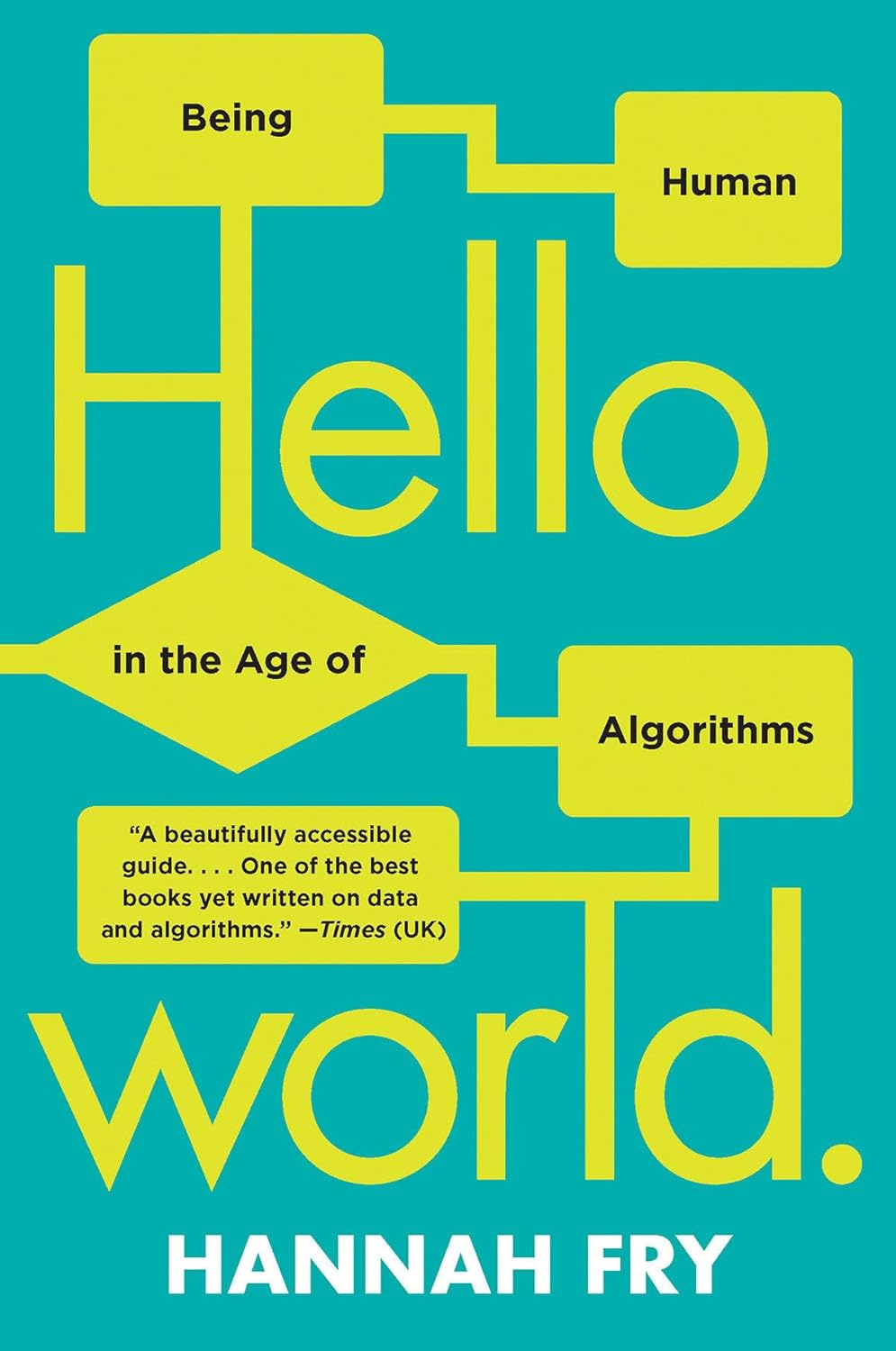
Algorithms in justice, medicine, cars and art, explained with British humor and mathematical honesty.

AI as the latest chapter in the history of information networks, from gossip to the printing press to the algorithm.
As an Amazon Associate, Zendoric earns from qualifying purchases; the price does not change for you. · all our recommended books →
🔗 Related on Zendoric
- AI agent swarms: what must survive a handoff and what must be able to be withdrawn · 2026-10-19
- Wall Street is already debating on air which sectors agentic AI will upend (though the details stay in the studio) · 2026-09-23
- Nate's Substack: the five human skills that grow alongside AI agents · 2026-10-12