Stallone gives in to AI in film: he's right that it won't be stopped, but beginning actors will pay the price
🕒 Published on Zendoric: October 24, 2026 · 00:20
✨ AI-generated · how it's made
Stallone wanted to de-age Rambo with AI, and Hollywood was outraged. He admits the complaints are "correct" but believes stopping the technology is impossible. The most valuable part is his diagnosis of who will pay the cost.
📚 Go deeper

The best starting book if you're not technical: a Wharton professor explains how to work WITH AI — when to delegate, when to supervise, when to keep i
As an Amazon Associate, Zendoric earns from qualifying purchases; the price does not change for you. · all our recommended books →
By Infobae · October 23, 2026.
Sylvester Stallone, 80, is defending the use of artificial intelligence in film after the backlash over his idea for a "half-human, half-AI" Rambo prequel. He said so on The Overlap podcast: "I'm going to get in trouble for this, but artificial intelligence is here to stay." According to Infobae, he had also gone into detail earlier on Power Players with Brian Sozzi, cited by Yahoo Finance on October 15.
The proposal was for Stallone to play an 18-year-old John Rambo, before Vietnam, with his performance blended with AI. By his account, the producers turned it down. The prequel, directed by Jalmari Helander (Sisu), will star 30-year-old Noah Centineo and is slated for June 4, 2027. Stallone is an executive producer but will not appear on screen.
He backs his argument with precedents. He cites the digital de-aging of De Niro, Pacino and Pesci in Scorsese's The Irishman, and the opening sequence of Indiana Jones and the Dial of Destiny, in which Harrison Ford appears as he did in the 1980s. In the latter, according to Stallone himself, the rest of the cast is real and only one character is recreated.
Most striking is that he does not dispute his critics: "Their complaints are correct. They are. But we can't stop this. It's an avalanche. If you don't get on, it's going to run you over." He adds a personal warning: he advised his daughter Scarlet Rose, an actress, to go into video games or something else.
**Our take.** Stallone conflates two different things, and they are worth separating. The first is his own case: a living actor who consents to, and benefits from, recreating his own likeness. That is a legitimate choice, and the most defensible use of AI in film. The second is the fatalism ("it's an avalanche, it's out of our control"). That part is debatable. Just because a technology cannot be stopped does not mean it cannot be governed: consent, compensation and limits on digital replicas are human and contractual decisions, not laws of nature. His example of "20 Elvis avatars" describes exactly what those rules should prevent.
The most honest part of his remarks is his admission about the cost. In the short term, it falls on actors starting out: no name, no bargaining power and fewer roles to compete for. That someone with his clout in the industry advises his daughter against the profession is a data point that carries more weight than any report. More broadly, in the employment series we follow, the pattern repeats: what is routine and replaceable is exposed, while unique talent and presence hold up. But the entry level, where the craft is learned, is the one narrowing the most.
In the long term, the core thesis still stands: tools that make production cheaper can open filmmaking to many more creators, and therein lies the promise of a more abundant culture. But that future will not arrive on its own. It requires the industry, unions and lawmakers to establish who controls, and who gets paid for, each digital likeness. Riding the wave, as Stallone urges, is reasonable. So is deciding who gets to surf it.
📚 Go deeper
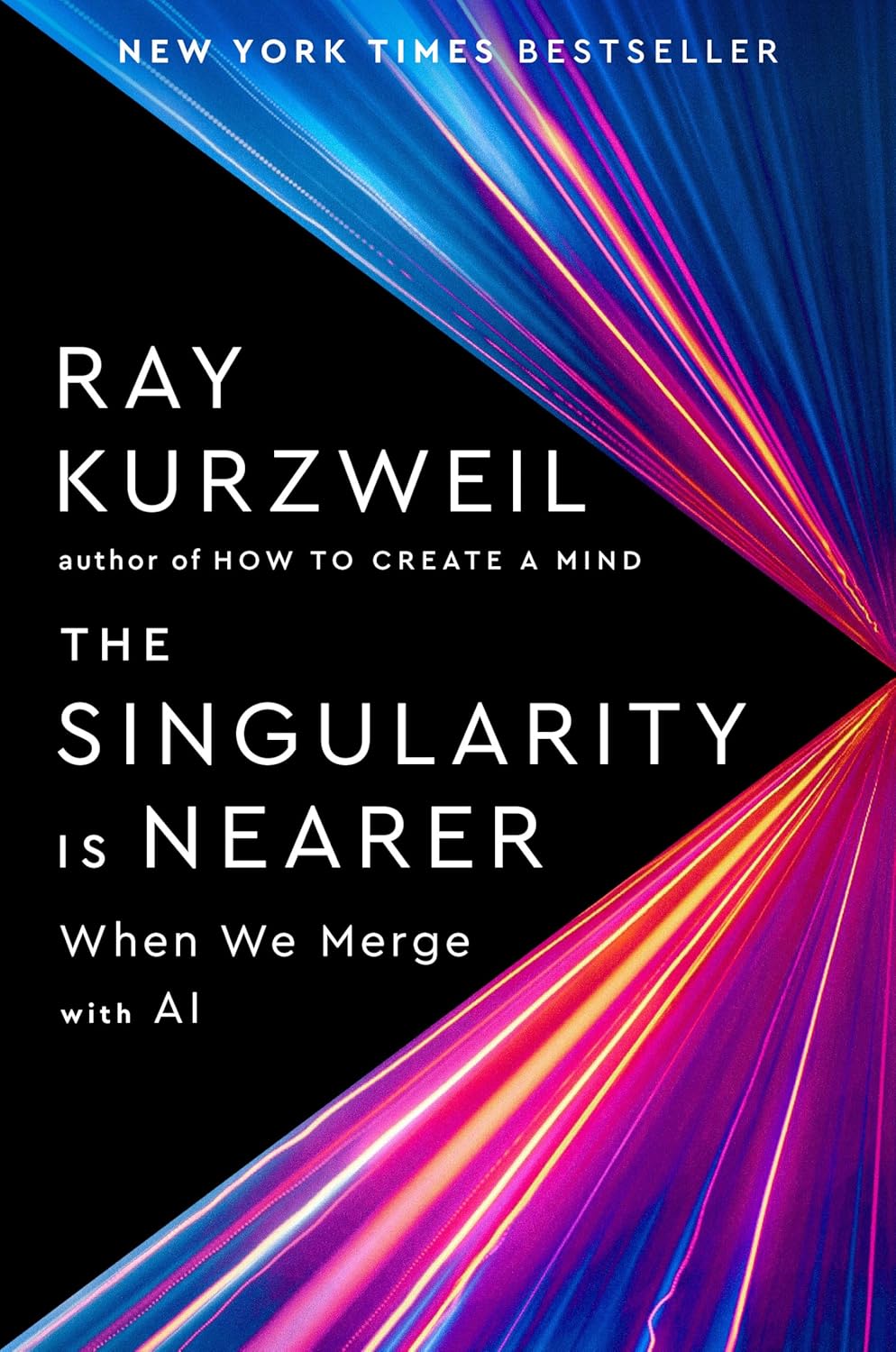
Twenty years after "The Singularity Is Near", Kurzweil revisits his predictions and keeps the date: human-AI merger around 2045.

AI as the latest chapter in the history of information networks, from gossip to the printing press to the algorithm.
As an Amazon Associate, Zendoric earns from qualifying purchases; the price does not change for you. · all our recommended books →
🔗 Related on Zendoric