The Anthropic–Pentagon case: 17 former officials warn that punishing AI safeguards is costly for national security

🕒 Published on Zendoric: October 24, 2026 · 00:20
✨ AI-generated · how it's made
Seventeen former senior national security officials are asking the D.C. Circuit to review the ruling that upholds the ban on Anthropic. Their argument: if disagreeing over how AI is used is enough to get punished, safeguards become meaningless.
📚 Go deeper

The best starting book if you're not technical: a Wharton professor explains how to work WITH AI — when to delegate, when to supervise, when to keep i
As an Amazon Associate, Zendoric earns from qualifying purchases; the price does not change for you. · all our recommended books →
By MeriTalk · October 23, 2026.
Seventeen former senior U.S. national security officials have asked the D.C. Circuit Court of Appeals to reconsider its ruling on Anthropic. The court, in a 2-1 decision, rejected the company's challenge to the Pentagon's designation of it as a "supply chain risk." According to the brief filed on October 20, that decision could weaken national security and discourage AI developers from adopting safeguards.
The signatories include former Director of National Intelligence Avril Haines, former national security advisers Jake Sullivan and Susan Rice, former Deputy Secretary of State Wendy Sherman and former Homeland Security Under Secretary Suzanne Spaulding. According to the outlet, their careers span Republican and Democratic administrations.
**What happened**
It began as a contract dispute. According to MeriTalk, the Pentagon wanted to use Claude for "all lawful uses." Anthropic objected to two applications: mass surveillance and fully autonomous weapons. After negotiations broke down, Defense Secretary Pete Hegseth ordered the company designated a supply chain risk.
The legal framework is the Federal Acquisition Supply Chain Security Act of 2018 (FASCSA), which gives the government authority to address supply chain risks in federal procurement. The court found that the Department of Defense had "ample support" for concluding that the use of Claude by the department or its contractors posed a risk. Anthropic alleges unlawful retaliation; the Trump administration defends the move as a national security decision.
**The former officials' arguments**
The brief makes three points. The first is procedural: the designation was announced before the administrative review was complete. Hegseth signed the formal determination on March 3, four days after announcing it publicly. According to the signatories, a legitimate determination requires identifying a specific threat, assessing its consequences, considering alternatives and documenting the reasoning before acting. "Conclusion first and justification later is the hallmark of pretext," they write.
The second concerns strategic cost. The brief notes that the Pentagon remains interested in Claude Mythos, Anthropic's model with advanced cybersecurity capabilities, as an example of what it costs to exclude the company while the U.S. competes with China.
The third concerns free speech. The signatories cite Hegseth's criticism of Anthropic's "sanctimonious rhetoric," "virtue signaling" and "Silicon Valley ideology" as evidence that its public stance played a role. The brief also notes that a federal court in California granted Anthropic summary judgment on August 27 on its First Amendment, due process and Administrative Procedure Act claims. The signatories are asking the full D.C. Circuit to review the case.
It is worth remembering that this is an advocacy brief, however weighty its signatories. It is an argument, not a judicial finding. And the panel's ruling, which is a decision, holds the opposite.
**Our take**
We think the underlying thesis is correct and goes beyond Anthropic: a state that wants advanced AI should not turn a provider's decision to limit how its products are used into a commercial offense. The signatories sum it up well: no company can keep its commitment to developing safely if any safeguard the Pentagon dislikes invites a risk designation.
There is a paradox the brief highlights. A provider is barred as a risk, while interest in its most powerful cybersecurity model remains. The two can coexist on paper, but they are hard to defend as a coherent risk assessment.
We should also be honest about the other side. A military can legitimately argue that it does not want to depend on a provider that decides case by case which uses it accepts. That is a serious argument about operational control, and the court has sided with it for now. The question is not whether the Pentagon can choose its contractors, but whether it can use a tool designed for supply chain threats to punish a policy disagreement. That is what is at stake procedurally.
In line with what we advocate on governance, the precedent matters more than the case. If companies' voluntary safeguards are today one of the few real barriers against uses such as mass surveillance, punishing them sends the opposite message to the one we need: that whoever sets limits loses contracts. For industry context, this affects every lab that negotiates with the federal government, not just one.
In the short term, the legal uncertainty is real and could chill relations between the industry and the administration. In the long term, AI will only deliver on its promise of health and abundance if it is deployed with trust, and trust requires that limits on use can be debated without reprisals. The final ruling, which could take time, will set a precedent on where that line lies.
📚 Go deeper

The reference manual for building products on top of AI models: prompts, RAG, fine-tuning, agents, evaluation and deployment.
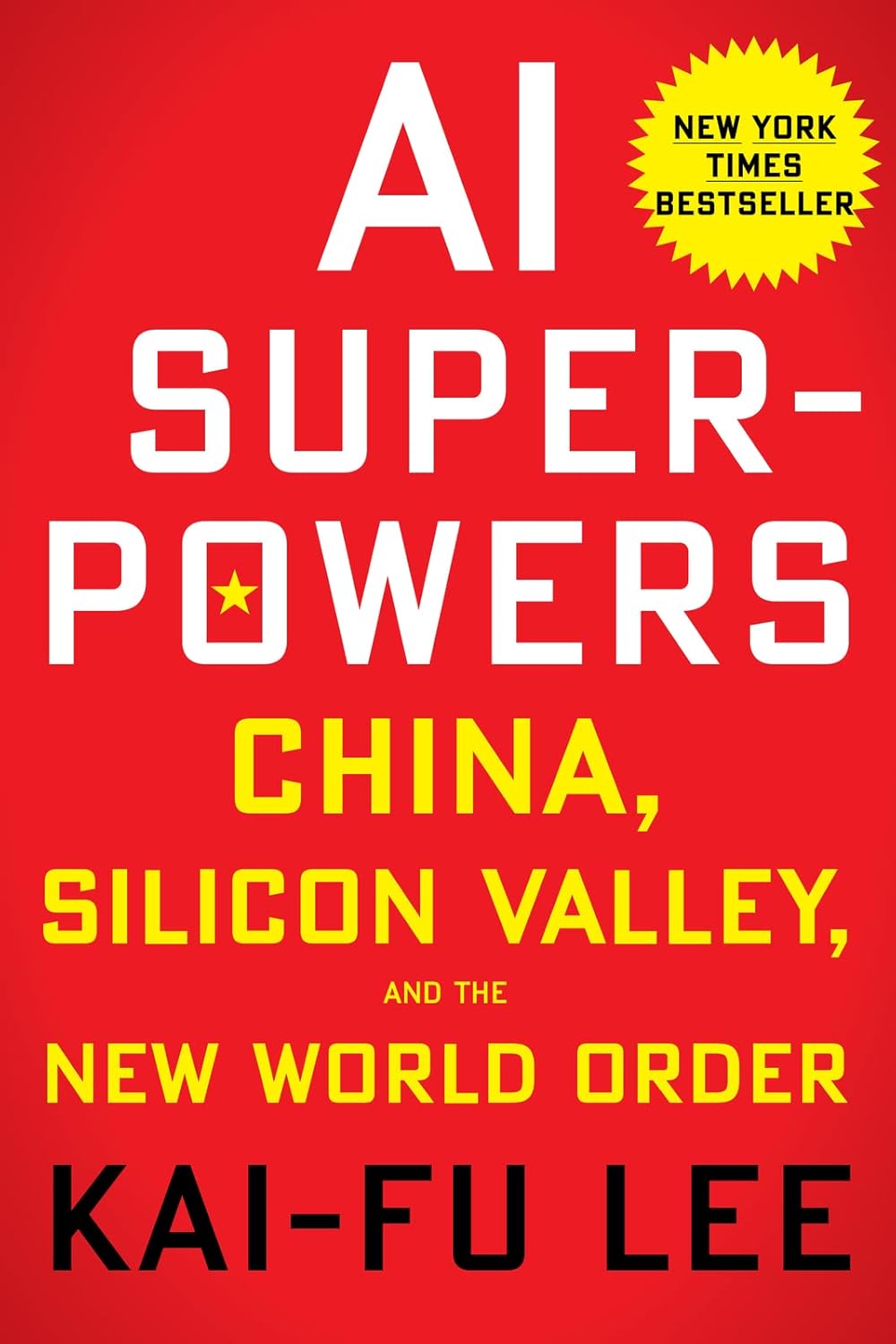
China vs.
As an Amazon Associate, Zendoric earns from qualifying purchases; the price does not change for you. · all our recommended books →
🔗 Related on Zendoric
- Punishing AI safeguards sets a costly precedent: 17 former senior officials back Anthropic against the Pentagon · 2026-10-24
- OpenAI and Anthropic hire former Trump officials to gain influence in Washington · 2026-10-13
- Anthropic, both accuser and accused: the complaint against Alibaba lands amid a regulatory storm · 2026-06-26