Mexico bets on its own AI to get medicines delivered: the challenge isn't the algorithm, it's logistics

🕒 Published on Zendoric: October 24, 2026 · 00:20
✨ AI-generated · how it's made
The Mexican government is creating a council of public-sector experts to optimize the distribution of 3 billion medical items a year. It's unflashy but useful AI, and its success will be measured in shortages, not platforms.
📚 Go deeper
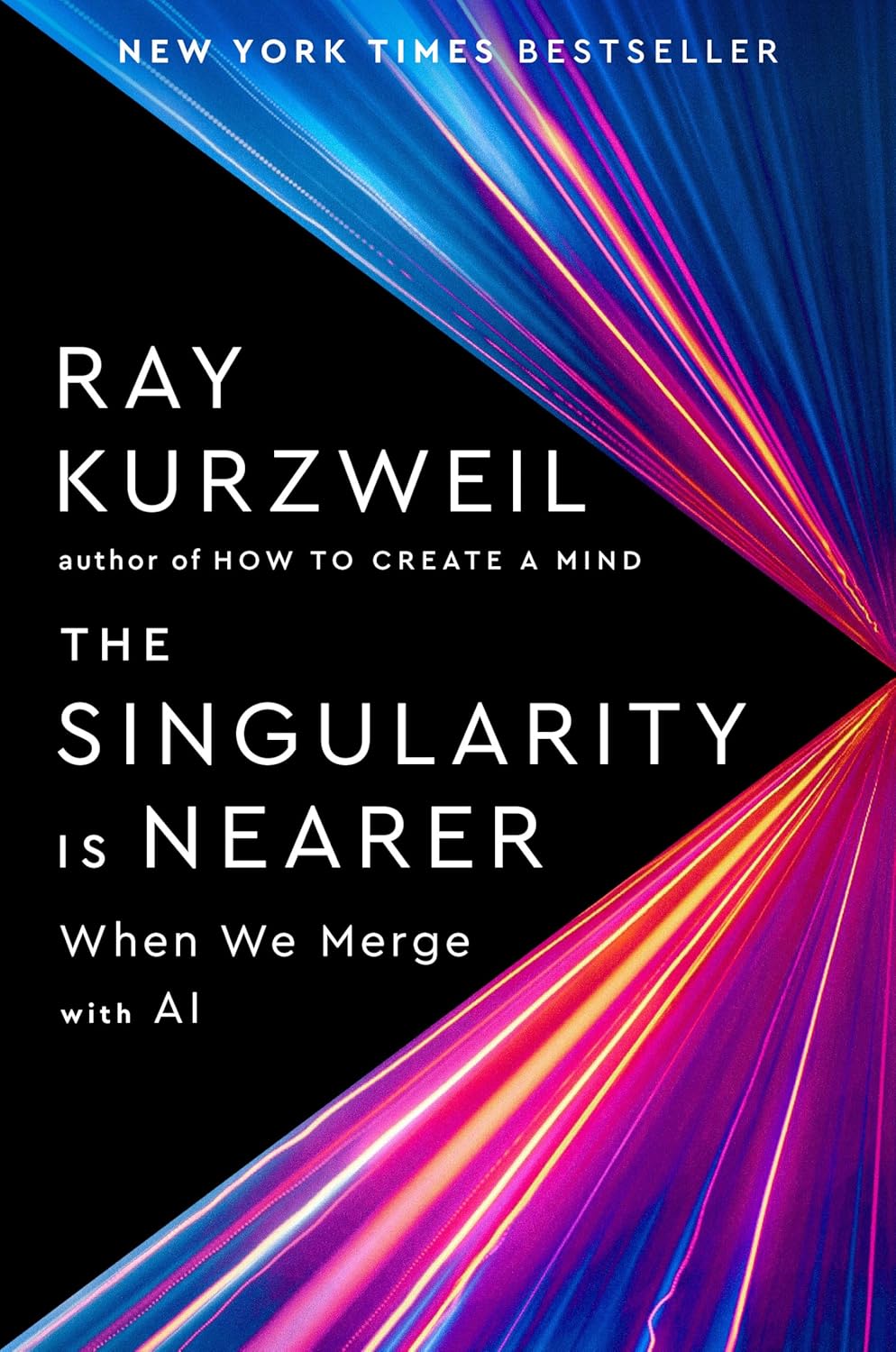
Twenty years after "The Singularity Is Near", Kurzweil revisits his predictions and keeps the date: human-AI merger around 2045.
As an Amazon Associate, Zendoric earns from qualifying purchases; the price does not change for you. · all our recommended books →
By Alcanzando el Conocimiento · October 23, 2026.
Mexican President Claudia Sheinbaum announced on October 23 the Advisory Council for the Digital Transformation of the Health Sector. Its mission is to design a system that tracks every medicine from supplier to patient. According to the outlet, the first work plan will be presented around November 23 and implementation would begin in January 2027, initially focused on the IMSS and IMSS-Bienestar.
The scale, according to Eduardo Clark, Undersecretary for Integration and Development of the Health Sector, is enormous: some three billion units of medicines and supplies a year, for more than a thousand hospitals and nearly 15,000 primary care centers. The problem being targeted is that buying medicines does not guarantee they are where they are needed: they can be purchased and stored without reaching hospital pharmacies in time.
The plan includes three lines of work: real-time needs management, warehouse and inventory control, and route and allocation optimization. The council is made up of four specialists from public institutions (UNAM, Tecnológico Nacional de México, CIMAT and IPN), along with young people from the Digital Transformation Agency's Artificial Intelligence Factory and graduates of the Public AI Training Center.
Two relevant facts: the government chose Mexican specialists instead of commissioning the system from a private company, and there is still no specific budget. Clark noted that projects like this can cost hundreds of millions of pesos.
Our take: the most interesting thing is how unglamorous the case is. There is no generative model promising miracles, but rather operations research, the branch of mathematics that studies how to allocate limited resources as efficiently as possible. In general, AI adds the most value where there is data, repetitive decisions and clear costs of getting it wrong, and healthcare logistics fits well. It is an example of applied AI that improves lives without any promise of superintelligence.
Caution is also warranted. A system is only as good as its data: if inventories are poorly recorded in hospitals with weak connectivity or electricity, the algorithm will optimize over noise. The president herself acknowledged that training, connectivity and electrical infrastructure will be needed, and the government is working with the CFE on this. The timeline is also tight: about a month for a first plan and just a few months to begin implementation across a network of this size.
The bet on public capabilities has clear advantages: less dependence on vendors, knowledge that stays within institutions and control over an essential service. The risk is the opposite: that in-house development suffers from a lack of continuity, resources or retained talent. We apply here the usual question about any technology commitment: who audits the results? The article notes that success should be measured in reduced shortages, delivery time, effective availability and waste, with verifiable information. That is the right bar, and the data must be required to be published.
For our core thesis, projects like this matter. Before eradicating diseases, an existing treatment has to reach the patient who needs it. In the long term, AI that removes those bottlenecks is part of the abundance we advocate. In the short term, the test will be whether there are fewer empty shelves in rural health centers in January 2027.
📚 Go deeper

AI as the latest chapter in the history of information networks, from gossip to the printing press to the algorithm.

DeepMind co-founder on the dilemma of containing technologies that do not want to be contained.
As an Amazon Associate, Zendoric earns from qualifying purchases; the price does not change for you. · all our recommended books →
🔗 Related on Zendoric
- PRECISION-AI: Chile's 5 billion-peso bet on AI oncology, and why the real challenge is clinical adoption · 2026-07-09
- Musk concedes Anthropic leads AI: a rare public reversal that says what the benchmarks already showed · 2026-07-10
- Alicante tries something more useful than a chatbot with AI: matching jobs and translating bureaucracy · 2026-07-13