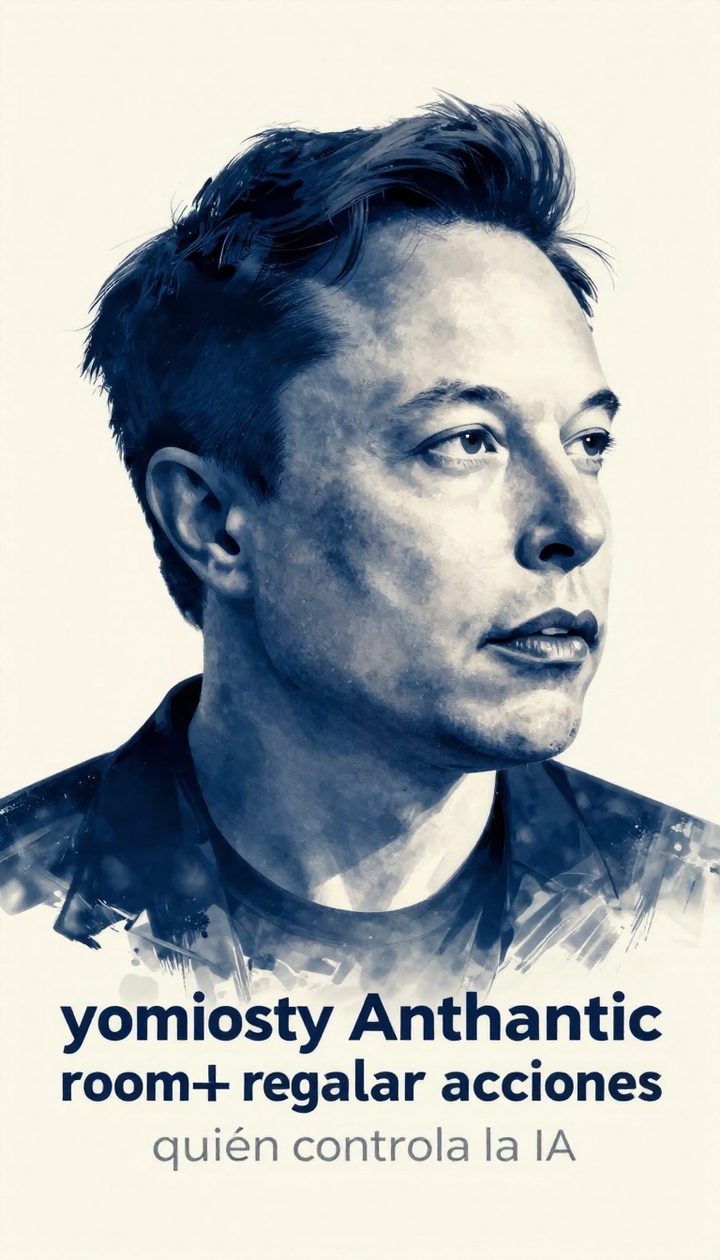
Musk and Anthropic pledge to give away shares: the gesture is big, but the key question is who controls AI
🕒 Published on Zendoric: October 20, 2026 · 00:19
✨ AI-generated · how it's made
Elon Musk promises SpaceX shares for every child in the U.S., and Anthropic is allocating 5% to a public benefit fund. The headlines talk about generosity. The underlying issue is power.
📚 Go deeper

The best starting book if you're not technical: a Wharton professor explains how to work WITH AI — when to delegate, when to supervise, when to keep i
As an Amazon Associate, Zendoric earns from qualifying purchases; the price does not change for you. · all our recommended books →
By The American Bazaar (with coverage from WSJ, SiliconANGLE and Yahoo Finance) · October 19, 2026.
According to the headlines in the coverage, Elon Musk has pledged SpaceX shares for every child in the United States. Anthropic, for its part, is committing 5% of its equity to a public benefit fund. SiliconANGLE describes pledges totaling billions of dollars in stock.
The material we have seen is sparse: only headlines and descriptions. We do not know the specific mechanisms, such as the timeline, who would manage the funds, the conditions or how each distribution would be valued. For that reason, we are not giving figures or details we cannot verify. These are also announced pledges, not completed transfers.
The press is already framing them in two ways. A WSJ opinion column suggests that Musk "beats" Anthropic when it comes to giveaways. Yahoo Finance, by contrast, says Anthropic's pledge raises big questions about who controls AI. Both are opinions from those outlets, not proven facts.
**Our take.** Comparing them as if it were a generosity contest is a mistake. What matters is the governance design. A 5% stake allocated to a public fund matters less for its monetary value than for the voting power, control of the fund and accountability attached to it. A fund managed transparently and independently can redistribute part of the value AI generates. One controlled by the company itself would be, above all, a tool for reputation and influence.
For the pledge to be meaningful, we would need to see who appoints the managers, whether there is an external audit and whether the beneficiaries have any say. Without those answers, the announcement is merely an intention.
More broadly, the idea of sharing part of the equity of the companies building AI fits our long-term thesis. If AI generates abundance, it must reach everyone and not be concentrated in a few hands. In the short term, the transition will bring job losses and inequality. That is why well-designed distribution mechanisms are a necessary piece, not an ornament. We will return to this topic when the details are known.
📚 Go deeper

The reference manual for building products on top of AI models: prompts, RAG, fine-tuning, agents, evaluation and deployment.

The definitive piece of investigative journalism on OpenAI: 260+ interviews, the clash between safety and speed, and the attempted firing of Sam Altma
As an Amazon Associate, Zendoric earns from qualifying purchases; the price does not change for you. · all our recommended books →
🔗 Related on Zendoric
- A SpaceX share for every child vs. Anthropic's nonprofit fund: the debate over who shares AI-era wealth has begun · 2026-10-20
- Anthropic hands 5% of its shares to a public benefit fund: the value of the pledge lies in details we don't yet know · 2026-10-19
- Anthropic sets aside 5% of its shares for a public benefit fund: the mission now depends on the company's value · 2026-10-19