A facial photo to predict cancer survival: FAHR-Face brings the facial biomarker to oncology, with caveats
🕒 Published on Zendoric: October 20, 2026 · 00:19
✨ AI-generated · how it's made
Mass General Brigham trains a model on more than 40 million faces that estimates the biological age and mortality risk of cancer patients from a photo. It promises cheap triage, but still lacks clinical-use validation and raises privacy questions.
📚 Go deeper

AI as an extractive industry: the lithium, the energy, the underpaid data-labeling work and the bodies behind the cloud.
As an Amazon Associate, Zendoric earns from qualifying purchases; the price does not change for you. · all our recommended books →
By Mass General Brigham · October 19, 2026.
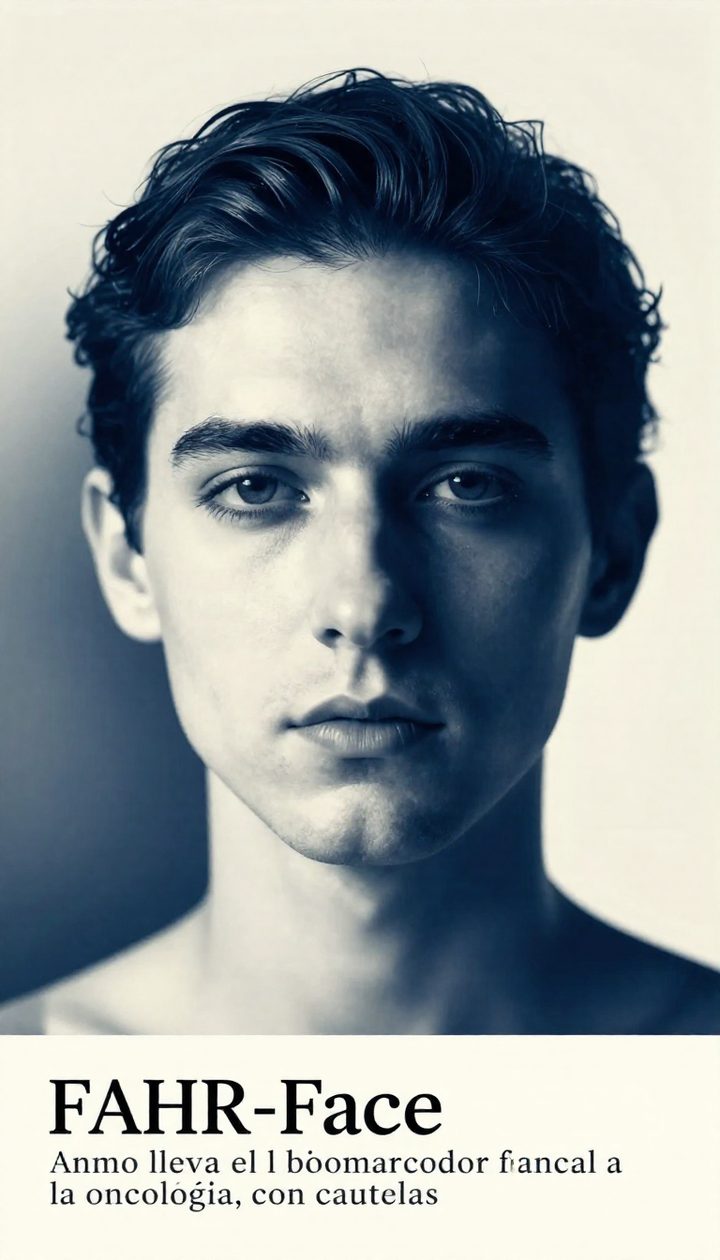
Researchers at Mass General Brigham have unveiled FAHR-Face (Foundation Artificial Intelligence for Health Recognition), a foundation model trained on more than 40 million facial images. A foundation model is a large network that learns a general representation and is then adapted to specific tasks. From it, they have developed two tools, according to the study published in Lancet Digital Health.
The first, FAHR-FaceAge, estimates a patient's biological age, and according to the authors does so more accurately than previous algorithms. The second, FAHR-FaceSurvival, directly predicts survival in cancer patients from a photograph. According to Hugo Aerts, senior co-author and director of the Artificial Intelligence in Medicine (AIM) program, it is the first demonstration that a model can predict cancer survival directly from a simple photo.
The data given in the press release: the gap between estimated facial age and chronological age was independently associated with survival. The two tools are only weakly correlated, and both remained associated with survival when analyzed together. Combining them improved the fit of the survival model in an external validation cohort. The release provides no specific performance figures, so we cannot gauge the size of the improvement.
Each tool looks at different areas. FaceAge focuses on the nasolabial folds, the forehead above the eye sockets and the temples. FaceSurvival assesses the region under the eyes and the bridge of the nose.
Other findings: heavy alcohol use, drugs and smoking were associated with looking biologically older. Smoking showed the clearest pattern, with current smokers aging more than former smokers, and former smokers more than those who never smoked. According to Raymond Mak, the corresponding author, FaceAge was stable across pose, lighting, expression and makeup, and across most of the plastic surgeries tested, with a slight shift after rhinoplasty.
The team has also launched an ethics-board-approved online study, the FaceAge Research Study, where anyone can upload a photo and receive their research reading, thereby contributing data to validate the tool in more diverse populations.
Our take. The thesis: what matters is not the photo but the pattern. Foundation models make it cheaper to create new biomarkers, because each one doesn't have to be trained from scratch, as Aerts points out. A face is the cheapest clinical data in the world: it requires no blood work, scanner or lab. If these measures hold up in practice, they could help estimate frailty before recommending aggressive treatments such as radiotherapy, surgery or systemic therapy, precisely the use Mak describes. And it fits an idea we keep repeating: the value of clinical AI lies in leveraging data that already exists, without new tests.
Now, the caveats. First, association is not a decision: the fact that facial age is linked to survival does not show that changing a treatment based on it improves outcomes. The authors themselves insist the tool should support, not replace, medical judgment. Second, a risk of bias: the release speaks of expanding to more diverse populations, which suggests that validation is still pending. In general, models trained on faces can perform differently depending on skin tone, age or ethnicity, and in oncology that has consequences. Third, the risk of misuse. A survival score derived from a photo is sensitive data; in the hands of insurers or employers it would be problematic, and it calls for regulation on who can calculate it and with what consent.
Some transparency context is also in order: the institution has filed a provisional patent application on facial health algorithms, and several authors disclose ties to the pharmaceutical and radiotherapy equipment industries, although the release separates out those they say are unrelated to this work. The study was funded by the European Research Council. That's no reason for doubt, but it is a reason to wait for independent validation.
In the long run, the direction is encouraging. Medicine that estimates your physiological reserve in seconds and decides more judiciously whom to treat and at what intensity is more personalized medicine and less blindly aggressive, a step toward prevention and extended healthspan. In the short term, we need to demand performance data, trials that measure decisions and not just correlations, and clear privacy rules before a selfie counts as a prognosis.
📚 Go deeper

AI as the latest chapter in the history of information networks, from gossip to the printing press to the algorithm.

DeepMind co-founder on the dilemma of containing technologies that do not want to be contained.
As an Amazon Associate, Zendoric earns from qualifying purchases; the price does not change for you. · all our recommended books →
🔗 Related on Zendoric
- An AI that reads cancer survival odds from a selfie is promising, but its value is as a frailty gauge, not a verdict · 2026-10-20
- NewDays raises $16M for its companion AI against cognitive decline, with evidence from just 24 patients so far · 2026-09-03
- Tempus brings AI to oncology: models trained on petabytes of clinical data, with the (still unproven) promise of lowering mortality · 2026-09-09