Turnitin freezes until 2027 its clause to train AI on student work after a revolt by British universities

🕒 Published on Zendoric: October 19, 2026 · 00:19
✨ AI-generated · how it's made
Turnitin proposed using anonymized student submissions to develop its AI tools. Three British universities have already announced they will not renew. The case shows that student data is the new battleground for educational AI.
📚 Go deeper

THE AI textbook: used by 1,500+ universities.
As an Amazon Associate, Zendoric earns from qualifying purchases; the price does not change for you. · all our recommended books →
By The University Times · October 18, 2026.
Turnitin, the software most Irish and British universities use to manage students' digital submissions, has had to put a change to its license agreement (EULA, or end-user license agreement) on hold. According to The University Times, the amendment would have allowed the company to use submissions “in aggregated, anonymized and/or de-identified form” to “improve or develop AI tools and other products.” In practice, this amounted to an automatic opt-in.
The backlash has been strong. According to the outlet, the universities of Southampton, Westminster and Newcastle have announced they will not renew their contracts next academic year, explicitly citing the possible change to the AI policy. Sam Dickinson, union affairs officer at the York students' union, summed up the problem: students' intellectual property should belong to them.
Turnitin has responded that it will not change the EULA before September 2027, “to give us time to discuss any changes with customers.” According to the reports cited, it is negotiating a mutually acceptable solution with UCISA (Universities and Colleges Information Systems Association), the UK body for university information systems. The company also says that no student or staff data has been used to develop generative AI or large language models, and that it has no plans to use essays for that purpose.
There is an important technical distinction. According to the outlet, Turnitin's models classify text rather than generate it: they distinguish human writing from text that may have been AI-generated and flag suspicious submissions. According to its website, only institutions that have enabled the AI Originality Report currently consent to their data being used for training. Trinity College Dublin does not use that feature. According to Professor Alan Eustace, it verifies authorship through research trails, document version histories and oral assessments.
Our take: the dispute is less about technology than about trust and default settings. It is not enough for the company to say it has no plans to train generative models if the clause, as written, would allow it. A contract should match what is promised, and customers have understood that. They have voted by canceling, which is the clearest way to hold a company to account.
There is also an underlying irony. An AI detector needs examples of human writing to improve, and those examples are the work of the very students it later assesses. Without clear consent, students supply the raw material and also bear the risk of false positives. More broadly, detectors of AI-generated text are controversial because of doubts about their reliability, so academic integrity built on them rests on weak foundations.
That is why Trinity's approach seems the most sensible to us in the medium term. If AI makes producing text trivial, assessment must shift from policing the finished product to observing the process, through version histories, oral defenses and traceable work. It costs more in the short term, but it avoids an arms race between generators and detectors that nobody wins.
The case fits a view we hold: AI governance is increasingly decided in specific contracts and purchases, not just in laws. If universities and student unions secure explicit consent clauses, they will set a useful precedent for all educational AI. In the long run, AI-enhanced education will only be worth having if students trust that their work will not become fuel for others without their permission.
📚 Go deeper
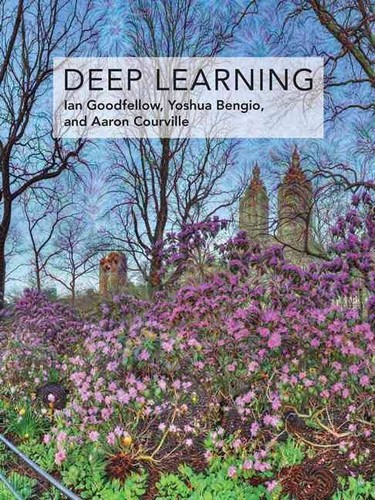
The academic "bible" of deep learning, with a Turing Award winner among its authors, and legally free on the web.

The memoir of the creator of ImageNet, the scientist who made the deep learning revolution in vision possible.
As an Amazon Associate, Zendoric earns from qualifying purchases; the price does not change for you. · all our recommended books →
🔗 Related on Zendoric
- Katy ISD hands out AI access by age: no generative chats until 8th grade · 2026-07-25
- AI detection no longer works: teachers are redesigning exams to demand the process, not the result · 2026-09-08
- Breast cancer leaves traces six years earlier: AI can already see them, and that forces a rethink of the entire screening process · 2026-06-28