Rivian will open its cars to third-party AI agents such as Anthropic: the assistant no longer belongs to the manufacturer
🕒 Published on Zendoric: October 19, 2026 · 00:19
✨ AI-generated · how it's made
RJ Scaringe revealed at TechCrunch Disrupt that Rivian vehicles will be able to run agents from labs such as Anthropic, with no date yet. The key is not the chatbot, but who controls the user's context and where the line on autonomy is drawn.
📚 Go deeper

The reference manual for building products on top of AI models: prompts, RAG, fine-tuning, agents, evaluation and deployment.
As an Amazon Associate, Zendoric earns from qualifying purchases; the price does not change for you. · all our recommended books →
By RivianTrackr · October 18, 2026.
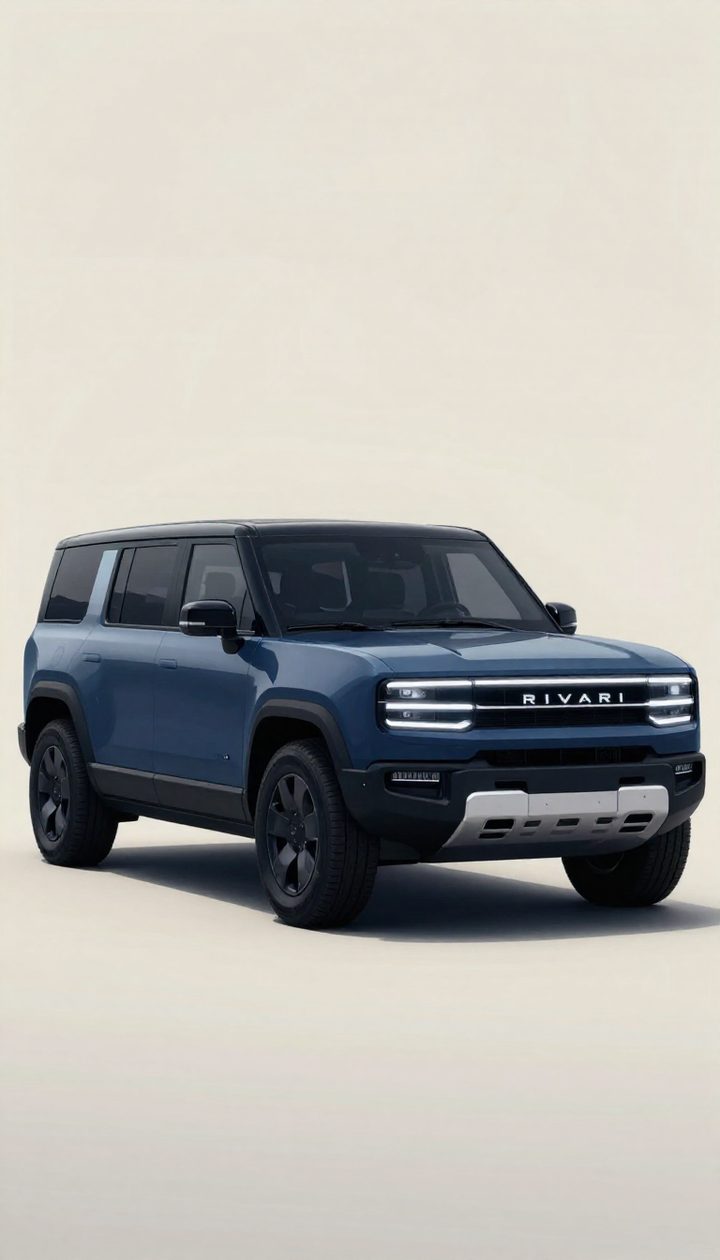
Rivian will in the future allow its vehicles to run AI agents from other companies, such as Anthropic. Its CEO, RJ Scaringe, said so at TechCrunch Disrupt this week, as reported by RivianTrackr. There is no timeline: the company points to its Autonomy & AI Day in December for more details.
The foundation already exists. Rivian Assistant runs on a proprietary agentic framework (a system that interprets what the user is asking for and routes it to the right part of the software). Scaringe compared it to a traffic light: simple requests are handled by a local model inside the car, while complex ones go up to the cloud, where another layer chooses among different models.
Today the only external connection is Google Calendar, active since May. According to Scaringe, integrating the big labs requires a lot of "plumbing" on Rivian's part and coordination with the labs themselves.
The example he gave is illustrative: asking the car to turn on the ventilated seats and then picking up a conversation from yesterday on another device about what to cook on Friday. The car would access the context the user has already built with their assistant on their phone or laptop.
Scaringe was explicit about one limit: vehicle controls, such as braking and steering, will not be handed over to an agent. According to the outlet, Tesla added Grok earlier this year, so Rivian would not be the first to put an AI assistant in the car. RivianTrackr expects this feature to arrive under the Connect+ subscription, where Rivian Assistant already lives; this is the outlet's expectation, not a company announcement.
Our take: what matters is not which chatbot sits in the dashboard, but who owns the user's memory. A car that accepts "bring your own assistant" turns the vehicle into one more terminal for a personal agent, just like the phone or laptop. Value shifts from the model to continuity of context. Broadly, this is the same dynamic as the battle over agent distribution and integration: the winner is whoever controls the plumbing and the standards, not just the smartest model. Rivian is betting on being the neutral layer, and Scaringe acknowledges that layer is costly to build.
The red line between conversing and driving is sensible, and it should hold. But it raises questions the announcement doesn't answer: what car data (locations, habits, in-cabin conversations) an outside lab will see, how what the local model processes is separated from what goes to the cloud, and who is accountable if an agent misbehaves on non-critical functions. With a local model for simple tasks and the cloud for complex ones, privacy design will be as important as capability design.
In the short term, this is convenience with data and dependency risks. In the long term, the direction is the right one: assistants that know us, follow us across devices and remove everyday friction, part of the abundance of time and attention that AI promises. December will tell whether Rivian delivers concrete standards and safeguards, or whether this remains a statement of intent.
📚 Go deeper

The definitive piece of investigative journalism on OpenAI: 260+ interviews, the clash between safety and speed, and the attempted firing of Sam Altma

DeepMind co-founder on the dilemma of containing technologies that do not want to be contained.
As an Amazon Associate, Zendoric earns from qualifying purchases; the price does not change for you. · all our recommended books →
🔗 Related on Zendoric
- The bottleneck of agentic AI is no longer the GPU: it's the hard drive that feeds it · 2026-07-09
- The distribution of Anthropic's $1.5 billion runs into publishers and agents claiming more than their due · 2026-09-07
- Anthropic opens Claude Marketplace with 2,000 connectors: the game is no longer the model, it's who controls distribution · 2026-09-28