A University of Córdoba website used as spam bait about “AI girlfriends”: the problem is the piece, not the topic
🕒 Published on Zendoric: October 14, 2026 · 00:19
✨ AI-generated · how it's made
The link we received as news about unexpected charges in virtual girlfriend apps is not an article. It is a URL on a university server with code embedded in the parameter, a typical spam pattern. We are discarding it as a source.
📚 Go deeper

THE AI textbook: used by 1,500+ universities.
As an Amazon Associate, Zendoric earns from qualifying purchases; the price does not change for you. · all our recommended books →
By Universidad de Córdoba (UCO) · October 13, 2026.
The feed headline ('is ai girlfriend chat worth it ai girlfriend app unexpected charges explained') does not correspond to any editorial content. We received no article text, only the title and a URL.
The URL points to a virtual tour page of the UCO's Central Research Support Service (SCAI). Its 'xml' parameter contains base64 data. Decoding it reveals an instruction for the krpano panorama viewer that loads an XML file from a GitHub repository unrelated to the university. This is a known injection pattern in viewers of this kind, used to plant spam or redirects on domains with a good reputation. We do not know whether the UCO has fixed the page, and we are not accusing the university of anything: it is most likely a victim of the technique.
Our take: there are no facts to analyze about 'AI girlfriends' or their charges. What is instructive is the mechanism. Spam is now built around trending topics, such as virtual companions, and hosted on trusted domains to slip into search engines and aggregators. Anyone feeding a keyword-driven feed should filter by domain, URL shape and actual content before publishing.
For readers, the same caution applies: if you come across a link that looks like this, do not open it. If the underlying issue is what interests you, namely recurring charges and microtransactions in AI companion apps, we will cover it when a verifiable source is available.
📚 Go deeper
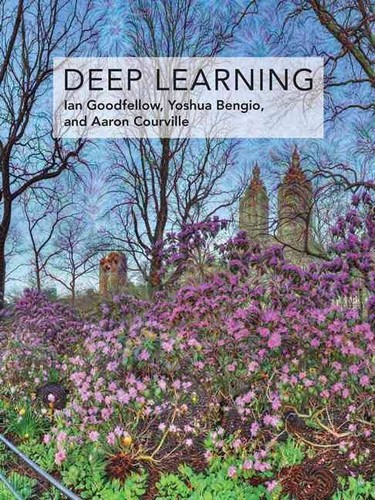
The academic "bible" of deep learning, with a Turing Award winner among its authors, and legally free on the web.

The memoir of the creator of ImageNet, the scientist who made the deep learning revolution in vision possible.
As an Amazon Associate, Zendoric earns from qualifying purchases; the price does not change for you. · all our recommended books →
🔗 Related on Zendoric
- A University of Córdoba URL used as spam bait about “AI virtual girlfriends” · 2026-10-14
- A virtual girlfriend “review” that isn't one: spam slips in through a University of Córdoba page · 2026-10-14
- A UCO virtual tour used as spam bait: no news about AI girlfriends, but a security lesson · 2026-10-14
Sources & references
- Universidad de Córdoba (UCO) — A University of Córdoba website used as spam bait about “AI girlfriends”: the problem is the piece, not the topic
- Universidad de Córdoba (UCO) — A University of Córdoba URL used as spam bait about “AI virtual girlfriends”
- Universidad de Córdoba (UCO) — A University of Córdoba URL used as spam bait is not a news story about virtual girlfriends
- Universidad de Córdoba (UCO) — A University of Córdoba URL used as spam bait: there's no story, just an abuse technique