AMD Helion measures AI in agents per watt: inference, not training, becomes the business

🕒 Published on Zendoric: October 13, 2026 · 00:19
✨ AI-generated · how it's made
AMD unveils Helion, an open rack with up to 32,768 CPU cores designed to run AI agents. Its pitch is not training power, but how many agents fit per watt. That's where the interest lies, along with what is still unknown.
📚 Go deeper

The story of NVIDIA and Jensen Huang: how a video-game card company ended up making the most coveted resource on the planet.
As an Amazon Associate, Zendoric earns from qualifying purchases; the price does not change for you. · all our recommended books →
By El Ecosistema Startup (with coverage from DiarioBitcoin) · October 12, 2026.
AMD has unveiled Helion, an open rack design that can hold up to 32,768 CPU cores. The company showed it at the Open Compute Project summit in San Jose. OCP is a consortium that sets open hardware standards for data centers. AMD says Helion will reach partner systems in November.
Helion comes in two versions. The first is CPU-only: 128 sockets of the sixth-generation Venice processor (Zen 6 architecture, 256 cores per chip), in “dense” 400-watt blades or “balanced” 600-watt blades. The second pairs general-purpose compute with up to 16 Instinct MI350P accelerators, split across two eight-GPU servers. Those accelerators work independently, with no interconnect fabric to scale across them.
That detail defines the product. Helion does not compete with Helios, AMD's training rack, which carries 72 MI455X accelerators and 31 terabytes of HBM4 memory. One trains frontier models and the other runs them. AMD argues that agentic AI “is not a single workload.” It covers everything from personal agents and enterprise applications to code execution and complex workflows, and each case needs different compute.
The figures come from AMD itself. By the company's own measurements, its EPYC 9996 (256 cores, 512 threads) delivers 2.08 times more cores per rack than a rack built on NVIDIA Vera. According to TweakTown, AMD also projects a 20x gain in rack-scale compute per unit of energy by 2030, and claims it had reached 4X by mid-2026. These are vendor estimates based on theoretical workloads. AMD itself admits that real capacity depends on the model, memory, software and orchestration.
Helion also includes a built-in token router. A token router sends each agent's calls either to frontier models in the cloud or to open-source models running inside the rack itself. PyTorch, Hugging Face, vLLM and SGLang are already enabled on AMD's stack.
The power situation explains the approach. In March, the Danish grid operator paused new connections, with a project queue of close to 60 gigawatts against peak demand of about 7. In June, Brussels adopted a Cloud and AI Development Act to at least triple data center capacity within seven years. A survey of 300 data center leaders in the UK, Ireland and the Nordic countries named energy as the main obstacle to sovereign capacity.
Some gaps remain. AMD has not announced pricing. It plans to contribute the specification to OCP but has not done so yet, so “open” does not mean everything is available from day one. The eight partners announcing support (Cisco, Dell Technologies, Hon Hai, HPE, Lenovo, QCT, Supermicro and Wiwynn) are American or Asian, and none is a European systems maker. For now, the commercial traction is with Helios: according to Constellation Research, HPE announced the first order, a $1.2 billion deal with Vultr.
**Our take.** We think what matters about Helion is the metric, not the rack. When a company this size sells “agents per watt” instead of FLOPS (floating-point operations per second, the classic measure of computing power), it is admitting that the bottleneck has moved. Training a model is a one-off event, while running millions of agents is an ongoing cost. Whoever wins on cost per completed task will capture the recurring margin.
This fits something we have long argued: as models become commodities, value moves to the layer that puts them into production. The token router is the clearest example. It makes the hybrid pattern standard (a frontier model for the hard tasks, a local open model for volume) and builds it into the hardware. If it works, it favors the open frontier and reduces dependence on a single model provider. Underneath, that is good news for the democratization of compute.
There are caveats. First, the comparison with NVIDIA Vera comes from the vendor itself, and it measures cores per rack, not real agents per watt. It is an input metric, not an outcome metric. Second, without prices or independent figures, nobody can say today who wins on cost per task. Third, Europe's problem is grid connection more than chips. A more efficient rack helps, but it will not clear a 60-gigawatt queue.
In the short term, the likely effect is more competitive pressure on NVIDIA in inference (running already-trained models). Small teams will also face more architecture decisions, since they will need to separate orchestration costs from generation costs. In the long term, efficiency per watt is one of the levers that can make an abundance of useful agents sustainable, from biomedical research to service management. But that promise has to be proven with real agents in production at a known cost. The first milestone is November, when we will see whether Helion is a reference design or a product someone actually buys.
📚 Go deeper

DeepMind co-founder on the dilemma of containing technologies that do not want to be contained.
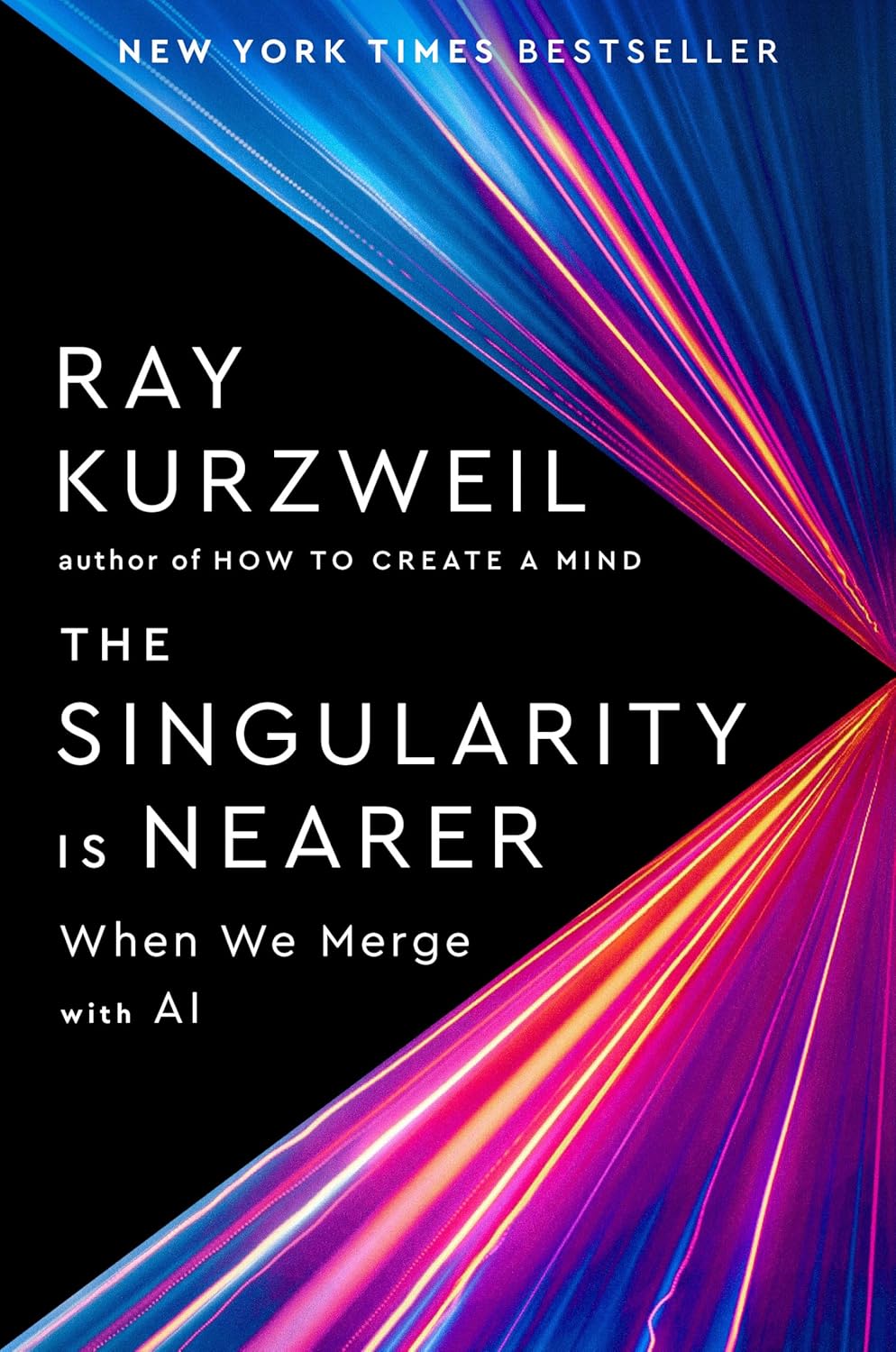
Twenty years after "The Singularity Is Near", Kurzweil revisits his predictions and keeps the date: human-AI merger around 2045.
As an Amazon Associate, Zendoric earns from qualifying purchases; the price does not change for you. · all our recommended books →
🔗 Related on Zendoric
- With 'Jalapeño,' OpenAI stops being just a silicon customer and becomes the architect of its own infrastructure · 2026-06-26
- The bottleneck of agentic AI is no longer the GPU: it's the hard drive that feeds it · 2026-07-09
- OpenAI unveils ChatGPT Work, its new agentic 'super app', and intensifies the rivalry with Anthropic · 2026-07-11