Maryland bans AI for every student in Frederick County: banning is not the same as teaching how to use it

🕒 Published on Zendoric: October 11, 2026 · 10:19
✨ AI-generated · how it's made
The Frederick County (Maryland) school board voted to ban AI for all its students, according to NBC4 Washington and WUSA9. With no details yet on scope or penalties, the move captures an unresolved dilemma: how to prepare students for a world with AI by banning it in the classroom.
📚 Go deeper

AI as the latest chapter in the history of information networks, from gossip to the printing press to the algorithm.
As an Amazon Associate, Zendoric earns from qualifying purchases; the price does not change for you. · all our recommended books →
By Zendoric · October 10, 2026. The school board of Frederick County Public Schools, in Maryland, voted to ban the use of artificial intelligence by all students in the district, according to NBC4 Washington and WUSA9. Both outlets so far confine themselves to confirming the headline: there is no public record of the text of the resolution, of whether the ban covers writing assistants, coding tools or spell-checkers built into other apps, of the penalties envisaged or of the date it takes effect.
In general, the push to ban AI in US classrooms combines several concerns: plagiarism and the erosion of learning when students outsource their reasoning to the model, the privacy of minors' data on commercial platforms, and teachers' difficulty in telling AI-assisted work from a student's own. Faced with the alternative —regulating it with subject-by-subject guidelines— Frederick has opted for an outright ban, the simplest route to announce and, often, the hardest to enforce in practice: students reach these tools from their phones, beyond the control of the school network.
Our reading: banning is not the same as teaching. A blanket ban offers short-term protection against the most obvious plagiarism, but it does not solve the underlying problem, which is teaching students to use AI with judgment in a labor market where it is already a standard working tool. In other sectors we have analyzed —from banking to law— the pattern repeats itself: the job does not disappear, what changes is which profile survives; in education, the teacher who survives is the one able to orchestrate AI in the classroom, not the one who merely transmits content while forbidding it to students. Banning without teaching alternatives leaves that generation worse prepared, not better protected.
With the information available today we cannot assess whether the measure includes exceptions —by age, subject or tools already built into the curriculum— or how Frederick plans to monitor compliance; we will have to wait for the district to publish the text of the resolution. What the case does reveal is an underlying choice: a school board that opts for prohibition over pedagogy, and that choice says as much about the regulatory vertigo of the moment as about the absence of a clear national framework for AI in public education.
📚 Go deeper

DeepMind co-founder on the dilemma of containing technologies that do not want to be contained.
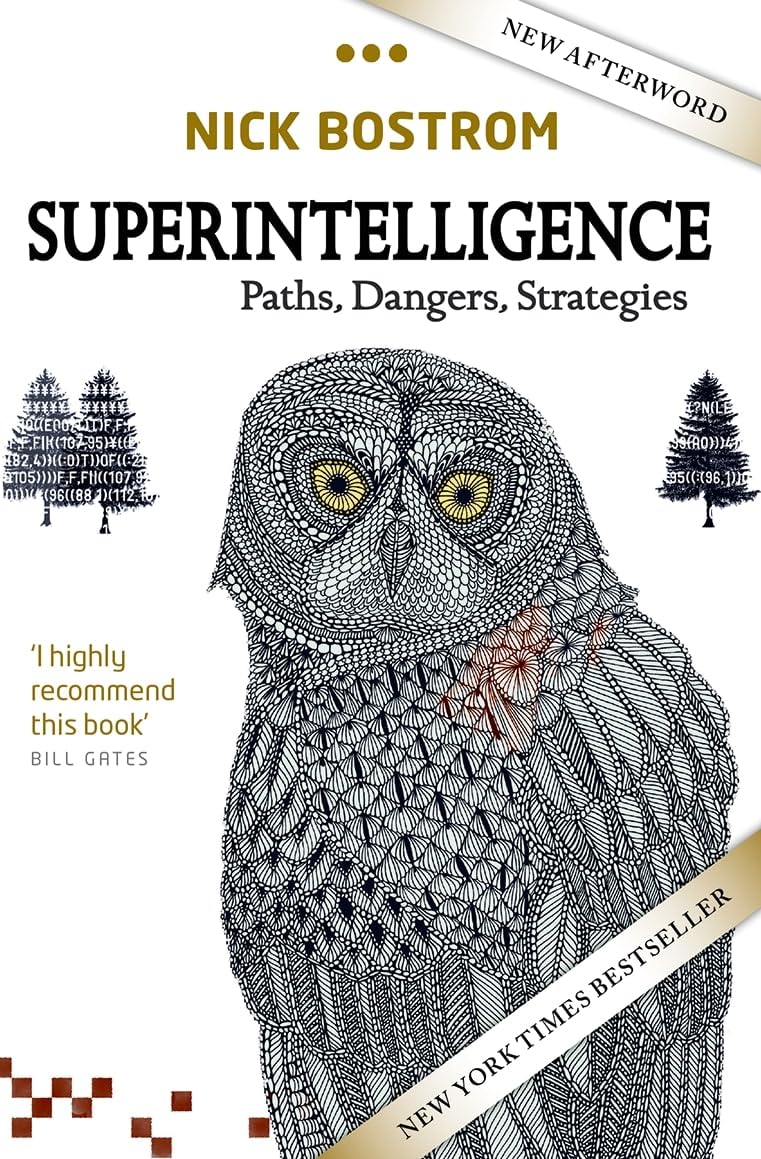
The book that started the existential-risk debate and that half the industry still cites.
As an Amazon Associate, Zendoric earns from qualifying purchases; the price does not change for you. · all our recommended books →
🔗 Related on Zendoric
- Maryland bans AI for every student in Frederick County: banning is not the same as teaching how to use it · 2026-10-10
- A North Dakota teacher joins Mark Cuban's AI fellowship, amid the legal vacuum in U.S. classrooms · 2026-09-15
- 700 million cameras and an unresolved dilemma: how AI turns Chinese surveillance into an uncomfortable mirror for the rest of the world · 2026-06-28