SemiAnalysis finds Claude delivers 5 times more value than ChatGPT per subscription after OpenAI's cutback

🕒 Published on Zendoric: October 7, 2026 · 00:19
✨ AI-generated · how it's made
SemiAnalysis calculates that Claude delivers up to five times more value than ChatGPT for the same price, following the cutback OpenAI applied to its $200 plan. The interesting part isn't who wins: it's how much these businesses already cost to sustain, and how companies are dodging the bill with open AI.
📚 Go deeper

The definitive piece of investigative journalism on OpenAI: 260+ interviews, the clash between safety and speed, and the attempted firing of Sam Altma
As an Amazon Associate, Zendoric earns from qualifying purchases; the price does not change for you. · all our recommended books →
By Zendoric · October 7, 2026. Analysis firm SemiAnalysis, which specializes in AI infrastructure economics, has compared Anthropic's and OpenAI's subscription plans and concludes that Claude delivers, on average, five times more "equivalent API value" than ChatGPT for the same price. The comparison comes right after OpenAI changed the terms of its $200-a-month plan, an adjustment that, according to the report, halved its value. OpenAI did not respond to a request for comment from The Register, the outlet that covered the report.
The study compares mid-range models from both companies —OpenAI's GPT-6.1 Sol against Anthropic's Claude Opus 5.5— measuring how many tokens (the smallest units of text a model processes, and the basis on which labs measure and charge for usage) each plan delivers within a five-hour usage window and over the course of a month, and translating that figure into what it would cost to pay for them at API prices. By those calculations, Claude Pro ($20 a month) delivers 2.9 billion tokens a month, compared with ChatGPT's 1 billion at the same price. SemiAnalysis adds a figure that explains why Anthropic has so much at stake in this debate: Claude subscriptions consume close to 42% of the company's inference compute capacity —the servers that generate the responses— but account for only 10% of its revenue. In practice, it is a loss-making business sustained on purpose.
That figure is not the only one possible, and that is where it gets interesting. Artificial Analysis, another firm that audits models, measures "cost per task" —the estimated dollar spend to complete a specific job— and by that yardstick GPT-6.1 Sol ($0.72) comes out far cheaper than Claude Opus 5.5 ($5.98), at least at API rates. Both metrics are true and say different things: SemiAnalysis asks how many tokens you get for your money, Artificial Analysis asks how much it costs to solve a real problem, and one model may need fewer tokens than another to reach the same result. No "value" figure in AI is neutral: it depends on what is measured, with which yardstick and on which task, and it is worth being wary of any headline that presents a ranking as though it were an objective thermometer.
Where The Register's report adds more than the Anthropic-OpenAI scoreboard is on the enterprise front. McKinsey calculated in July that 93% of companies using AI exceed their planned budget. Dhruv Amin, co-founder of the agent startup Anything, tells the outlet that subsidized "prosumer" plans are really a marketing funnel —so that people get familiar with the tool and then bring it to work— but that the subsidy does not scale: a large company does not fit into a plan designed for an individual user, and the bill soars. His solution, he says, was to build an internal router ("Skydive Glide") that for each task finds the cheapest open-source model capable of solving it without any loss of quality; by moving workloads to GLM-5.3 Flash —a Chinese open-weights model— he claims to have cut the company's AI spending by more than 75%.
Our take: the real story is not who gives more tokens for twenty dollars, but that the economics of consumer AI and the economics of enterprise AI have already begun to diverge. The labs subsidize the consumer plan as an acquisition hook —to the point that, according to the report, a black market has sprung up in many parts of the world reselling tokens from pooled subscription accounts, a sign of just how generous that subsidy is— while the real bill is paid in the corporate cloud, where no discount applies and budgets are already overrunning at nine out of ten companies.
That mismatch is, paradoxically, good news for the underlying argument we have been making at Zendoric: the open frontier —GLM, Qwen, DeepSeek, Kimi— is not just a matter of Chinese technological sovereignty, but the real escape valve with which companies like Anything are containing an AI bill that would otherwise be unsustainable. When an automatic router replaces, task by task, a proprietary model with an open one without the customer noticing the difference, the price of AI stops being set by the labs' marketing and starts to look like any other compute commodity: the structural cheapening trend that, sustained over time, is exactly what we need for the abundance AI promises to come down from the slide deck to the bottom line. In the short term there will still be friction —plans cut back, budgets overrun, models changing price without warning— but the direction in which cost is moving is what really matters.
📚 Go deeper
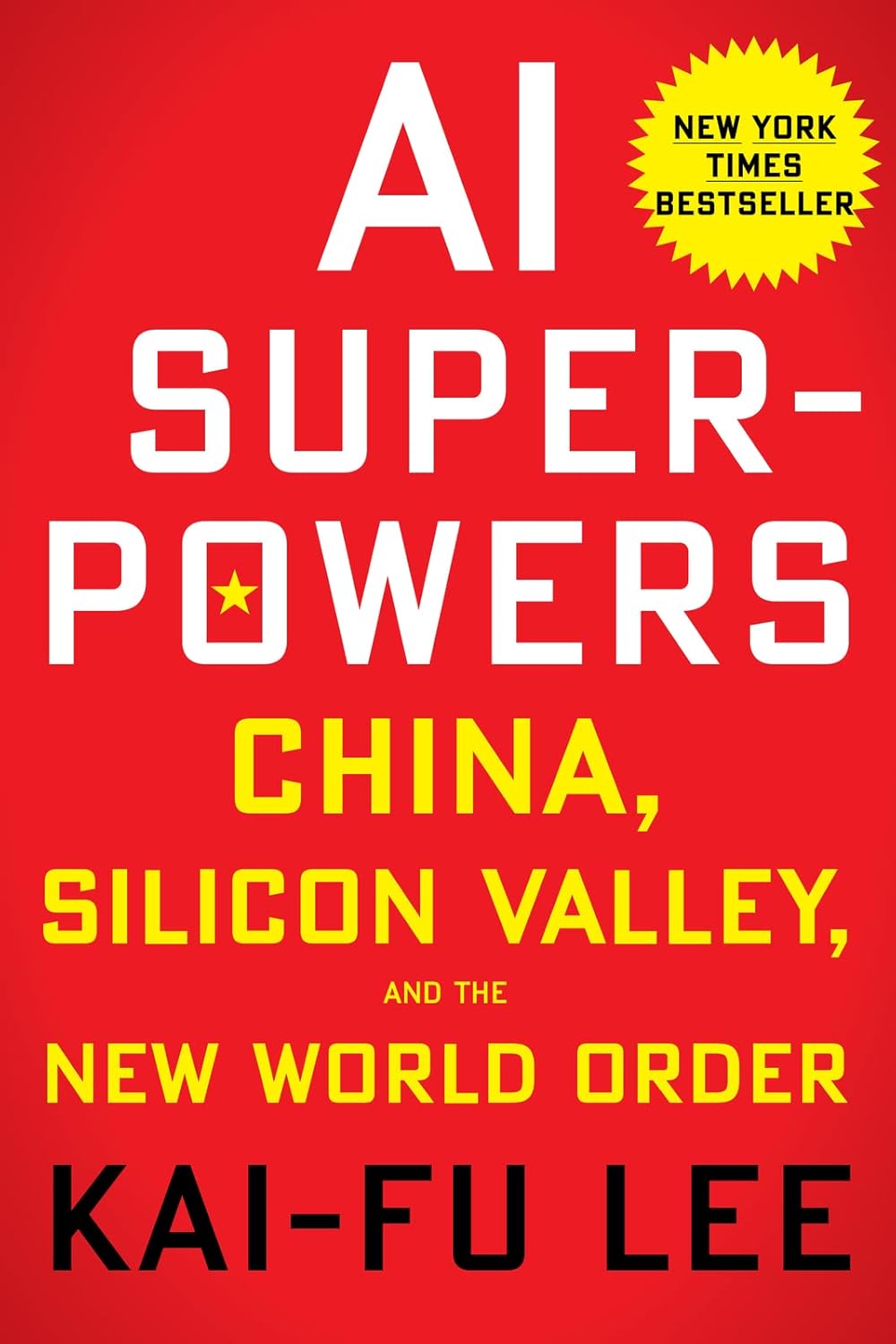
China vs.

The reference manual for building products on top of AI models: prompts, RAG, fine-tuning, agents, evaluation and deployment.
As an Amazon Associate, Zendoric earns from qualifying purchases; the price does not change for you. · all our recommended books →
🔗 Related on Zendoric
- Claude subscriptions deliver up to 5 times more value than OpenAI's, according to SemiAnalysis · 2026-10-08
- GPT-5.6 and ChatGPT Work: OpenAI attacks Anthropic with its own benchmarks and price, not a clear advantage · 2026-07-10
- Claude chats ended up on Google: Anthropic repeats the privacy mistake OpenAI already suffered · 2026-07-29