Meta opens its Muse AI agent to DIY hardware with open-source SDKs for ESP32 and Raspberry Pi
🕒 Published on Zendoric: October 6, 2026 · 07:39
✨ AI-generated · how it's made
Meta has released 'Muse Gadgets', an open-source hardware initiative designed so that anyone can build their own physical devices connected to Muse, the company's AI agent.
📚 Go deeper

The story of NVIDIA and Jensen Huang: how a video-game card company ended up making the most coveted resource on the planet.
As an Amazon Associate, Zendoric earns from qualifying purchases; the price does not change for you. · all our recommended books →
Meta has released 'Muse Gadgets', an open-source hardware initiative designed so that anyone can build their own physical devices connected to Muse, the company's AI agent. The project is explicitly presented as 'made by hackers, for hackers, just for fun', with a lighthearted but genuine warning: experimenting can leave boards bricked, void warranties, cause power outages or, jokingly, 'bankruptcies'. The message makes clear that this is experimental territory and that you proceed 'at your own risk'.
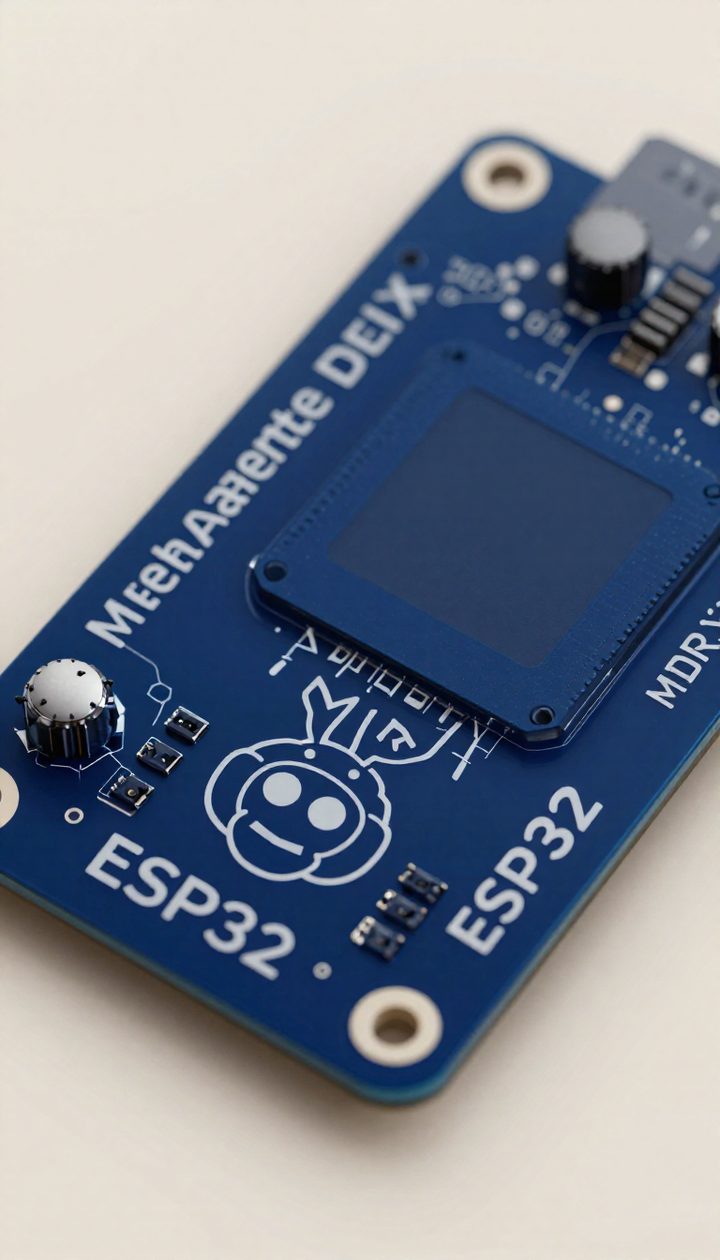
The technical foundation of the initiative is two software development kits (SDKs) published on GitHub under the Apache 2.0 license, offered 'as is' and without warranties. The first, the ESP32 Device SDK, allows a standard ESP32 board (low-cost and very popular among makers) to be connected to Muse in order to add screens to display images, audio input and output, or any sensor and actuator the user has on hand. The second, the Linux Device SDK, is aimed at turning a Raspberry Pi or another Linux machine into a Muse 'gadget', making it possible to program custom commands so that the agent can handle system administration tasks or integrate with Home Assistant setups.
Around these SDKs, Meta has built a Discord community which, according to the page itself, had 218 members online at the time of consultation. Those who complete a project can share it in the #projects channel with a photo or video, a brief description and a GitHub repository with its README, with the possibility that Meta will feature some of the work by linking to the original repository.
Alongside the open tools, Meta is also offering a product of its own: the Muse Home Link, a device that connects Muse to the home Wi-Fi network so it can interact with compatible appliances or with any equipment that exposes a local HTTP API. As explained, 'skills' built by the community could allow, depending on each user's setup, turning on a light, controlling the TV or sending a document to a printer. The Home Link is offered free with an active Muse subscription, only for users in the United States, with a limit of one unit per subscriber, and shipping is said to begin in October, on a first-come, first-served basis.
The page also shows a series of example projects built on third-party hardware: a Raspberry Pi 5 to integrate Muse with Home Assistant and other Linux applications; a 1.75-inch round AMOLED touchscreen from Waveshare with speaker, microphone and push-to-talk; an accessory to connect Muse to the TV over HDMI, marked as 'coming soon'; a color e-ink display from Seeed (reTerminal E1002) designed to show morning briefings, reminders or shopping lists; an M5Stack StickS3 pocket device with a status screen and a front button; a 'desktop companion' called AiPi Lite, with a push-to-talk button, spoken responses and a color screen; an ideaspark ESP32 board with a 1.9-inch display; and the Home Assistant Voice Preview Edition, with microphone, speaker and an LED ring that indicates Muse's status. Meta expressly clarifies that these devices are made and sold by other companies, and that it does not endorse or warrant them.
Taken together, the initiative points to an ecosystem strategy: instead of confining Muse to a single proprietary device, Meta opens the door for the maker community to embed it in everyday objects —desktop displays, pocket terminals, e-ink panels, smart speakers— using cheap and widely available boards such as ESP32 and Raspberry Pi. It is an approach reminiscent of how other voice assistants have grown by leaning on open hardware communities, and it combines two complementary pieces: on one side, open SDKs to encourage experimentation; on the other, a proprietary product tied to an active Muse subscription (the Home Link) that reserves for Meta the central piece of home connectivity. It is worth bearing in mind that the content analyzed is Meta's own product page, promotional in tone, so the claims about capabilities, shipping dates or availability reflect what the company says and not an independent third-party assessment.
📚 Go deeper

The reference manual for building products on top of AI models: prompts, RAG, fine-tuning, agents, evaluation and deployment.

Semiconductors as the oil of the 21st century: history, espionage, and why an island of 23 million people underpins the entire AI economy.
As an Amazon Associate, Zendoric earns from qualifying purchases; the price does not change for you. · all our recommended books →
🔗 Related on Zendoric