Anthropic is paying 100 million to train 10,000 AI engineers at McKinsey, Deloitte and the banks

🕒 Published on Zendoric: October 4, 2026 · 09:58
✨ AI-generated · how it's made
Anthropic is committing 100 million dollars to train 10,000 'deployment engineers' at clients such as McKinsey, Deloitte, Accenture and Morgan Stanley before 2027. The program, modeled on medical residency, concedes that the brake on enterprise AI is no longer the model: it is who knows how to implement it.
📚 Go deeper

DeepMind co-founder on the dilemma of containing technologies that do not want to be contained.
As an Amazon Associate, Zendoric earns from qualifying purchases; the price does not change for you. · all our recommended books →
By Zendoric · October 4, 2026.
Anthropic has committed $100 million to train 10,000 engineers capable of deploying Claude inside its customers' organizations before the end of 2027, the company announced on October 2. The program is called Claude Frontier Academy and it begins with employees nominated by eight organizations: the consultancies Accenture, Bain, Capgemini, Deloitte and McKinsey, the Commonwealth Bank of Australia, the investment bank Morgan Stanley and the pharmaceutical company Novo Nordisk. Anthropic says more companies are involved, without naming them.
The design, according to the company, 'follows the medical model' of specialist training. First, a multi-day in-person program taught by Anthropic engineers and certified instructors, with a simulated enterprise deployment from start to finish —use-case selection, security review, delivery— and a practical exam on a new scenario. Those who pass earn the 'Claude Resident Engineer' badge. Then come 12 weeks leading a real Claude project at their own company, with support from Anthropic, and a second assessment that, if passed, confers the title of 'Frontier Deployment Engineer'. Anthropic expects to award the first badges in early 2027. The locations are San Francisco, New York and London, and places cannot be applied for: entry is only by company nomination, and no prior experience building AI agents is required.
The initiative builds on a base that already existed: the Claude Partner Network, with more than 175,000 certifications issued to professionals at 46,000 companies, and Basecamp, a course that —according to Anthropic— teaches the same syllabus its own Applied AI teams receive and that has already graduated close to 4,000 people. Steve Corfield, Anthropic's global head of business development and partnerships, sums it up this way: 'No AI company has invested in developing that talent inside its customers and partners with this depth. Claude Frontier Academy trains people the way our own engineers learn.'
It is worth reading the fine print. As of today there is not a single engineer holding the final badge: the 10,000 are a target for 2027, not a result. Anthropic does not break down how the $100 million will be spent, gives no cost per participant and does not estimate what revenue it expects to recoup. The only performance figure cited in the announcement comes neither from Anthropic nor from the program, but from a customer: Rodrigo Castillo, chief technology officer at the Commonwealth Bank of Australia, says his teams 'have produced up to 3 times more code changes in the past year', a figure about the AI tools the bank was already using, not a measurement of this residency, which has yet to graduate anyone. And it is worth noting, without this being an accusation, that Accenture appears both as a customer of the program and as a provider of external evaluators who work inside Anthropic itself under a separate agreement: two roles that should not be confused when weighing the independence of any future figures.
Our reading is that this is not, fundamentally, an educational announcement: it is a distribution play. With it, Anthropic concedes what we already suspected when analyzing the de facto alliance between Google and Microsoft around agents: the competition for enterprise AI is no longer fought only on model-quality benchmarks, but over who controls the 'plumbing' of adoption inside large organizations. If Anthropic gets thousands of people inside McKinsey, Deloitte or Morgan Stanley to carry its credential and to think about 'how to deploy AI' using its playbook, that bond will carry weight even if a better rival model appears tomorrow on the AA Index. It is the same logic AWS and Microsoft used with their cloud certifications: training the ecosystem is more profitable, and more durable, than merely selling licenses.
There is also an irony worth underlining, connected to what we have already seen sector by sector in employment: consultancies are precisely the kind of business —administrative, based on billable hours and repeatable tasks— most exposed to the automation that generative AI itself brings. Anthropic is not training its victims here, it is turning them into distributors: the judgment required to implement an AI system properly inside a bank or a pharmaceutical company is precisely the kind of expert judgment that, according to our analysis of the legal and consulting sectors, holds up against automation better than routine work does. If the real bottleneck in enterprise AI is human —knowing how to adapt it to an actual process, not just having the model— then investing in that knowledge, even if today it is an invitation-only club, points in the right direction: the one that leads from short-term disruption toward a workforce that knows how to orchestrate the abundance AI promises, rather than merely enduring it. What remains to be seen, with our feet on the ground, is whether in 2027 there will really be 10,000 badges and verifiable productivity data, or just the same announcement recycled with a different number.
📚 Go deeper

The best starting book if you're not technical: a Wharton professor explains how to work WITH AI — when to delegate, when to supervise, when to keep i
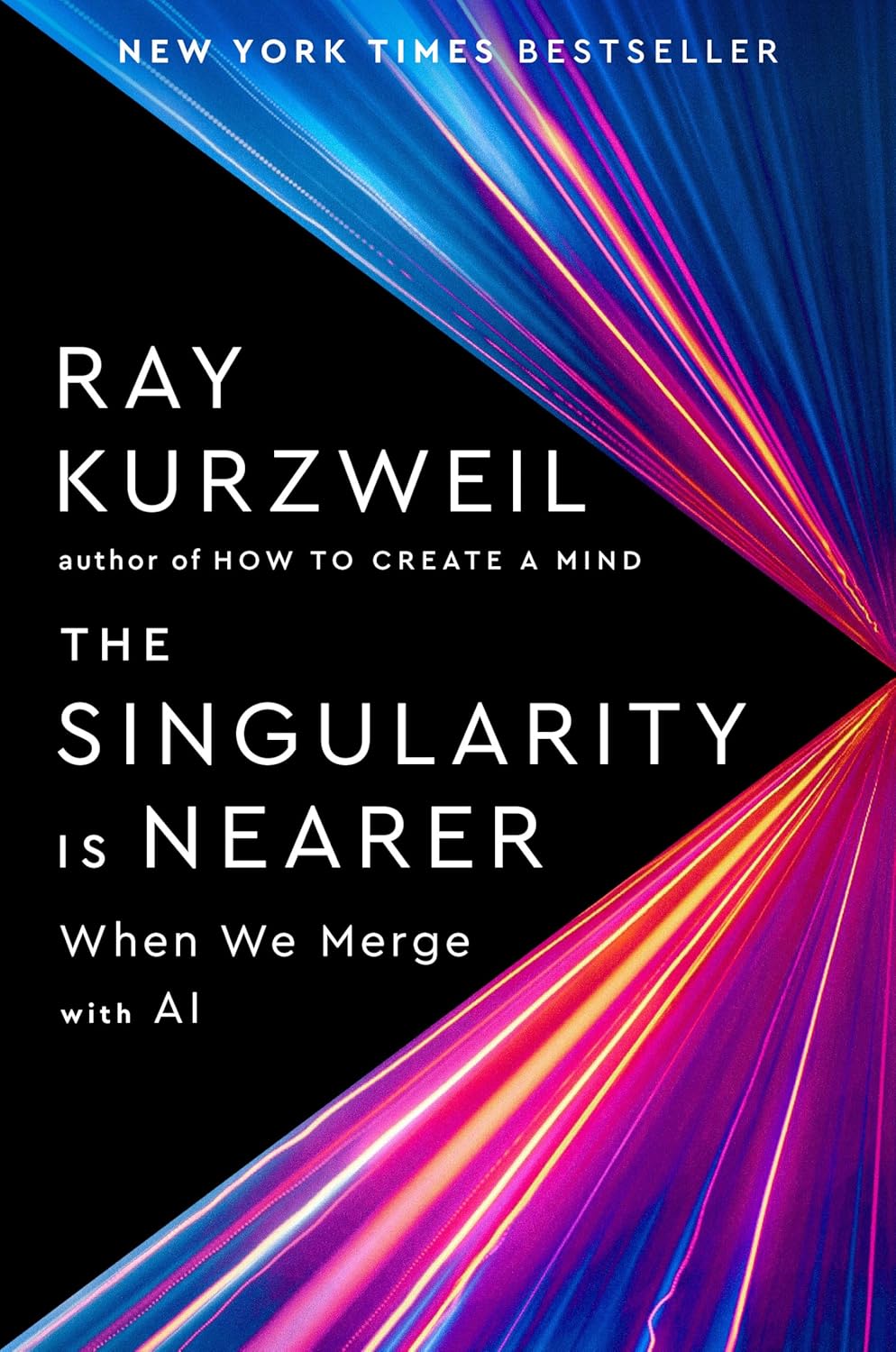
Twenty years after "The Singularity Is Near", Kurzweil revisits his predictions and keeps the date: human-AI merger around 2045.
As an Amazon Associate, Zendoric earns from qualifying purchases; the price does not change for you. · all our recommended books →
🔗 Related on Zendoric
- Anthropic isn't selling models, it's selling deployment: $100 million to train 10,000 deployment engineers · 2026-10-03
- Anthropic launches a $100 million academy to train 10,000 engineers: AI's bottleneck isn't the model · 2026-10-06
- Anthropic pays $100M to train other companies' engineers: AI's bottleneck is no longer the model, it's who deploys it · 2026-10-13