IKEA and Kodiak prepare driverless freight trucks on a 219-mile route across Texas
🕒 Published on Zendoric: October 3, 2026 · 02:03
✨ AI-generated · how it's made
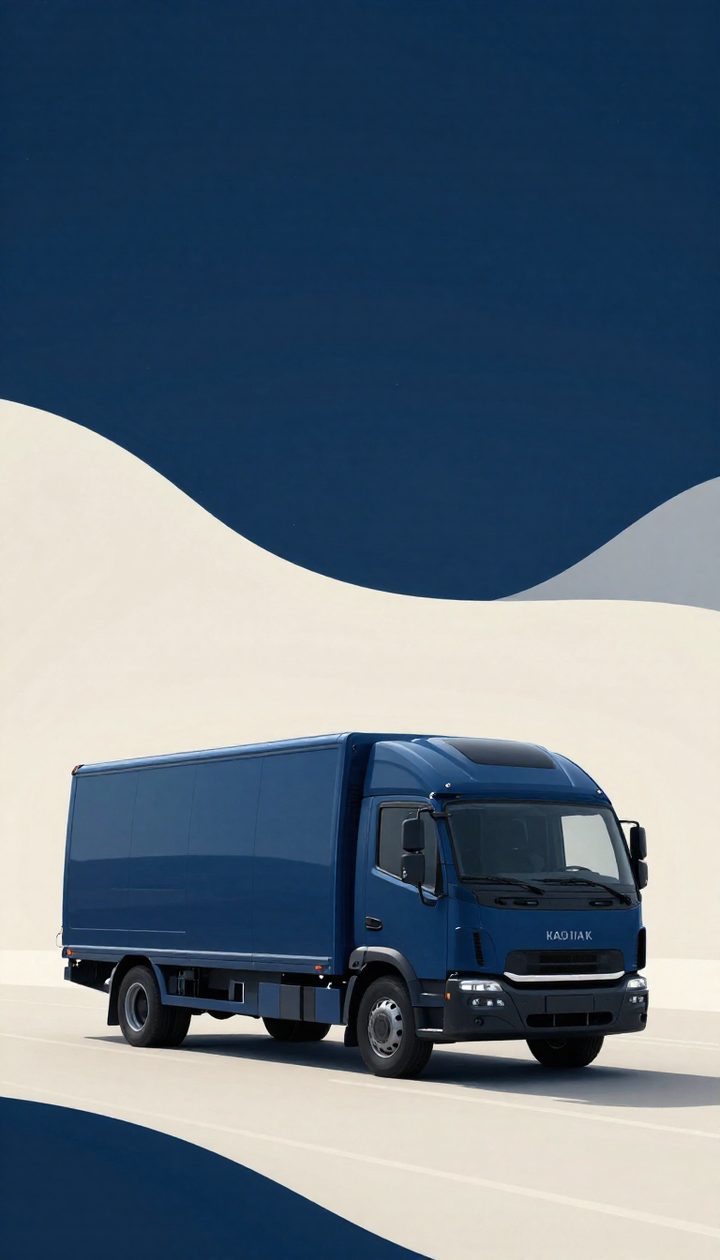
Kodiak AI, a self-driving company for long-haul trucking, has announced that IKEA Supply will be its first freight customer for a fully driverless transport service on a 219-mile (about 352 km) stretch of Interstate 45, between the Dallas-Fort Worth and Houston areas in Texas.
📚 Go deeper

The definitive piece of investigative journalism on OpenAI: 260+ interviews, the clash between safety and speed, and the attempted firing of Sam Altma
As an Amazon Associate, Zendoric earns from qualifying purchases; the price does not change for you. · all our recommended books →
Kodiak AI, a self-driving company for long-haul trucking, has announced that IKEA Supply will be its first freight customer for a fully driverless transport service on a 219-mile (about 352 km) stretch of Interstate 45, between the Dallas-Fort Worth and Houston areas in Texas. What matters about the announcement is not so much the distance as the preparation time: Kodiak and IKEA have been working together on this route for four years, during which the company has completed more than 1,300 loads for IKEA and accumulated over 750,000 autonomous miles with a safety observer on board. The full route connects IKEA's distribution center in Baytown with its Frisco store, a 292-mile trip of which the 219-mile stretch is now to be automated with no human in the cab.
The article, written by Aaron Prather, Director of Market Intelligence at the Association for Advancing Automation (A3), stresses that the challenge of autonomous trucking is no longer technological but operational. According to Don Burnette, Kodiak's founder and CEO, the years of joint operation with IKEA have served to learn unglamorous but decisive lessons: when a truck should depart, how to calculate its arrival in order to assign it a specific dock door, or how to turn predictive maintenance data into proactive maintenance plans. The core idea is that a truck arriving autonomously adds no value if the dock is not ready, and that higher fleet utilization is useless if maintenance becomes unpredictable. In other words, driving technology alone is not enough: it has to be integrated into the rhythms of a real freight network.
Kodiak chose the Dallas-Houston corridor because of its accumulated experience: the company has been hauling freight on that route since 2019 and has logged more than 3.5 million autonomous miles with safety drivers on board. On September 25, Kodiak announced that this corridor would be its first driverless long-haul lane, after starting its final launch program in August, in which it now consistently completes deliveries between its Lancaster (Texas) facility and Houston without human intervention, though still with a safety observer who, according to the company, has not touched the steering wheel even on city streets.
It is important to note that Kodiak does not yet operate driverless trucks on I-45 for IKEA. The company uses its own metric, the 'Autonomy Readiness Measure' (ARM), which gauges the percentage of the claims and evidence in its highway safety case that it considers substantially complete. That indicator reached 93% at the end of August, up from 84% in February, and Kodiak expects to reach 100% and begin driverless commercial highway service before the end of 2026. The article expressly clarifies that this figure is an internal Kodiak measure of progress, not a certification or safety rating issued by a government authority. In parallel, the company runs driverless tests on closed courses to reproduce scenarios too rare or dangerous to test on public roads, combining them with daily testing on I-45.
Another element the article highlights is the infrastructure surrounding the vehicle, beyond the driving software itself. Kodiak and PrePass have begun integrating 'Enhanced Inspection' information for autonomous trucks into roadside enforcement systems in Texas and Louisiana, allowing enforcement personnel to verify inspection information, authorize passage without stopping or give instructions electronically. PrePass's chief technology officer, Chas Wurster, sums up the problem by noting that the next barrier to scaling driverless operations is not inside the truck, but in the infrastructure around it. Under the Commercial Vehicle Safety Alliance (CVSA) Enhanced Commercial Motor Vehicle Inspection program, a trained inspector verifies that an autonomous vehicle is free of safety defects before it operates driverless, and a passed inspection can remain valid for up to 24 hours. This illustrates that removing the driver does not eliminate interactions with regulators, inspection stations, distribution centers, maintenance or dispatch systems: it only changes how those tasks have to be handled.
Kodiak is not starting from scratch in driverless operations: together with Atlas Energy Solutions, it launched commercial driverless operations in the Permian Basin in December 2024, and by the end of the second quarter of 2026 it had 35 autonomous trucks operating commercially in that area. The two companies plan to expand that fleet to 100 autonomous trucks by mid-2027 and expect to begin operating them on public roads in early 2027, subject to regulatory and operational milestones. However, the article notes that I-45 represents a different challenge: while industrial operations in the Permian Basin can be built on defined routes and specialized environments, long-haul trucking puts autonomous trucks directly inside the public transportation system, alongside passenger vehicles, conventional trucks, work zones and roadside enforcement.
On the labor impact, the article notes that Kodiak and IKEA present the technology as a way to automate long highway stretches while human drivers focus more on local transport. Burnette argues that this model could reduce the time drivers spend away from home, while people continue to be involved in other parts of the freight operation. The text openly acknowledges that it cannot answer on its own how employment will change if autonomous driving expands broadly, but it suggests that the relevant architecture is not whether trucks become autonomous, but which parts of the transportation system get automated and how the rest is reorganized around them.
The article concludes that the real milestone will not be the first driverless trip on I-45, which will undoubtedly draw attention, but the moment when that operation becomes routine: a truck that leaves Houston, arrives when the distribution system expects it, heads to the right dock door, unloads and pulls out again, with no need for any special demonstration. After four years and more than 750,000 autonomous miles hauling IKEA freight with a safety observer on board, that is the transition Kodiak is now preparing to complete.
📚 Go deeper

AI as the latest chapter in the history of information networks, from gossip to the printing press to the algorithm.

DeepMind co-founder on the dilemma of containing technologies that do not want to be contained.
As an Amazon Associate, Zendoric earns from qualifying purchases; the price does not change for you. · all our recommended books →
🔗 Related on Zendoric
- Uber ties layoffs to AI for the first time — but the memo reveals the real bottleneck isn't the tech · 2026-07-23
- 1Password completes post-quantum TLS across all its clients without touching application code · 2026-09-24
- When closing the door pushes the customer to the shop across the street: the paradox of AI controls · 2026-06-24