Claude's watermark complies with the EU AI Act, but its detection scanner isn't for everyone
🕒 Published on Zendoric: October 2, 2026 · 00:19
✨ AI-generated · how it's made
Anthropic marks Claude's text with an invisible statistical fingerprint designed to comply with the EU AI Act. It doesn't hide characters: it skews which words the model picks. The scanner that detects it, however, isn't public — for now only regulators, media and law enforcement have it.
📚 Go deeper

AI as an extractive industry: the lithium, the energy, the underpaid data-labeling work and the bodies behind the cloud.
As an Amazon Associate, Zendoric earns from qualifying purchases; the price does not change for you. · all our recommended books →
By FIU News · October 1, 2026.
Anthropic has been embedding an invisible watermark in the texts Claude generates since this summer, as the company itself has confirmed. The stated aim is to comply with the European Union's Artificial Intelligence Act, which requires synthetic content to be identified. The watermark is already built into the most recent Claude models; its arrival in older models, according to Anthropic, is on the way.
It is neither magic nor a trick of hidden characters. Mustafa Ocal, an AI detection researcher at the Knight Foundation School of Computing & Information Sciences at Florida International University (FIU), has spent weeks examining Anthropic's publications about the system and explains the mechanism in an interview with FIU News: a language model does not "think" its answers, it predicts them, choosing each word from a list of candidates with different assigned probabilities. The watermark consists of skewing that list: certain words (which Ocal calls "blue") come to appear considerably more often than their natural probability would dictate, and others ("red") considerably less. No human reader notices, because all the chosen words remain perfectly natural; what changes is only the relative frequency with which they appear across a text of a certain length, which Ocal puts at upwards of about five sentences.
The comparison Ocal uses is that of a casino watching the blackjack tables: no one can prove that a particular hand was rigged, but if a player wins half the hands instead of the expected 5%, the statistics give the cheat away. The same happens with Anthropic's scanner: it does not flag an isolated word as "marked," it detects that, taken as a whole, the text has deviated too far from the way a human being chooses words.
The idea of marking AI-generated texts is not new — Google introduced it in 2024 with its SynthID system and already applies it in production. What sets Anthropic's move apart, according to Ocal, is the combination of two decisions: applying the watermark universally across its most recent models, and making a scanner of its own available to verify it. But that scanner is not publicly accessible: it is in private preview and, for now, is only in the hands of regulators, law enforcement bodies, news media, fact-checkers and a small group of researchers and companies, as Ocal describes it.
That, in our view, is the nuance that matters most in this story and that should not be overlooked. This is not a public transparency tool of the "anyone can check whether a text is AI-generated" kind, but a system of selected institutional trust: Anthropic decides who gets the key. It is a real improvement over having no watermark at all, but it shifts the problem of "did an AI write this?" to a new one: "who is authorized to ask the machine?" In a sector where we have already seen that control of the technology — who governs it, not just what it is capable of doing — determines the distribution of power, having the authenticity verifier for an entire content ecosystem depend on the commercial goodwill of a single company is, at the very least, a limitation that warrants watching.
The practical applications Ocal cites, however, are the kind that do move the needle in the short term. A company using Claude to screen résumés or make hiring decisions will no longer be able to hide it easily: if the process is audited with the scanner, the use of AI is exposed, which in principle protects the candidate against undisclosed automated decisions. In the legal arena, Ocal points to an even more direct use: a justice department with access to the scanner could determine whether a piece of documentary evidence was drafted by Claude, a far from trivial instrument at a time when AI-assisted forgery is already a real forensic problem. It is, in fact, the same terrain where we were already seeing the value of expert judgment grow within the legal profession: the watermark does not replace the lawyer or the expert witness, but it gives them a verification tool that did not exist before.
Some caution is still in order. Broadly speaking, the academic community researching AI detection has long pointed out that no text watermark is immune to everything: a deep rewrite, a round-trip translation or an aggressive paraphrase with another model can dilute the signal. Ocal himself acknowledges that a light edit is probably not enough to insert the watermark, but he does not specify what level of rewriting would be enough to erase it once inserted. The robustness claims now circulating rest, for the moment, on the analysis of an outside researcher who has studied the company's public documentation, not on an independent audit with access to the scanner. They should be treated as a solid hypothesis, not a settled fact, until third parties can test them under adversarial conditions.
What this piece makes clear, in any case, is where generative AI infrastructure is heading as it matures: writing better is not enough, you have to be able to prove who — or what — did the writing. If this sector's underlying thesis is that the abundance AI brings is only sustainable if society keeps its trust in what it reads, sees and signs, then mechanisms like this one are a necessary piece of the puzzle, just as rules against counterfeiting banknotes or notarial seals are. The difference is that here the seal is still handed out by a single company. The logical next step — and the one that would really give weight to the promise of transparency — would be for verification to stop being a regulatory privilege and become an open standard, auditable by anyone, not just by whoever Anthropic decides to invite.
📚 Go deeper

The only novel on the list, by a Nobel laureate: an artificial friend observes humans with a blend of lucidity and innocence no essay achieves.
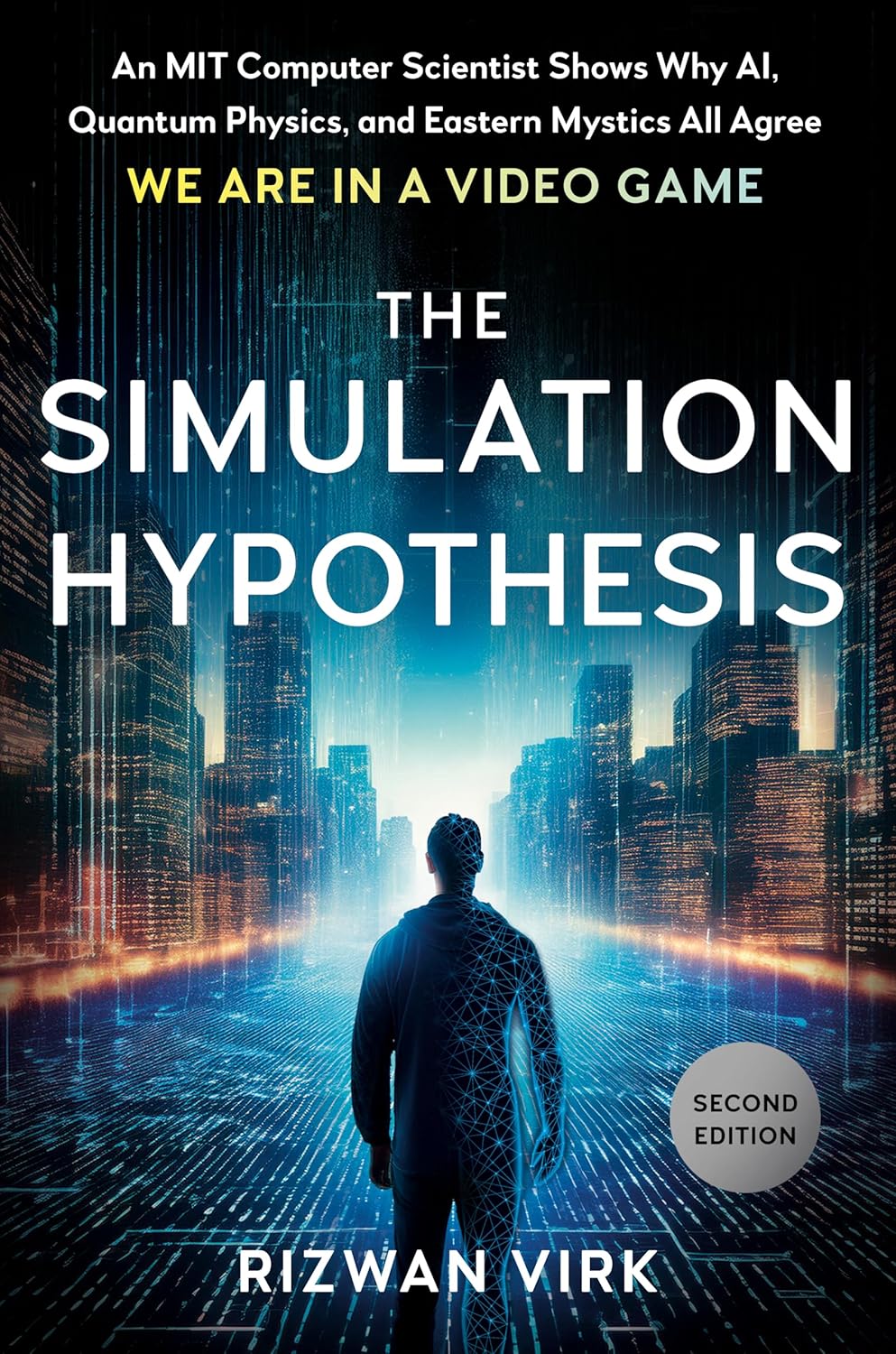
An MIT computer scientist connects AI, quantum physics and video games to take an uncomfortable question seriously: what if we live in a simulation? M
As an Amazon Associate, Zendoric earns from qualifying purchases; the price does not change for you. · all our recommended books →
🔗 Related on Zendoric
- A lawsuit over being denied a frontier AI model marks a turning point: access as a stake worth fighting for · 2026-06-25
- Claude Sonnet 5: Anthropic brings agentic AI to the everyday user, with all the implications that entails · 2026-07-01
- Sonnet 5: Anthropic targets the invisible bill of AI agents with an Opus-grade model at a Sonnet price · 2026-07-01