Álava builds a physical AI talent pool: 50 young people will teach robots to learn by imitating humans

🕒 Published on Zendoric: September 29, 2026 · 08:25
✨ AI-generated · how it's made
From 23 to 25 October, Robotekin brings together 50 people aged 18 to 35 in Vitoria to train robots through imitation learning, the technique that teaches machines by observing human gestures. It is a modest hackathon, but it captures where AI is heading: from the screen to the body.
📚 Go deeper

The reference manual for building products on top of AI models: prompts, RAG, fine-tuning, agents, evaluation and deployment.
As an Amazon Associate, Zendoric earns from qualifying purchases; the price does not change for you. · all our recommended books →
By El Correo · September 29, 2026.
The Basque Robotics and Automation Association (Robotekin) is holding the first Hackathon LeRobot 2026 from October 23 to 25 at the Robotory, the association's headquarters on the Vitoria Campus of the Álava Technology Park. Over 48 hours, 50 young people aged 18 to 35 will work in teams on challenges involving object manipulation, robotic vision and social applications linked to education, accessibility or assistance, according to the source. There will be mentors specialized in robotics and artificial intelligence (AI), plus prizes for the best solutions.
The technical thread running through all the challenges is imitation learning (also known as learning from demonstration): instead of hand-programming each of the robot's movements, a human teleoperates it or guides it manually several times and an AI model learns from those demonstrations to reproduce and generalize the task. It is, in fact, the approach that gives the hackathon its name: LeRobot is an open-source project driven by Hugging Face that has become a reference for training low-cost robotic arms with this technique, and it has helped lower the barrier to entry into AI robotics outside the big labs.
Robotekin frames the gathering as more than a one-off competition. «If we want our industry to remain competitive, we have to prepare today the talent we will need tomorrow. Robotics and artificial intelligence are transforming the way we produce, and we need our young people to be able to experiment with these technologies and learn to apply them», says Saray Zárate, the association's president and provincial councilor for Economic Development and Sustainability (PNV), as reported by El Correo. The association hopes to turn this first edition into a stable community that connects young people, specialists and companies year after year.
It is worth placing the initiative at its real scale: it is a 50-person hackathon, a first edition, 48 hours long. There is no technological leap to announce here, and it would be a mistake to read it as one. What matters is not the event itself but the direction it points to: while the public conversation about AI remains dominated by language models, the research frontier —and now also local-scale talent development— is shifting increasingly toward so-called physical AI or embodied AI, that is, systems that not only generate text or images but perceive and act in the real world.
That transition connects with something we have been observing as we track AI's impact by sector: in technology, what is gaining weight is not the routine task but the integration and governance of these tools, the profiles capable of bridging a model and a concrete application. Robotic manipulation adds a layer harder than language —the physical world does not forgive errors the way a badly generated text does— and so, in the short term, one should not expect a wave of manual-task automation comparable to the one already underway in administrative work. But building a talent pipeline now, with low-cost kits and open frameworks like the one that gives this hackathon its name, is exactly what allows a small territory to avoid being left out when that wave arrives.
That, in our view, is the underlying reading that transcends the local: the democratization of AI robotics through open-source tools reproduces, in the physical realm, the same pattern we already saw with open language models —more access, more control, less dependence on a handful of giants. It is a small piece, but one consistent with the idea that the abundance AI promises in the long run will not come only from the big labs, but also from thousands of young people in places like Vitoria being able to touch, train and make mistakes with a real robotic arm.
📚 Go deeper
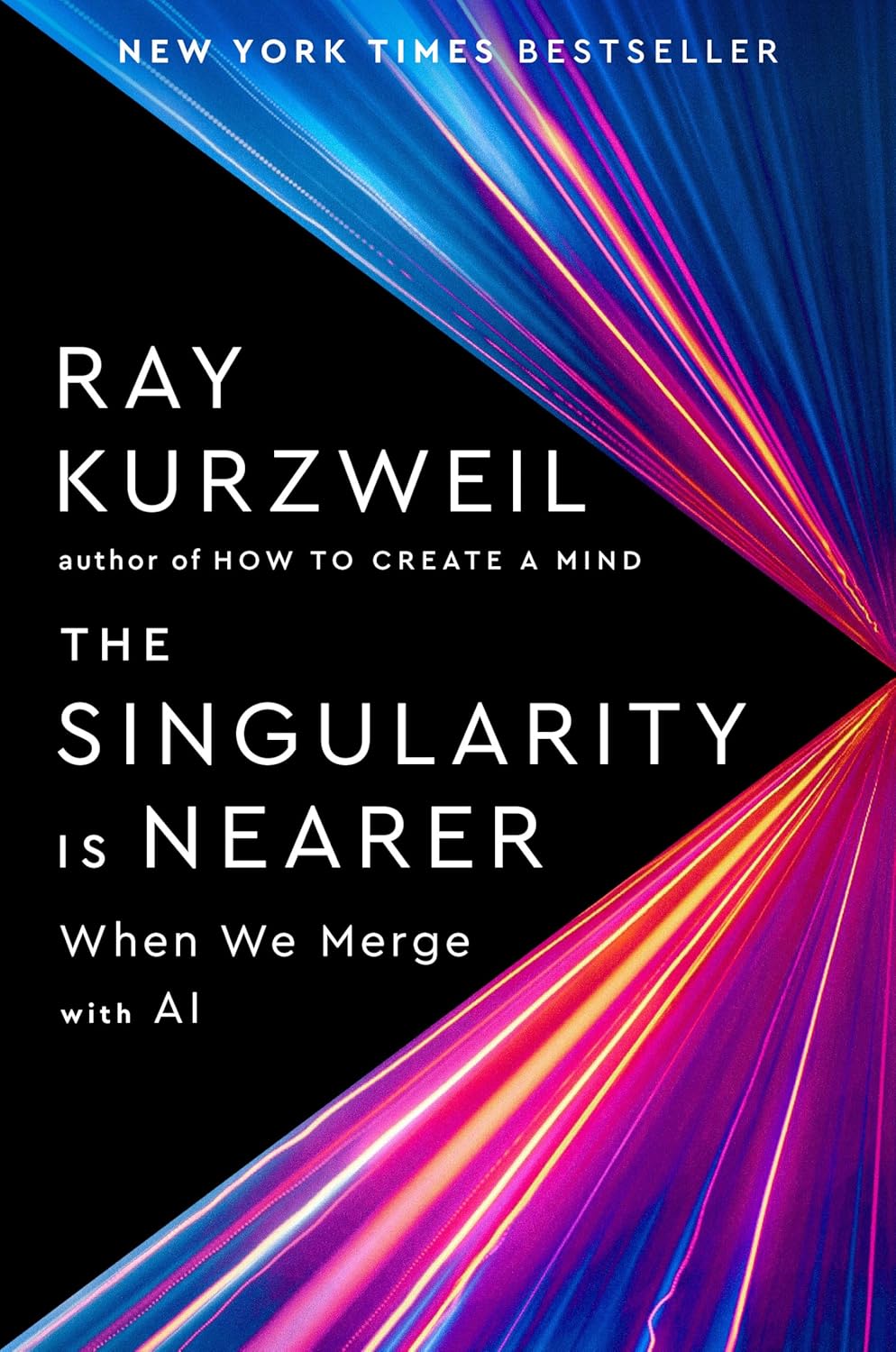
Twenty years after "The Singularity Is Near", Kurzweil revisits his predictions and keeps the date: human-AI merger around 2045.

AI as the latest chapter in the history of information networks, from gossip to the printing press to the algorithm.
As an Amazon Associate, Zendoric earns from qualifying purchases; the price does not change for you. · all our recommended books →
🔗 Related on Zendoric