Opus 5.5 arrives billed as the best model available — and cheaper than Fable, which is the bigger claim

🕒 Published on Zendoric: September 28, 2026 · 00:22
✨ AI-generated · how it's made
Anthropic has released Opus 5.5, presented as the strongest model currently available and cheaper to run than Fable. The capability claim will be tested in days; the price claim is the one that changes how many people get to use it. Until independent benchmarks land, treat both as vendor framing.
📚 Go deeper

The only novel on the list, by a Nobel laureate: an artificial friend observes humans with a blend of lucidity and innocence no essay achieves.
As an Amazon Associate, Zendoric earns from qualifying purchases; the price does not change for you. · all our recommended books →
The facts we have are short: Opus 5.5 has launched, and it is described as the best model currently available and more economical than Fable. That is the whole of the announcement as it reached us — no benchmark tables, no pricing figures, no independent evaluation yet.
That matters for how we read it. "Best current model" is, at this stage, a claim by the party that benefits from it, not a measured result. We have been consistent on this point: distinguish demonstrated capability from aspiration, and wait for hard evaluations before repeating a ranking. In our own Zendoric Quality index — one-third SWE-bench-Pro, one-third LMArena, one-third Terminal-Bench — Fable 5 sits at the top with 90, ahead of GPT-5.6 Sol at 79. Beating that is a high bar, and it is the bar Opus 5.5 is implicitly claiming to clear. The verification will come from the same places it always does: agentic coding benchmarks that are not yet saturated, long-horizon terminal tasks, and expert unguided security evaluations, where the spread between models is still wide enough to be informative.
Our reading: the price line is the more consequential half of the announcement, and it is getting less attention than the capability line. A frontier-class model that costs less than the previous frontier model is not a routine product update — it is the mechanism by which capability stops being a boardroom purchase and becomes a default tool. Every time the price of the best available reasoning drops, the set of problems worth pointing it at expands: the small clinic that can now run analysis it could not justify last quarter, the researcher without a lab budget, the developer in a market where the old per-token price was simply prohibitive. Cheaper frontier intelligence is how the long-term case — better medicine, faster science, more people freed to work on what they care about — actually gets built, one unglamorous cost curve at a time.
The short-term picture is less tidy, and we should say so. Faster, cheaper frontier models compress the window in which teams adapt, and the tasks most exposed remain the routine and administrative ones we have tracked sector by sector. A cheaper top-tier model also lowers the cost of misuse as surely as it lowers the cost of use; that is the same coin, and the governance question — who is authorized to use a capability — arrives with each price cut, not only with each capability jump.
What we will be watching: the actual pricing when it is published, performance on evaluations that are not yet saturated, and whether the cost reduction survives contact with real agentic workloads, where token consumption at long horizons often eats the headline discount. Until then, the honest summary is that a new model exists, its maker says it leads and costs less, and both halves of that sentence are checkable. We will check them.
📚 Go deeper

An MIT computer scientist connects AI, quantum physics and video games to take an uncomfortable question seriously: what if we live in a simulation? M
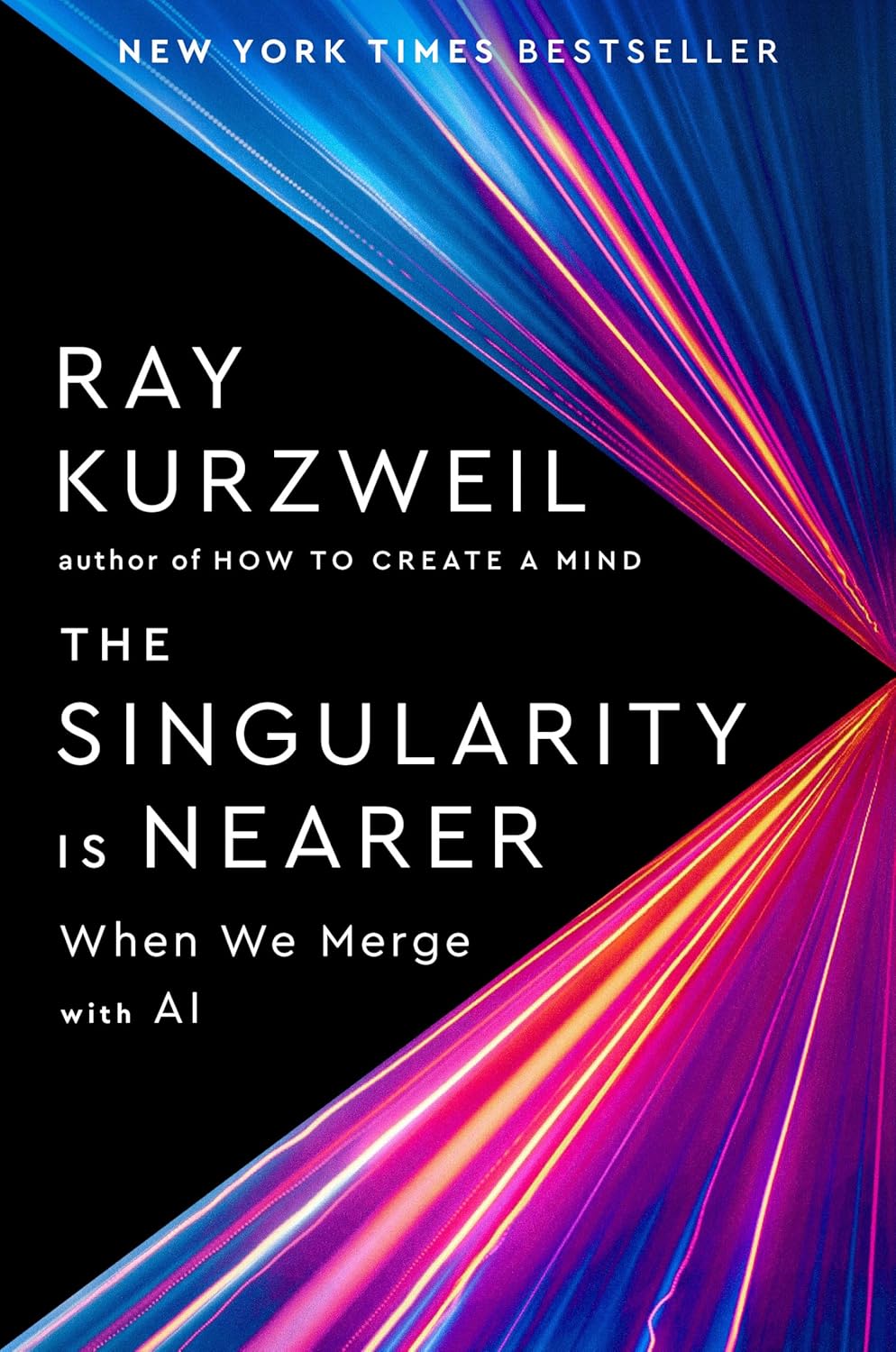
Twenty years after "The Singularity Is Near", Kurzweil revisits his predictions and keeps the date: human-AI merger around 2045.
As an Amazon Associate, Zendoric earns from qualifying purchases; the price does not change for you. · all our recommended books →
🔗 Related on Zendoric
- Opus 5 tops Fable 5: at the frontier, Anthropic's toughest rival is now its own previous model · 2026-07-25
- GPT-6 arrives claiming a double-digit lead over Fable 5.1 — treat launch-day numbers as a claim, not a result · 2026-09-13
- Musk concedes Grok trails Anthropic by years — while the 100%-a-month agent claim measures distribution, not capability · 2026-09-28