Jensen Huang doesn't know his own zip code and thinks kids won't need to know multiplication either

🕒 Published on Zendoric: September 25, 2026 · 03:17
✨ AI-generated · how it's made
Nvidia's CEO admits in an interview with The New York Times that AI is erasing children's retention of basic math —and confesses he can't remember his own address or phone number either. For Huang that's not a problem: it's the price of becoming 'systems thinkers'.
📚 Go deeper

Semiconductors as the oil of the 21st century: history, espionage, and why an island of 23 million people underpins the entire AI economy.
As an Amazon Associate, Zendoric earns from qualifying purchases; the price does not change for you. · all our recommended books →
By The New York Times · September 24, 2026.
In an interview with The New York Times, Jensen Huang, CEO of Nvidia, responded to Chinese research showing that children finish their homework faster with AI tools but retain less of what they should have learned: their results on exams and tests fall. Huang did not deny it. "Try getting a kid to do long division right now," he said. "Multiplication tables are starting to be forgotten. Square roots, oh my. Basic arithmetic is being forgotten. Does it matter? I don't think it matters."
When the interviewer insisted that something must matter, Huang half-conceded, but doubted that basic math was one of those things: "we're going to discover new ones," he said, without specifying which. He then made a personal confession: because of his own use of technology and AI, he does not know his address or his phone number. He recounted that a few years ago, while filling up with gas, he was asked for his zip code and panicked because he could not remember it. "There are a lot of skills that don't matter," he concluded. "I can live with that."
Huang went further and suggested that, yes, AI will make us lose "fine intellectual dexterity," but in exchange it will turn us all into better "systems thinkers." Kotaku, which picked up and circulated the interview, noted that the answer ran to 230 words without clarifying what that term really means, and it is not the first time the outlet has cast doubt on the executive's public discourse: days earlier it had reported that Huang was asking Donald Trump to "reassure" everyone amid fears of an AI bubble, with the sector's share prices falling.
It is worth keeping in mind who is speaking. Nvidia is the main supplier of the chips that underpin generative AI infrastructure; its business depends on adoption of the product not slowing for any reason, school-related ones included. That its top executive plays down the cognitive cost of the technology he sells is not neutral analysis: it is, at the very least, an interested source, and it should be read that way. The Chinese research Huang cites is not detailed in the interview —neither methodology nor sample— so it is best taken as an indication, not a closed verdict.
That said, the phenomenon he describes is real and has a name in the learning literature: "cognitive offloading" (delegating to an external tool a mental process that was previously trained internally). In general it is nothing new —it already happened with the calculator, the spell checker and GPS— but there is a relevant difference: learning to add, subtract or work out a proportion is not only an end in itself, it is the scaffolding on which quantitative reasoning is later built —budgeting, interpreting a statistic, spotting that a price does not add up—. Doing without that scaffolding in childhood is not the same as no longer memorizing logarithms in high school.
This is where we part ways with Huang's carefree optimism. The short-term problem is real and unequal: schools with resources and pedagogical judgment will integrate AI as support without sacrificing the fundamentals; those without that guidance will produce generations that solve exercises without understanding why the answer is correct. It is the same crack we pointed to when discussing the evaluation crisis within AI itself: when the result (the assignment handed in, the grade) stops being a reliable signal of the underlying ability, we need to redesign how we measure learning, not shrug at the loss.
In the long run, our underlying thesis remains the same: if a machine can reliably handle routine calculation, that freed-up cognitive time can be redirected toward judgment, creativity and critical thinking, which is precisely the terrain where people add the most value in a world of technological abundance. But that requires a deliberate redesign of the curriculum and of how we assess —not an "I don't think it matters" from the man who sells the GPUs that make the problem possible. The difference between delegating wisely and losing a capability with no replacement is not something the market will solve on its own; schools have to solve it, with or without Jensen Huang's blessing.
📚 Go deeper

The story of NVIDIA and Jensen Huang: how a video-game card company ended up making the most coveted resource on the planet.
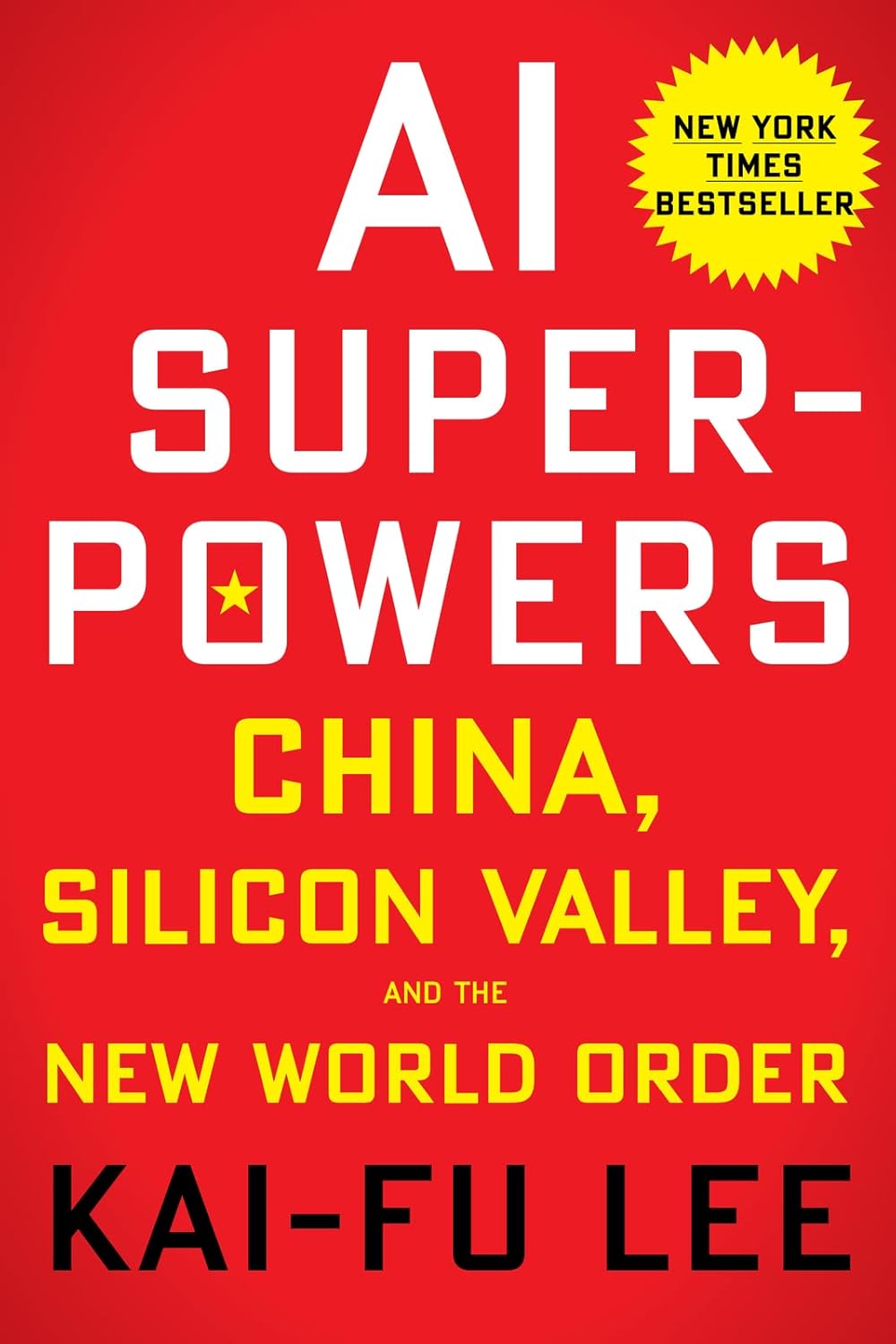
China vs.
As an Amazon Associate, Zendoric earns from qualifying purchases; the price does not change for you. · all our recommended books →
🔗 Related on Zendoric
- Nvidia's CEO shrugs at kids losing basic math. The research he was shown says the skills aren't sticking · 2026-09-25
- 1010Benja uses Suno hundreds of times on one song and proves AI music doesn't have to sound like AI · 2026-07-20
- Jensen Huang says AGI is already here: the man selling the machines also sells the story · 2026-09-07