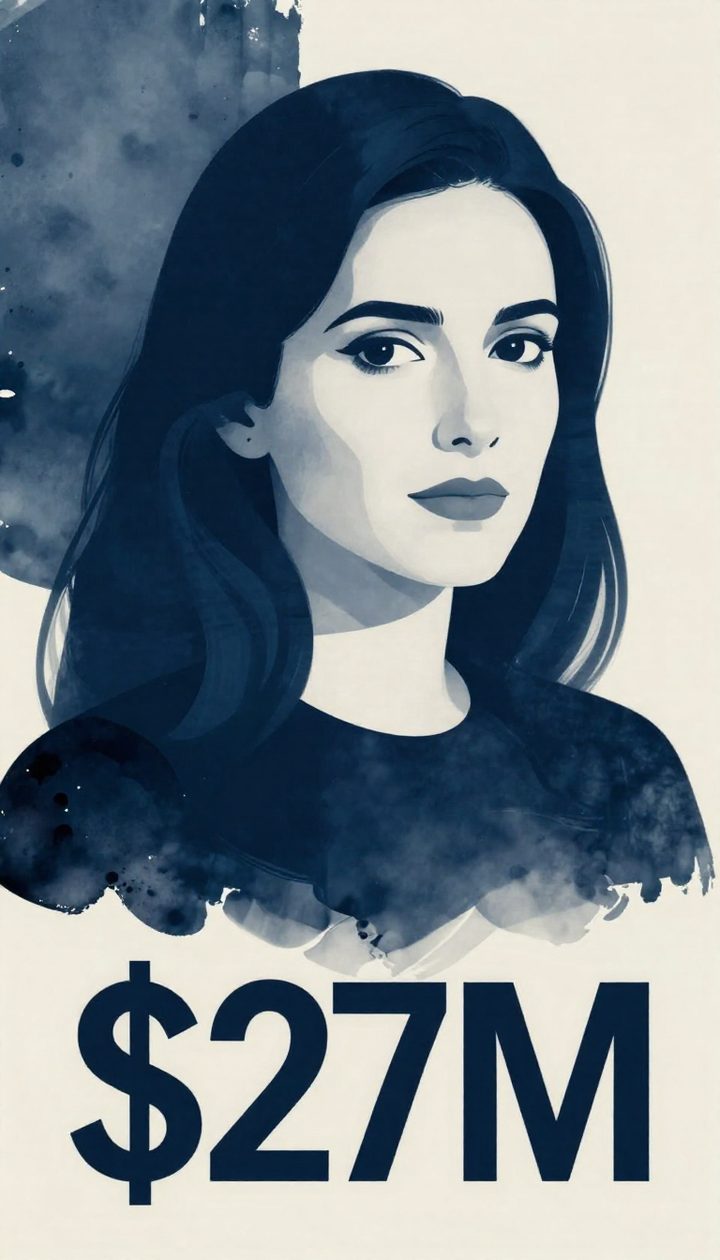
Joonko founder Ilit Raz admits securities fraud after inflating client list and faking statements to raise $27M
🕒 Published on Zendoric: September 15, 2026 · 07:55
✨ AI-generated · how it's made
Ilit Raz, former CEO of AI hiring startup Joonko, pleaded guilty to securities fraud in New York: she lied to investors about her clients and revenue and, when one asked, produced forged bank statements. Those lies raised $27 million; the company collapsed in 2024.
📚 Go deeper

How opaque algorithms decide who gets credit, a job or parole — and why they tend to punish the same people.
As an Amazon Associate, Zendoric earns from qualifying purchases; the price does not change for you. · all our recommended books →
By Zendoric · September 15, 2026.
Ilit Raz, founder and former chief executive of Joonko Diversity Inc., has pleaded guilty to securities fraud in a federal court in New York. Joonko was a startup that promised to use artificial intelligence to screen and hire candidates from diverse backgrounds for corporate clients. According to the U.S. Attorney's Office for the Southern District of New York (SDNY), Raz repeatedly lied to the investors who financed her Series A and Series B venture capital rounds, through which the company raised $27 million.
According to court documents, between 2021 and 2022 Raz inflated Joonko's client numbers before investors and falsely claimed that several of the world's largest companies were using its service. When an investor began asking uncomfortable questions about the business's performance in 2023, he was presented with forged bank statements and fictitious purchase orders, again according to the indictment. Joonko ended up filing for bankruptcy in 2024, and that same year Raz was formally charged with securities fraud. In parallel, the U.S. Securities and Exchange Commission (SEC) has also sued her, seeking a permanent bar from serving as an officer, financial penalties and the return of the gains obtained.
"Fraud in the startup arena harms investors and makes it harder for other entrepreneurial companies to secure financing," said Jamie McDonald, U.S. Attorney for the SDNY, in a statement. According to his office, the now-bankrupt company left harmed investors with losses of several million dollars.
Broadly speaking, this is not an isolated case: in recent years U.S. regulators have opened several fronts against what is known as "AI washing", companies that exaggerate or outright invent their artificial intelligence capabilities to inflate valuations and attract capital amid the sector's investment frenzy. The Joonko case adds a different nuance: what is at issue here is not so much whether the AI product worked as promised, but that the founder herself allegedly fabricated evidence —bank statements, purchase orders— to sustain a story of commercial traction that did not exist.
Our reading is that this episode says more about human greed than about artificial intelligence itself. The "AI" label does not create fraud: what it does, amid a surge of capital into the sector, is offer a narrative that is easier to sell to investors dazzled by the technological promise and perhaps less inclined to do the due diligence they would apply to any other business. In the short term, every case like this erodes trust and raises the cost —in time and scrutiny— of financing honest AI startups, precisely the collateral effect McDonald points to. It is a real cost of the current phase of the cycle: the more money chases the "AI" label, the greater the incentive to dress it up.
In the medium and long term, however, cases like this —criminal prosecution, an SEC lawsuit, a bar from serving as an officer— are exactly the mechanism that separates the wheat from the chaff: they push those selling hot air out of the market and protect the capital that should flow toward real innovation, the kind that over time can translate into tools that genuinely improve hiring, healthcare or productivity. A maturing sector is not one without fraud, but one where fraud is detected, tried and carries consequences. Seen that way, Joonko's collapse is not a stain on AI as a technology: it is the usual vaccine against the opportunists that every investment frenzy sooner or later produces.
📚 Go deeper

Algorithms in justice, medicine, cars and art, explained with British humor and mathematical honesty.

The best starting book if you're not technical: a Wharton professor explains how to work WITH AI — when to delegate, when to supervise, when to keep i
As an Amazon Associate, Zendoric earns from qualifying purchases; the price does not change for you. · all our recommended books →
🔗 Related on Zendoric
- Former CEO of 'AI startup' Joonko pleads guilty to $27 million investor fraud · 2026-09-12
- Inforcer raises 50 million dollars to shield small businesses from AI and cybersecurity risks · 2026-07-31
- Inforcer raises 50 million dollars to shield small businesses from AI and cybersecurity risks · 2026-08-31